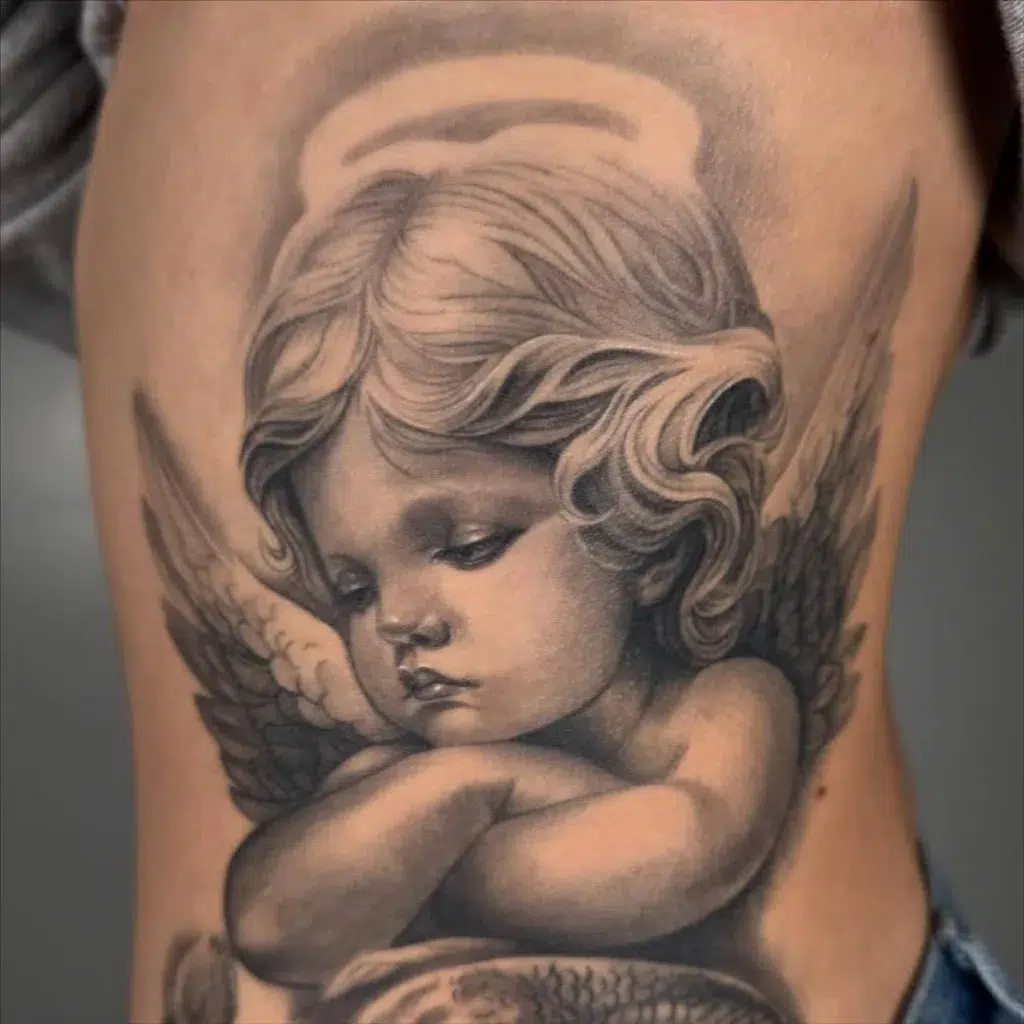


Color Realism Tattoos in Nashville: What the Style Means & Who Can Deliver It
Key Takeaways
- Color realism tattoos in Nashville are in high demand—but the style is one of the most technically demanding in the industry, and not every artist claiming it can deliver at the highest level
- Color realism requires layering multiple pigments to build saturation, depth, and lifelike dimension—it moves significantly slower than bold styles
- The healed result of a color realism tattoo is the only honest measure of quality—fresh photos in this style are particularly deceptive
- Skin tones, lighting, and reference photo quality all affect what’s achievable; a skilled color realism artist will set honest expectations in the consultation
- Jake Ingersoll at Skin Design Tattoos Nashville specializes in color realism alongside black and grey realism and cover-up work
- Nashville’s creative culture creates strong appetite for ambitious, high-detail work—color realism fits that appetite when executed at the right level
- Sun protection after healing is non-negotiable for color realism—color pigments are more vulnerable to UV degradation than black ink
- A consultation is where color realism projects either get properly planned or go wrong before they begin
Why Color Realism Is One of the Hardest Styles to Execute Well
Color realism is exactly what it sounds like: tattoo work that uses color to produce photographic depth, dimension, and lifelike rendering that stops people in their tracks.
It’s also one of the most technically demanding styles in tattooing—and one of the most variably executed.
The gap between color realism done by a specialist and color realism done by someone who lists it on a general services menu is enormous. That gap is largely invisible in fresh tattoo photos, which is what makes choosing an artist for this style particularly important to get right.
This guide covers what color realism actually requires technically, what to look for when evaluating an artist in Nashville, what the consultation process should involve, and how to set realistic expectations for a style that rewards patience and planning more than almost any other.
What Color Realism Actually Is—and Isn't
Color realism isn’t color tattooing. That distinction matters.
Color tattooing—traditional American, neo-traditional, Japanese traditional—uses color in a graphic, stylized way. Fills, outlines, defined areas of solid pigment. The color works with a bold visual structure.
Color realism uses color the way a painter uses paint. The goal is to replicate the way light actually behaves—how it falls across a surface, how it creates shadow and highlight, how it produces the dimensional quality that makes an object look three-dimensional rather than flat. There are no outlines in the traditional sense. The form is built entirely through color and tonal variation.
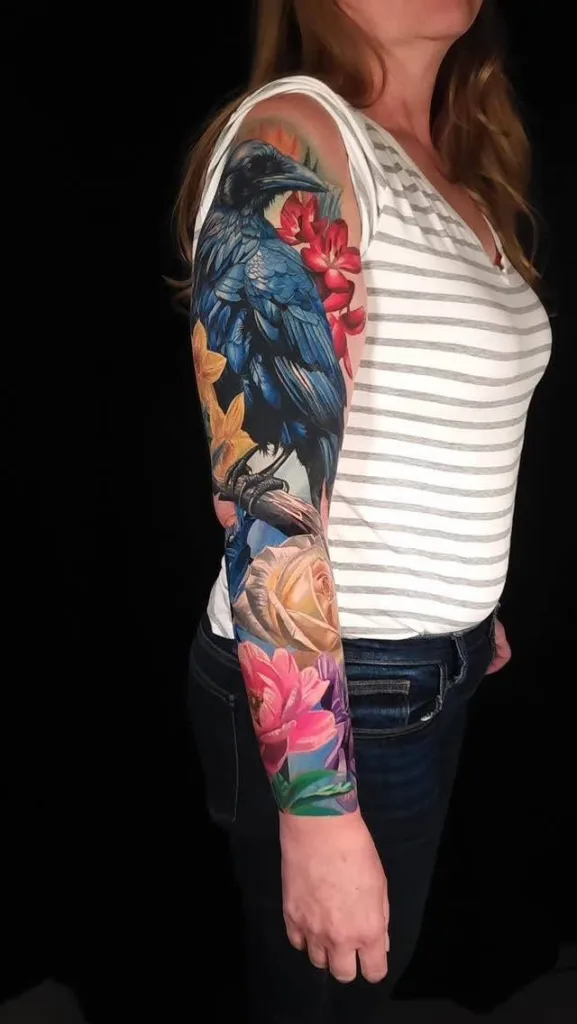
Feminine color realism tattoo sleeve by award-winning Nashville tattoo artist Jake Ingersoll—text ‘JAKE’ to (702) 297-6079 for a free consult
That means the artist has to understand color theory at a level that other tattooing styles simply don’t require. How pigments interact under the skin. How color shifts as it heals. How to build saturation in layers without overworking the skin. How to manage the fact that tattoo pigments behave differently than paint on a canvas—because the canvas is living tissue.
It’s a style that separates artists who have genuinely mastered it from those who can approximate it.
The Technical Demands of Color Realism
Understanding what makes color realism technically demanding helps you evaluate artists and set realistic expectations.
Layered Pigment Building
Color realism is built in passes, not in a single application. An artist building a realistic portrait or wildlife piece in color has to layer pigments incrementally—building saturation and tonal depth gradually rather than applying full-strength color from the start.
This takes time. A color realism piece that covers the same surface area as a bold traditional tattoo will take significantly longer to complete. Artists who rush the layering process produce work that looks flat rather than dimensional, and often heal inconsistently.
Color Theory Under the Skin
Pigments look different under skin than they do in a cap. They also interact differently than expected—layering certain colors produces unexpected results, and the skin’s own tone affects how pigments read on the surface.
An experienced color realism artist understands how to compensate for these factors. They know which pigments hold saturation well and which don’t. They know how to build a color that reads correctly after healing, not just immediately after the session. This knowledge comes from years of working with the specific challenges of the medium.
Reference Quality and Achievability
Color realism is only as good as the reference material and the honest assessment of what’s achievable.
A low-resolution or poorly lit reference photo produces a tattoo that’s limited by the reference. A design that requires color gradients the skin can’t hold at the requested scale produces a result that disappoints.
A great color realism artist evaluates reference quality at the consultation and gives an honest assessment of what they can achieve and what they can’t—including suggestions for how to adjust the concept to produce the strongest possible result.
An artist who agrees to everything without this conversation isn’t being accommodating. They’re skipping the work that separates good outcomes from disappointing ones.
Healing Complexity
Color realism heals differently than black and grey work.
Color pigments—particularly light colors like yellow, white, and certain pinks—are more volatile during healing. They can shift, lose saturation, or heal unevenly in ways that black ink doesn’t. This isn’t always a defect; it’s a property of the medium that skilled artists plan for by building color with the healed result in mind rather than the fresh result.
It also means that evaluating a color realism tattoo before it’s fully healed—the six-to-eight-week minimum—produces an inaccurate picture. Color that looks patchy at week two often resolves significantly by week eight.
What Strong Color Realism Looks Like in a Healed Portfolio
Because fresh color realism photos are particularly deceptive—colors are most vivid immediately after the session, before healing shifts anything—healed portfolio work is more important to evaluate in this style than in almost any other.
When reviewing a color realism artist’s healed portfolio, look for:
Retained color saturation. Colors should still read as vibrant and intentional after healing, not significantly faded or washed out. Some color shift is normal; dramatic loss of saturation indicates either poor technique or pigment selection.
Dimensional depth. The three-dimensional quality that defines the style should be present in the healed result, not just the fresh one. Flat, poster-like color in healed work suggests the layering work wasn’t done properly.
Smooth color transitions. Gradients from one color to another—the technical heart of color realism—should be smooth and controlled in the healed result, not patchy or streaky.
Consistent highlight placement. Highlights in color realism create the illusion of light falling on a surface. In healed work, they should still read as intentional and correctly placed, not blown out or disappeared.
Subject matter legibility. A color realism portrait or wildlife piece should still be recognizable and detailed after healing—not muddy or unclear. If the subject matter is hard to read at six months, the foundational execution was weak.
Color Realism Tattoos in Nashville: What the Market Looks Like
Nashville’s creative culture makes it a strong market for ambitious, high-detail tattoo work. The city’s music industry backbone, growing arts scene, and increasingly design-conscious resident population create a client base that understands and values craft—including the craft of color realism.
The challenge in Nashville—as in most growing markets—is that demand for color realism has outpaced the supply of artists who genuinely specialize in it. The style’s popularity has led many artists to offer it as part of a general menu without the years of focused practice the style actually requires.
Identifying genuine expertise means looking past the label and into the portfolio—specifically the healed portfolio, specifically in color realism.
Jake Ingersoll at Skin Design Tattoos Nashville
Color realism is one of Jake Ingersoll’s core specializations at Skin Design Tattoos Nashville—alongside black and grey realism and cover-up and enhancement work.
That combination is worth noting. An artist who works at a high level in both color realism and black and grey realism has developed a depth of technical understanding across both the tonal and the color dimensions of realistic tattooing. The skills aren’t identical—but the underlying understanding of how to build dimension and depth in a tattoo carries across both.
Custom color realism cover-up tattoo by Skin Design Tattoos Nashville artist Jake Ingersoll — text a picture of your tattoo regret to (702) 297-6079 with your ideas for a consultation
Cover-up specialization adds another layer. Cover-up work requires an artist to achieve strong results within real constraints—existing ink, fixed placement, a design that has to both conceal and stand as a strong piece independently.
Artists who do cover-up work well are artists who can problem-solve compositionally, not just execute in ideal conditions. That problem-solving capacity translates directly to the challenges of color realism, where reference quality, skin tone, and client expectations all require honest assessment and skilled navigation.
Jake’s consultations for color realism projects are direct about what the reference material allows for, what the placement and sizing decisions mean for the final result, and what the session plan looks like for a piece of the requested scope. The conversation that happens before the session is where the project either gets set up correctly or doesn’t.
What to Expect From a Color Realism Consultation
A color realism consultation is different from a consultation for bold traditional or fine line work. The reference material and achievability conversation is more involved, and more honest assessment is required.
What a good color realism consultation covers:
Reference evaluation. Your artist will review your reference images and assess their quality and suitability. High-resolution, well-lit references produce better outcomes. If your references have limitations, a skilled artist will tell you specifically what those limitations mean for the tattoo.
Skin tone considerations. Skin tone affects how color pigments read. What works on lighter skin doesn’t always translate identically to darker skin. An honest artist discusses this directly and adjusts the approach—color selection, saturation levels, highlight placement—to produce the strongest result for your specific skin.
Color realism portrait and cartoon designs on darker skin, done at Skin Design Tattoos Nashville
Sizing requirements. Color realism requires sufficient surface area to build the detail and gradient work the style demands. Undersizing a color realism piece is one of the most common ways clients end up disappointed—the detail compresses, colors merge, and the dimensional quality collapses. Your artist will recommend the minimum size for your specific design to hold its integrity.
Session planning. Color realism pieces typically require more total time than equivalent black and grey work. Large pieces will require multiple sessions. Your artist will give you a realistic picture of the time investment before any commitment is made.
Healed result expectations. A skilled color realism artist will show you healed examples of comparable work and explain what to expect from the healing process—including what’s normal color shift versus what’s a concern.
After the Session: Color Realism Aftercare
Color realism requires the same general aftercare as any tattoo—clean, moisturize, avoid sun and soaking—but with additional attention to sun protection given the style’s particular vulnerability to UV exposure.
Color pigments fade faster than black ink under UV. The same UV radiation that breaks down black ink slowly can degrade color pigments significantly faster. This doesn’t mean color realism tattoos are fragile—it means they require more consistent sun protection to maintain their quality over time.
After full healing, SPF 30 or higher applied to the tattooed area before any sun exposure is the single most impactful long-term maintenance habit for a color realism piece. Year-round, not just in summer. Nashville’s spring and summer UV levels are significant, and even autumn and winter sun exposure accumulates over time.
The clients who still have vivid, dimensional color realism tattoos at ten years are the ones who protected them from the start.
FAQ
What is color realism tattooing?
Color realism is a tattoo style that uses layered color pigments—without traditional bold outlines—to create photographic depth and dimension. The goal is to replicate how light actually falls on a surface, producing work that looks three-dimensional and lifelike.
It’s one of the most technically demanding styles in tattooing, requiring deep understanding of color theory, pigment behavior under skin, and layered application technique.
How long does a color realism tattoo take?
Longer than most other styles for equivalent sizing. Color realism is built in passes, with pigments layered incrementally to build saturation and depth. A medium-sized color realism piece may take five to eight hours or more.
Large-scale pieces typically require multiple sessions. Your artist will give you a specific estimate at the consultation based on your design and sizing.
How do I know if a Nashville tattoo artist is actually good at color realism?
Ask specifically to see healed color realism work—not just fresh photos. In healed work, look for retained color saturation, smooth gradient transitions, dimensional depth that holds up after healing, and subject matter that’s still clearly readable.
Also evaluate whether the artist’s portfolio is built around color realism specifically or lists it among a dozen other styles without depth.
Does color realism hurt more than other tattoo styles?
Not inherently due to the style itself—pain level is primarily determined by placement. What does differ is session length: color realism sessions tend to run longer than bold-style sessions for equivalent sizing, which means more time in the chair and more cumulative discomfort over a long session. Taking breaks as needed and preparing properly—eating beforehand, staying hydrated—helps manage longer sessions.
How should I care for a color realism tattoo after healing?
The standard aftercare rules apply during healing: wash gently, moisturize lightly, avoid sun and soaking. After full healing, consistent SPF 30 or higher on the tattooed skin before any sun exposure is the most important long-term maintenance habit.
Color pigments are more vulnerable to UV degradation than black ink—protecting them from the start is what keeps a color realism piece looking vivid at five and ten years.
Can color realism be done on darker skin tones?
Yes—color realism can be executed beautifully on a range of skin tones. The approach adjusts: color selection, saturation levels, and highlight placement all require consideration of how pigments will read on your specific skin.
An experienced color realism artist discusses this honestly at the consultation and adjusts the design approach accordingly, rather than applying a one-size-fits-all technique.
What's the best placement for a color realism tattoo?
Placements with more stable skin and less frequent UV exposure tend to produce the strongest long-term results: outer upper arm, thigh, upper back, calf.
Placements with high friction, frequent washing, or significant sun exposure—hands, forearms, feet—are harder on color realism than on bolder styles. Your artist will discuss placement options at the consultation based on your design and lifestyle.
Ready to Talk Color Realism in Nashville?
Color realism is a serious commitment—technically and in terms of time and investment. Getting it right starts with the right artist and the right conversation before any session is booked.
At Skin Design Tattoos Nashville, Jake Ingersoll’s specialization in color realism means the consultation is an honest one. You’ll leave with a clear picture of what’s achievable with your reference material, what the session plan looks like, and what the healed result will realistically be—before you commit to anything.
Text 702-297-6079 to book your free consultation.
Or start online at skindesigntattoos.com/tattoo-consultation/
Financing available through Affirm and Klarna—payment plans up to 24 months at skindesigntattoos.com/financing/
Looking to Get Tattooed Outside of The Music City?
Skin Design Tattoos also has tattoo shops in:
Let’s create something you’re proud to wear for life.