
Tattoo Ideas for Women: Styles, Placements, & What to Consider Before You Book
Looking for tattoo ideas for women that you’ll love just as much 10 years from now? Reach out for a free consultation; text us at 702-297-6079 or send us a message today.
Key Takeaways
- Tattoo ideas for women span a wider range of styles than ever—from delicate fine line to bold black and grey realism to large-scale Japanese compositions
- Style fit matters more than trends—the best tattoo idea is one built around your aesthetic, not what’s popular right now
- Placement affects how a tattoo ages, how visible it is, and how comfortable the session will be
- Fine line tattoos are among the most popular choices for women but require diligent sun protection and skilled execution to hold up over time
- Black and grey realism is increasingly popular among women and produces some of the most striking, enduring work in the industry
- Large-scale work—sleeves, back pieces, thigh compositions—rewards patience and planning over impulse
- A consultation is where good tattoo ideas become great tattoos—sizing, placement, and design are refined before any commitment is made
- Skin Design Tattoos artists including Christina Choi, Lynn Hoang, Reena Pho, and Cat Castro specialize in the styles women are most drawn to
Why Most Tattoo Idea Lists Fall Short
Search “tattoo ideas for women” and you’ll get thousands of images arranged by trend, body part, or season.
What you won’t get is context.
You won’t get an explanation of why certain styles age better than others. You won’t get guidance on which placements suit which body types, or which design choices will still feel intentional in fifteen years versus which ones are riding a wave that peaked two years ago.
That’s what this guide is for.
Whether you’re planning your first tattoo or adding to existing work, the goal here is the same: give you a framework for finding an idea that’s genuinely right for you—not just one that photographs well in someone else’s Instagram post.
Start With Style—Not Subject Matter
The most common mistake in the tattoo planning process—for anyone, not just women—is leading with subject matter before establishing style.
You want a floral tattoo. You want a portrait of someone you love. You want something that feels feminine but substantial.
Those are starting points. But the style—how the tattoo is constructed, how it reads visually, how it ages—is what actually determines who you need, what it will cost, and whether it will still look the way you want it to in a decade.
Find the style first. Then find an artist who genuinely specializes in it. Then develop the subject matter within that framework.
Here’s what to know about the styles most relevant to tattoo ideas for women.
Tattoo Styles Worth Knowing
Fine Line
Fine line tattooing has become one of the defining styles of the last decade, and its popularity among women in particular shows no sign of slowing.
Single-needle or tight-grouped needle work creates delicate, precise lines capable of rendering everything from botanical illustrations to geometric patterns to detailed portraits with remarkable restraint. The visual result is something that feels placed rather than stamped—deliberate, refined, and often deeply personal.
Why women choose it: The aesthetic fits naturally into a wide range of personal styles. It reads as both minimal and detailed simultaneously. It can be scaled from a small wrist piece to a full forearm composition without losing its essential character.
What to know going in: Fine line tattoos are more vulnerable to fading than bold styles. UV exposure degrades fine linework faster than it does heavier work—consistent SPF after healing is non-negotiable, not optional. Fine line work done by an artist without deep specialization in the style tends to blur and lose definition faster than it should. Style fit matters enormously here.
At Skin Design Tattoos, fine line is a core specialization across multiple locations. The difference between fine line done by a specialist and fine line done by a generalist is visible in the healed work—always ask to see healed portfolios before committing.
Black and Grey Realism
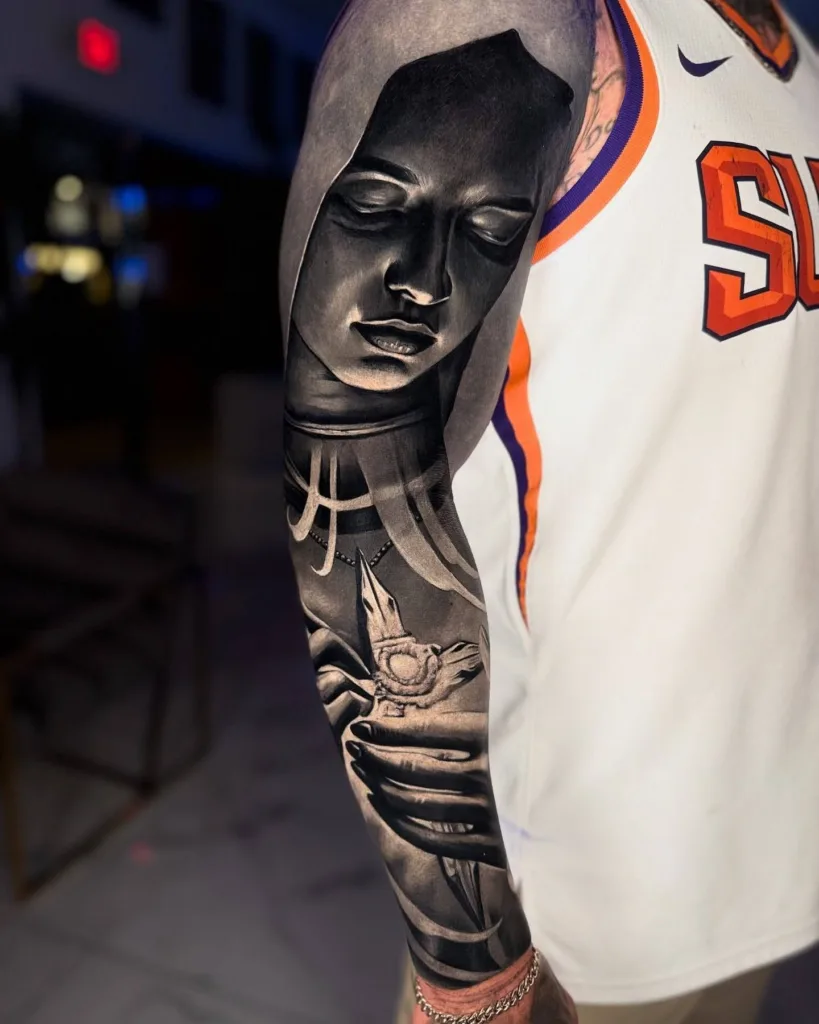
Black and grey realism is having a significant moment among women—and it’s not a trend. It’s a recognition that some of the most powerful tattoo work being produced today lives in this style.
Working entirely in gradients of black ink, black and grey realism creates photographic depth and dimension that color work simply can’t replicate. Portraits, botanicals, animals, figures, abstract atmospheric compositions—all of it translates into this style with a weight and seriousness that makes pieces feel like they belong on skin rather than sitting on top of it.
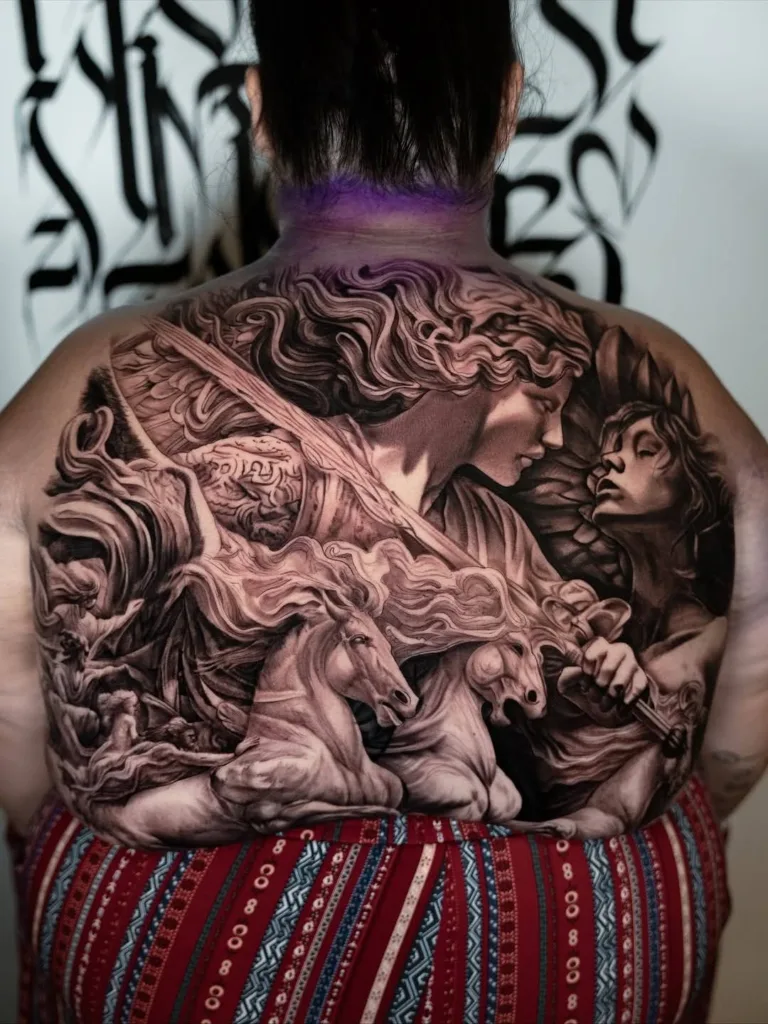
Full-back piece done by Skin Design Tattoos founder and black and grey realism artist Robert Pho—text us at 702-297-6079 to make your vision a reality
Award-winning black and grey realism tattoos by Skin Design Tattoos OC artists
Why women choose it: It ages more predictably than color work. It suits a wide range of subject matter—from intensely personal portraiture to nature-based compositions to abstract dark art. It reads as sophisticated and deliberate rather than decorative.
What to know going in: This is one of the most technically demanding styles in tattooing. Tonal consistency, smooth gradients, and realistic texture require years of dedicated practice. Choosing an artist based on price rather than demonstrated expertise in this specific style is the most reliable path to a result you won’t be happy with.
Artists like Christina Choi, Lynn Hoang, and Reena Pho at Skin Design Tattoos have built their reputations in this style specifically—award-winning work at the 2025 Hawaii Tattoo Expo and Golden State Tattoo Expo reflects the level of technical investment that realism requires.
Floral and Botanical
Florals are one of the most enduring subjects in women’s tattooing—and one of the most versatile.
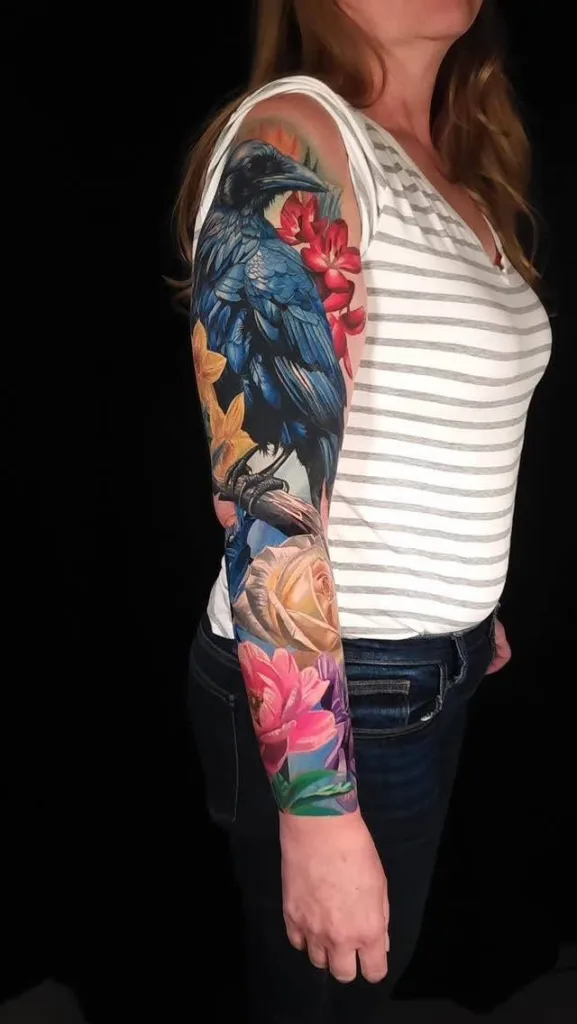
A botanical composition can be rendered in fine line for a delicate, illustrative feel; in black and grey for depth and weight; in neo-traditional for bold graphic impact; or in full color for richness and warmth. The subject matter is consistent—the style determines everything else about how the tattoo reads and ages.
What makes floral tattoos work: Strong composition, intentional placement that follows the body’s natural lines, and an artist who treats the subject with the same craft attention as any other subject. Florals done casually look casual. Florals done with genuine artistic investment look extraordinary.
Cherry blossom mastectomy tattoo done by Lynn Hoang—reach out for a free consultation today
What to watch for: Floral tattoos are among the most requested and therefore among the most variably executed. Portfolio research is especially important here—look specifically for healed botanical work, not just fresh examples.
Neo-Traditional
Neo-traditional expands the structural integrity of traditional tattooing—bold line weight, solid fills—with a more illustrative vocabulary, a wider color palette, and more expressive rendering.
Text ‘STORM’ to 702-297-6079 or book via inkquiries.com/storm
The result ages reliably because the bold lines hold the composition together as color naturally softens over time, while offering significantly more visual complexity and character than strict traditional work.
Strong neo-traditional directions for women:
- Floral and foliate compositions with jewel-toned color and expressive linework
- Animal and nature subjects rendered with illustrative personality
- Art nouveau-influenced botanicals and figures
- Portrait-adjacent work that retains expressiveness over strict realism
Watercolor
Watercolor tattoos—soft washes of color that mimic the fluid, blended quality of watercolor painting—are visually distinctive and immediately recognizable.
They’re also worth approaching with informed expectations.
Watercolor tattoos without strong underlying structure—linework or bold elements that anchor the composition—tend to fade and lose definition faster than most other styles. The soft edges that define the look are also what make them most vulnerable to time and sun exposure.
If you’re drawn to watercolor: Look for artists who build underlying structure into watercolor work rather than relying purely on color washes. Ask to see healed examples specifically—the difference between a well-structured watercolor tattoo and one without underlying support is most visible after healing.
Japanese Traditional
Japanese traditional tattooing was built for large-scale composition, and it works as powerfully for women as for anyone.
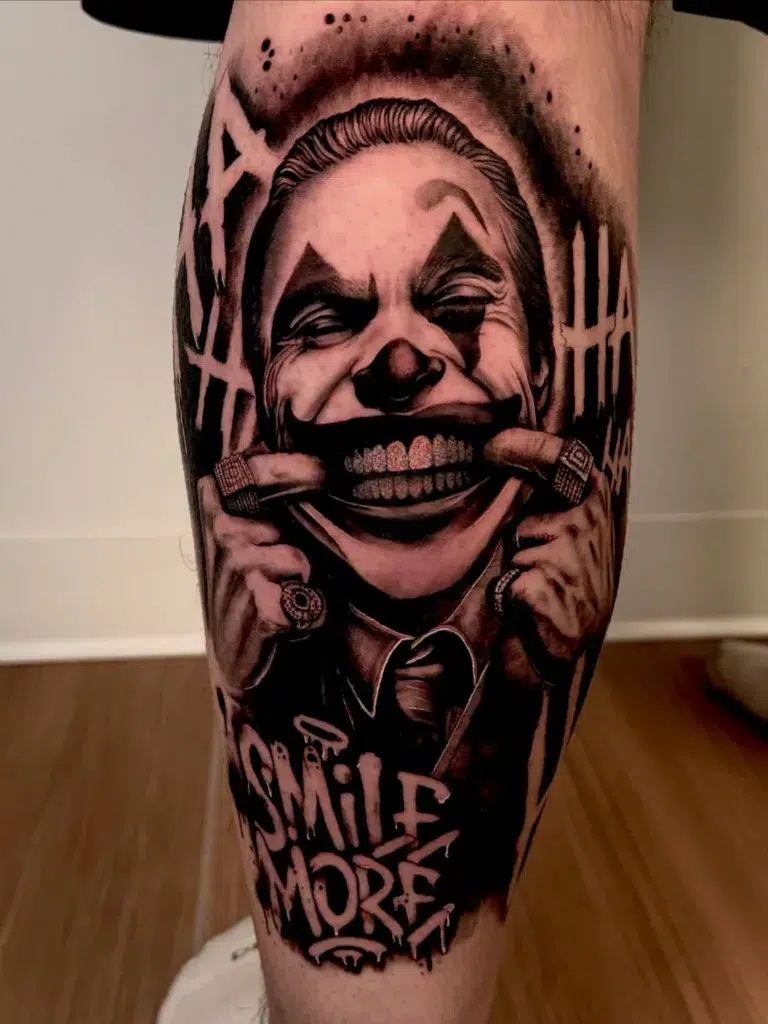
Healed and fresh black and grey leg sleeve by Christina Choi
The style’s defining visual language—flowing water, clouds, botanicals, animals rendered in bold outline and rich fill—creates compositions that move with the body rather than sitting flat against it. A Japanese floral sleeve or back piece on a woman is one of the most striking and cohesive tattoo formats in the art form.
Strong Japanese directions:
- Floral sleeves built around peonies, chrysanthemums, or cherry blossoms
- Koi or phoenix compositions as primary anchor pieces
- Back pieces centered on a single large-scale subject with botanical and atmospheric framing
- Mixed figure and floral compositions in the traditional idiom
Tattoo Ideas for Women by Placement
Style tells you how a tattoo is made. Placement tells you where it lives—and that shapes everything from the session experience to how the work ages.
Forearm
One of the most versatile and visible placements for women. The forearm offers substantial surface area for meaningful work, reads clearly from a distance, and is straightforward to show or conceal depending on context.
What works well: Fine line botanicals and illustrative compositions, black and grey realism in portrait or nature subjects, geometric and ornamental patterning, script and lettering with enough sizing to age cleanly.
Consider: The forearm is frequently sun-exposed. Whatever goes here needs consistent SPF protection after healing to maintain long-term quality.
Inner Arm and Bicep
The inner arm and bicep are more intimate placements—visible when you choose to show them, easy to conceal when you don’t.
The inner bicep in particular suits longer, vertical compositions that follow the natural line of the arm. The outer bicep is a strong anchor placement for larger pieces intended to connect into a sleeve.
Ribcage and Side
The ribcage is one of the most dramatically placed areas for women’s tattooing—high impact, deeply personal, rarely visible to anyone but you.
Long vertical compositions work exceptionally well along the ribcage: botanical stems, single-subject portraits, script and meaningful text, flowing nature elements.
What to know: The ribs are among the most painful placements. The skin moves constantly with breathing, which affects both the session experience and healing. This is not a placement to choose lightly—but for the right piece, it’s one of the most powerful choices available.
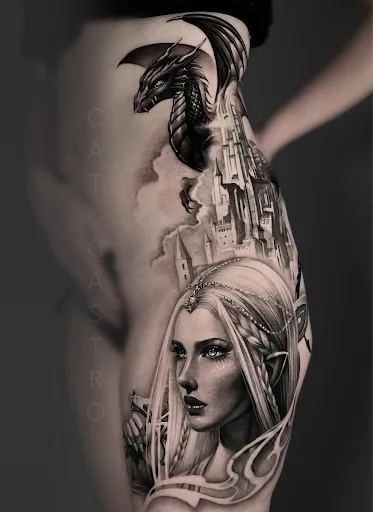
Black and grey tattoo realism portrait tattoo by Skin Design’s very own Cat Castro (also featured on Ink Masters!)—click here to book your free consultation today
Thigh
The thigh is underutilized relative to how well it works as a canvas.
It offers significant surface area, more comfort during the session than most other placements, and a natural orientation that suits both vertical and horizontal compositions. Inner thigh placements are particularly intimate—visible in specific contexts, fully concealed in most.
What works well: Large-scale portrait or nature compositions, Japanese-influenced work, fine line illustrative pieces, botanical compositions that follow the leg’s natural curve.
Fully healed cherub tattoo by Skin Design Tattoos Honolulu tattoo artist
Back and Shoulder
The upper back, full back, and shoulder blade are among the most impactful placements for large-scale work.
A back piece or spine composition on a woman is striking precisely because the placement is unexpected—the full surface isn’t visible to the wearer, which gives it a different kind of personal weight. These pieces are for the wearer first.
Spine placements: Long vertical compositions that follow the spine are particularly strong for women—botanical stems, geometric column work, stacked symbolic elements.
Full back: Among the most ambitious and rewarding formats in tattooing. Treated as a single composition from the beginning, a full back piece becomes one of the most complete statements in body art.
Wrist and Hand
The wrist and hand are among the most visible placements and among the fastest to fade.
Skin on the hands regenerates quickly, is constantly in contact with surfaces, and is washed frequently. Expect more maintenance than other placements. For the right small, intentional design, hand and wrist placements are powerful—but they require more long-term attention to stay sharp.
Ankle and Foot
Ankle and foot placements are popular for their intimacy—visible in sandals and bare feet, concealed in most professional contexts.
Similar considerations to hand placements apply: higher friction, more frequent washing, faster fading than protected placements. Choose designs with sufficient weight to maintain definition as the tattoo ages.
Behind the Ear and Neck
Small, intimate placements with significant visual impact in the right context. Best suited to simple, clean designs with strong enough line weight to hold definition at small scale.
Consider: These placements sit in areas that are difficult to photograph during the healing process and easy to neglect in aftercare. Sun protection on neck placements is also easy to skip—don’t.
What Makes a Tattoo Idea Worth Committing To
Trends have a lifespan. Personal meaning doesn’t.
They’re rooted in something real. A subject matter that means something specific to the person wearing it ages differently than something chosen for its aesthetic appeal alone. Both are valid reasons to get a tattoo. But meaning adds a layer of relevance that outlasts any trend cycle.
They were sized correctly. Small tattoos often seem less intimidating. But designs that are too small for their detail level blur and lose definition faster than those given adequate space. An artist who recommends going slightly larger is protecting the long-term integrity of the piece—not trying to increase the total cost.
They were placed with intention. Placement that complements the body’s natural lines produces tattoos that feel like they belong. Placement chosen arbitrarily produces tattoos that don’t seem to know where they are.
They were executed by the right artist. Style match is everything. A fine line specialist produces fundamentally different fine line work than a generalist who also does fine line. The portfolio tells you which is which—look at the healed work.
Questions to Ask Before You Book
Before committing to any artist or studio, ask these directly:
- Can I see healed examples of work in the style I’m interested in—not just fresh photos?
- What size do you recommend for this design, and what happens if I go smaller?
- What should I expect during the healing process for this placement?
- How does your studio handle touch ups if something doesn’t heal as expected?
- What’s your consultation process for custom work?
An artist who answers these questions thoroughly, honestly, and without pressure is an artist who prioritizes the result over the booking.
FAQ
What are the best tattoo ideas for women?
The best tattoo ideas for women are ones built around personal meaning, executed in a style the artist genuinely specializes in, and placed with intention for both visual impact and long-term aging. Fine line botanical work, black and grey realism, neo-traditional floral compositions, and large-scale Japanese-influenced pieces are among the most enduring choices—but the right idea is the one that’s right for you specifically.
What tattoo styles age the best for women?
Bold styles with strong line weight—traditional, neo-traditional, and well-structured black and grey realism—age most reliably. Fine line work is beautiful and increasingly popular but requires more diligent sun protection and periodic maintenance to stay sharp. Color tattoos fade faster than black and grey equivalents. Watercolor tattoos without underlying structure are the most vulnerable to early fading.
Where is the best placement for a first tattoo for women?
The outer forearm, upper arm, and outer thigh are among the most comfortable and reliable first placements. They offer adequate surface area for meaningful work, heal predictably, and are straightforward to protect during healing. Highly sensitive placements—ribs, spine, feet, hands—are better approached once you have a sense of your tolerance.
How do I choose a tattoo artist for the style I want?
Identify your style first, then search specifically for artists whose portfolios are built around that style. Request healed tattoo photos rather than just fresh ones—healed work is the honest measure of technical ability and longevity. Book a consultation and assess how the artist communicates: thoughtful questions, honest guidance, and informed pushback when something won’t work are all signs of an artist invested in the outcome.
Are fine line tattoos a good idea for women?
Fine line tattoos can produce some of the most beautiful and distinctive work in tattooing, and they’re an excellent choice for women who prefer a delicate, precise aesthetic. The important caveats: choose an artist who genuinely specializes in fine line rather than one who offers it among many styles, commit to consistent sun protection after healing, and understand that fine line work may require touch up maintenance more regularly than bolder styles.
How long does a tattoo take for women's common placements?
t depends entirely on size and complexity rather than placement alone. A small fine line wrist piece might take one to two hours. A detailed forearm composition could run four to six hours. A full thigh piece or sleeve may require multiple sessions totaling fifteen or more hours. Your artist will give you a realistic time estimate during the consultation.
Can I get a tattoo if I'm planning to lose weight?
Weight changes affect how tattoos look over time, but they affect all tattoos to some degree—not just ones on people who are planning to lose weight. Significant weight loss or gain can stretch or compress tattoos in ways that alter the design. For most clients, this is a minor consideration rather than a reason to delay. Placements with significant skin elasticity—stomach, inner thigh—are more affected than placements on more stable areas. Discuss your specific situation with your artist at the consultation.
What should I consider about tattoos and professional life?
Visibility is the primary consideration. Tattoos on the hands, wrists, forearms, and neck are visible in almost all professional contexts. Upper arm, back, thigh, and ribcage placements are easily concealed under standard professional clothing. Industry norms vary significantly—what’s unremarkable in a creative field may carry more weight in a conservative one. There’s no universal right answer, but it’s worth thinking through before committing to a highly visible placement.
Ready to Find Your Idea?
The best tattoo ideas for women don’t come from a list. They come from a conversation with an artist who understands your vision and knows how to execute it.
Skin Design Tattoos has tattoo shops in:
Text 702-297-6079 to book your free consultation.
Or start online at skindesigntattoos.com/tattoo-consultation/
Financing available through Affirm and Klarna—payment plans up to 24 months at skindesigntattoos.com/financing/