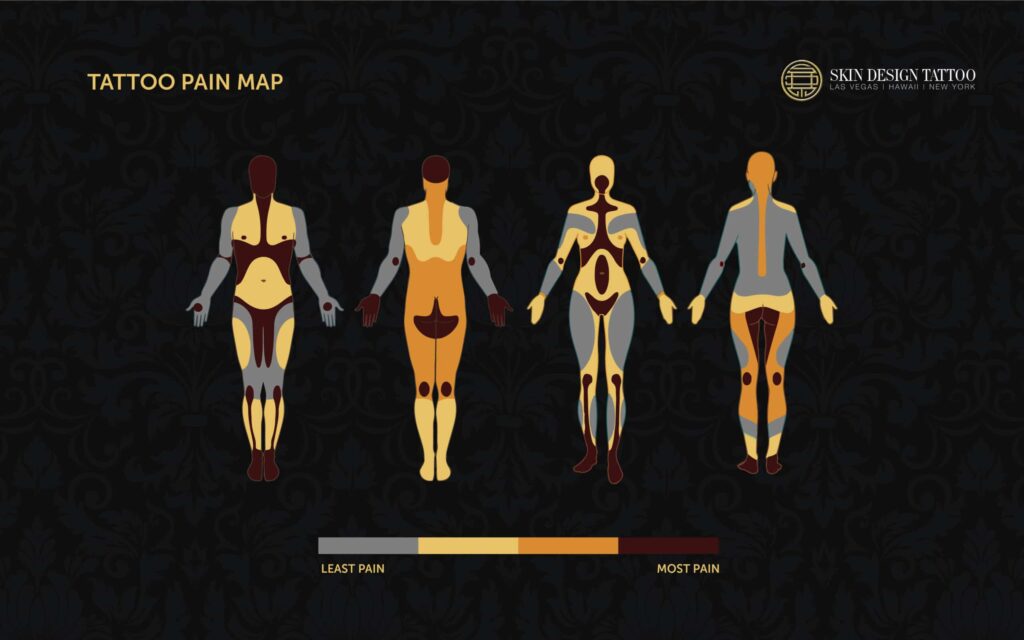

If you are planning to get a tattoo, whether it is your first or you are just planning to get a tattoo in a new area. Working out the tattoo pain level before you go in and get the process carried out can give you less to worry about. You may be worrying about what the most painful tattoo spots are, or if you’re brand new to getting inked you may want to start with the least painful place to get a tattoo just to work out your threshold for pain. Different people experience pain differently, but our pain scale is designed to show a rough idea of which areas are worst.
The least painful place to get a tattoo
Getting a tattoo is always going to have some level of pain. The tattoo pain level depends on your own tolerance but most people experience at least some discomfort. To minimize this, you should consider one of the least painful places to get a tattoo.
The level of pain is often down to the fact that there are a lot of nerve endings or the area or there is a bone close by. The following areas tend to be less painful than many others and are a good place to get your first ink:
- Thigh. The thigh has a lot of space to fit even bigger designs, you can hide it if you want with relative ease. The lack of nerve endings mean it isn’t too painful.
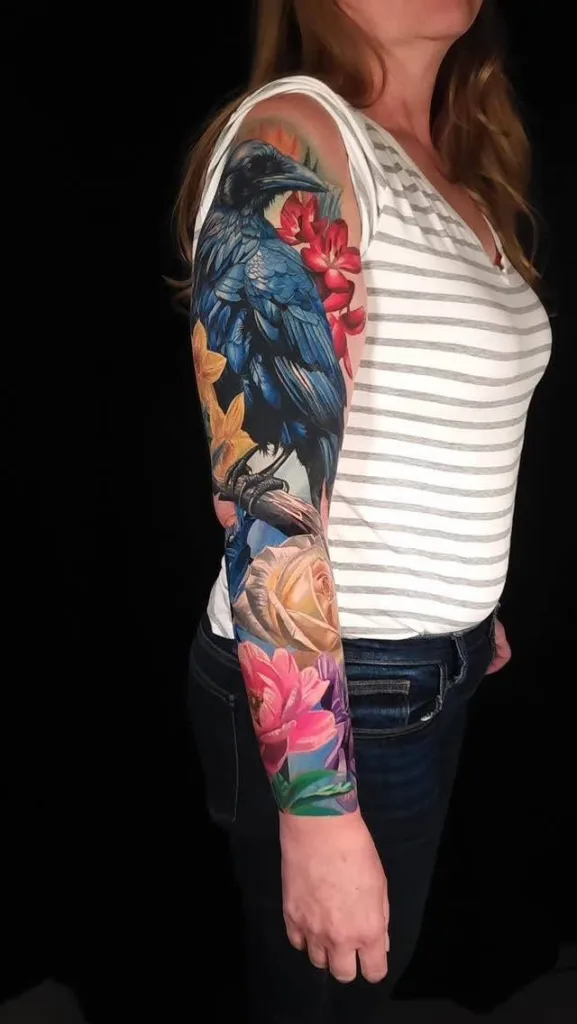
- Shoulder/bicep. Likewise, the shoulder doesn’t have a huge number of nerve endings.
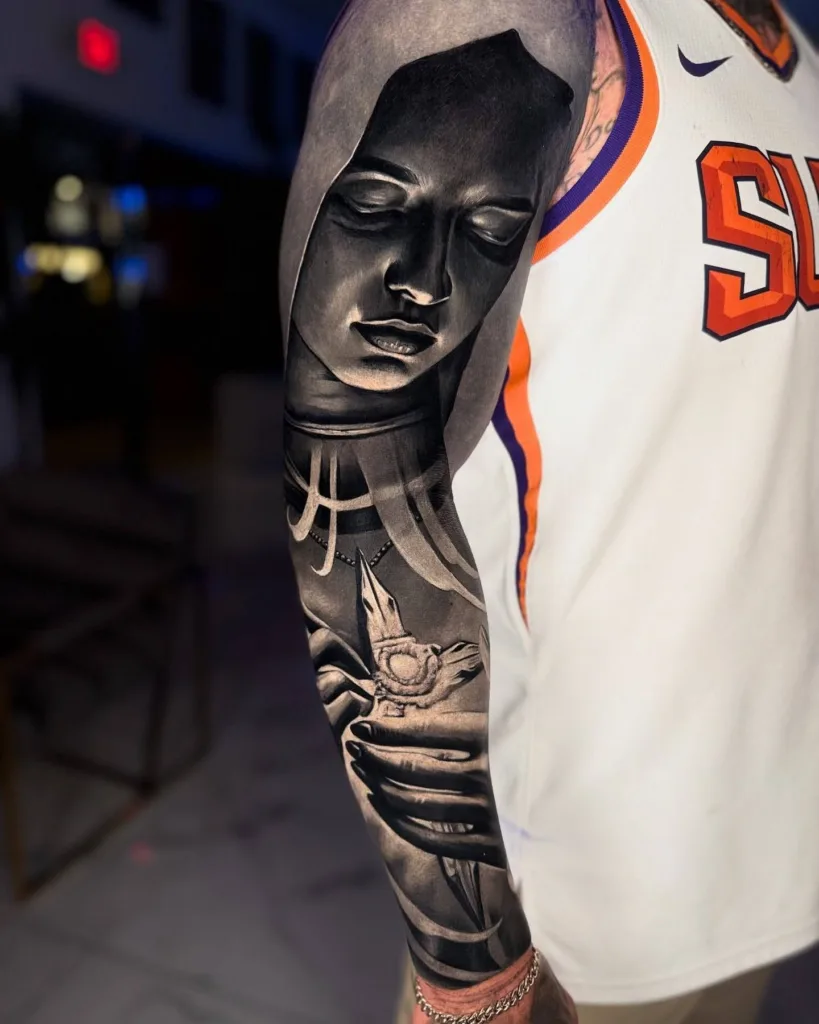
- Forearm. The forearm is a good place to show off your design and isn’t hugely painful — especially popular for fine line tattoos, which tend to be lighter on the needle pressure.
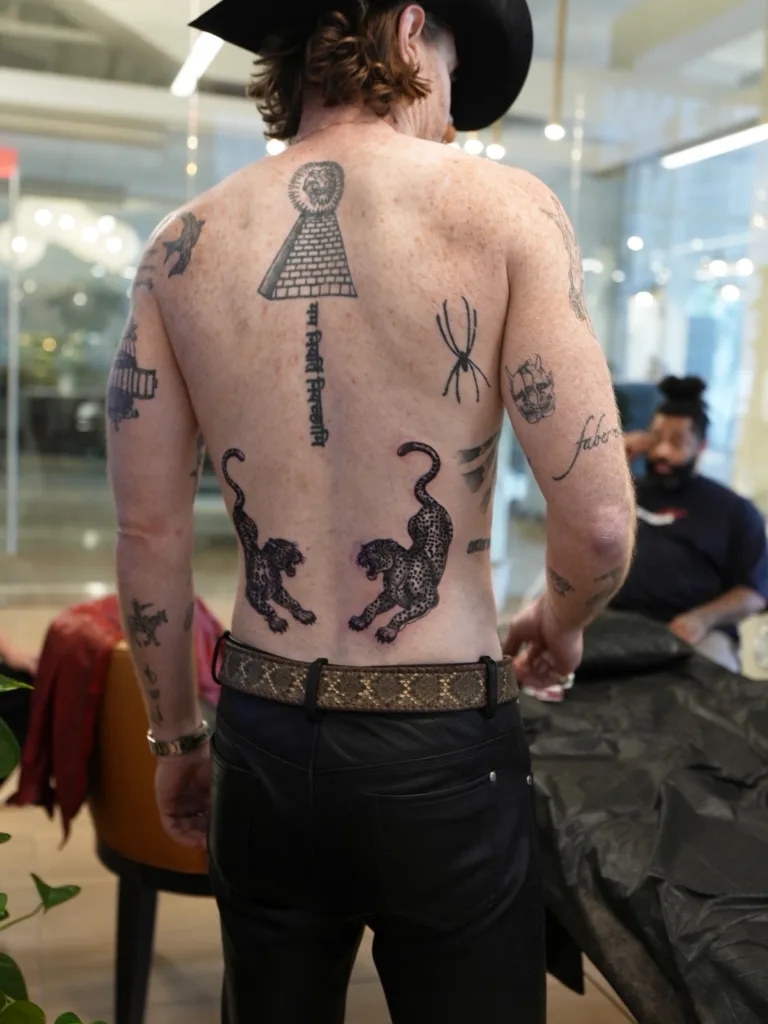
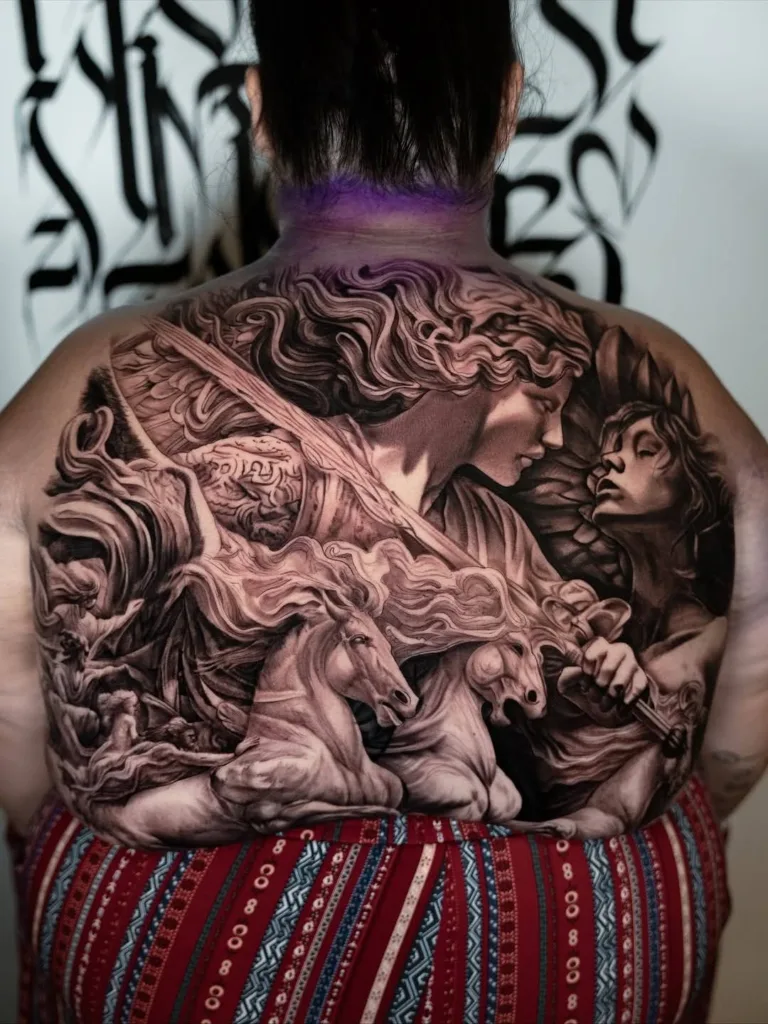
- Back. Many areas of the back are also great for tattoos, especially for larger designs. The pain level is not too high up on the tattoo pain scale as the needles enter the skin.
Most painful tattoo spots
Now, the places you should avoid if you are trying to prevent a lot of pain. These are the most painful tattoo places on the body, and only those who have experience getting tattooed and are confident that they can deal with the discomfort should go for these spaces.
It should also be clarified that different people perceive pain in different ways and that the answer to the exact most painful spot may be different depending on who you ask. However, some areas which tend to have bony and sensitive properties are the most painful tattoo places if you ask for a consensus.
These areas include:
- Armpits
- Ankles
- Wrists
- Fingers
- Head
- Inner thigh
As a rule of thumb, think of the places you would least like to be stabbed by a pin! These are the areas you will probably find most painful. If you’re leaning toward a delicate spot like wrists or ankles, micro tattoos are a great option — smaller designs mean less time under the needle.
How to cope with tattoo pain
Being prepared for the pain of a tattoo is a big deal, and can greatly help you when you are going into the appointment.
You should make sure that you are in good physical condition. If you are hungry or if you haven’t slept well then you will likely be far more sensitive to any pain that is caused by having a tattoo done.
You should go for numbing cream if this is appropriate. Speak with the tattoo artist to see what they recommend for the area. There may be a little extra cost associated with this but there’s no shame in needing some numbing cream to help you out.
If things get really bad during the tattoo, you can always ask to take a little break. This should be possible most of the time, but you might have to make it short to prevent the area from swelling up in the time you’re taking five minutes to cope!
Don’t focus too much on the pain, if you can avoid it. Take deep breaths and focus on something else. Have a conversation or even read if you can do so without it getting in the way.
Pain scale
Our pain scale is based on what most people tend to experience when they are having a tattoo done. There is no exact science to it, but generally, these areas are the most likely to cause you a lot of pain. The tattoo pain level won’t vary a huge amount from what others tend to experience. Ready to take the next step? Book a consultation with our tattoo artists and we’ll help you choose the perfect placement and style for your first or next piece.