

Getting Your First Tattoo: What to Expect and How to Prepare
Key Takeaways
- First-time tattoo anxiety is normal—most of it comes from not knowing what to expect, and this guide fixes that
- Choosing the right artist and studio matters more than any other decision you’ll make in this process
- A consultation before your session is not optional for custom work—it’s where good tattoos are made
- Placement and size affect both the experience and the long-term result; both decisions deserve real thought
- Pain is real but manageable—most first-timers find the experience far more tolerable than anticipated
- Eating a full meal before your session and staying hydrated are the two most impactful things you can do to prepare
- The healing process takes two to four weeks of active care; what you do after the session matters as much as what happened during it
- A first tattoo is a long-term investment—the cheapest option is rarely the right one
- Skin Design Tattoos guides first-time clients through every step, from concept to healed result
What Nobody Tells You Before Your First Tattoo
The internet has no shortage of first tattoo advice.
Most of it is vague, contradictory, or written by people with a passing interest in the subject rather than a decade behind the chair.
Here’s what actually matters.
The best first tattoo tips aren’t about which design to pick or how to breathe through the pain. They’re about understanding the process well enough to make decisions you won’t regret. Getting your first tattoo is one of the few purchases you’ll make that you carry with you permanently.
That weight is real—and it should inform every decision you make going into it, starting with which studio you walk into and ending with how you treat your skin for the weeks after.
This guide is written for first-timers who want to do this right. Not just get through it—but come out the other side with something they’ll still love in twenty years.
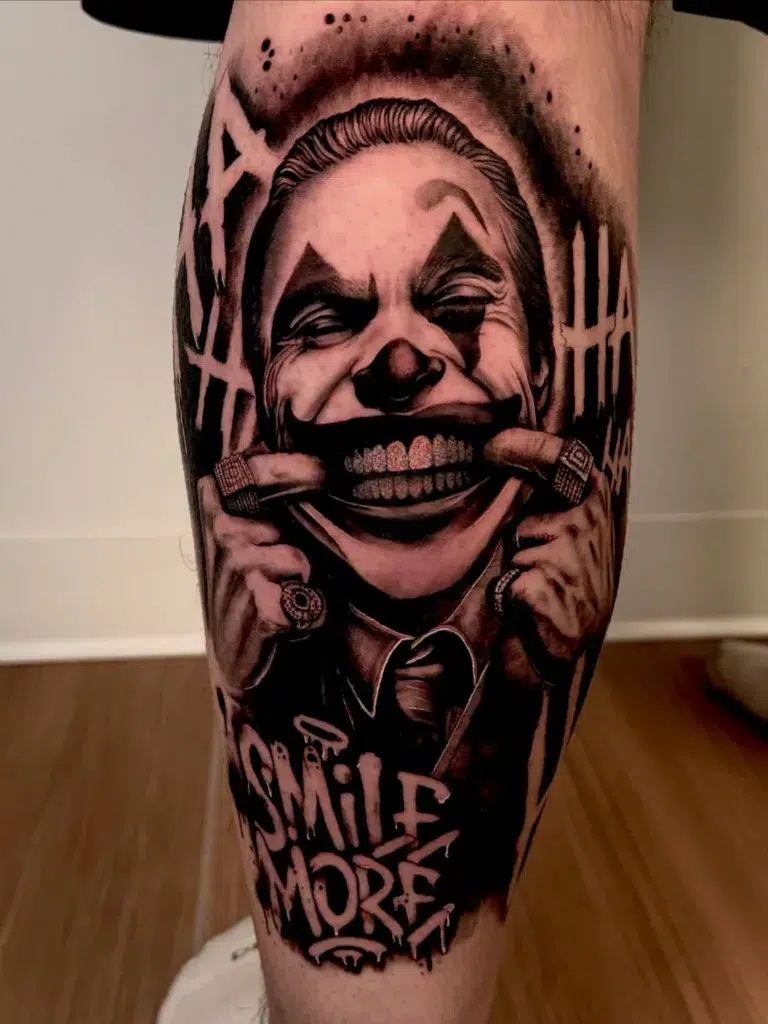
Healed black and grey tattoo design by Skin Design Tattoos Hawaii artist Lynn Hoang—text ‘LYNN’ to (702) 297-6079 to book
Step One: Get Clear on What You Want Before You Shop for an Artist
The biggest mistake first-time clients make is finding an artist before they’ve figured out what they want.
This gets the process backwards.
What you want determines who you need. A studio that specializes in bold traditional work is not the right place for a delicate fine line botanical piece. An artist known for black and grey realism isn’t the ideal choice for a vibrant neo-traditional sleeve. Style fit matters enormously—and it’s the first thing to establish.
Start here:
What style of tattoo are you drawn to? Spend time on Instagram, Pinterest, and studio portfolios collecting examples of work that resonates with you. You don’t need to be able to name the style—you just need to know what catches your eye.
Once you have a sense of the visual direction, you can start identifying artists whose portfolios consistently produce work that looks like it. That’s your shortlist. Work from that list—not from proximity or price.
Choosing the Right Studio for Your First Tattoo
Not all tattoo studios are built the same, and as a first-timer you may not yet have the eye to spot the difference.
Here’s what to look for.
Cleanliness and professionalism
A reputable studio looks and feels clean. Surfaces are organized, equipment is properly stored, and the environment communicates that the people working there take hygiene seriously. If something feels off when you walk in—trust that instinct and leave.
Artist specialization
Great tattoo artists specialize. An artist who claims equal mastery across every conceivable style is almost certainly a generalist who hasn’t gone deep enough in any of them. The best work comes from artists who have spent years—often a decade or more—developing expertise in a specific set of styles.
When evaluating portfolios, look for consistency. Does the work look reliably excellent, or does quality fluctuate significantly from piece to piece? Consistency is a sign of mastered technique.
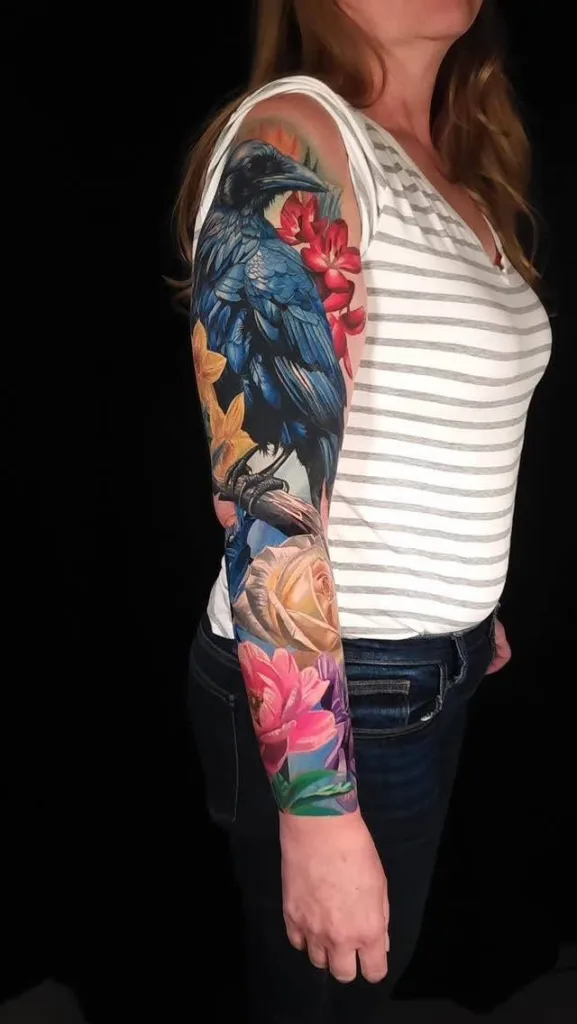
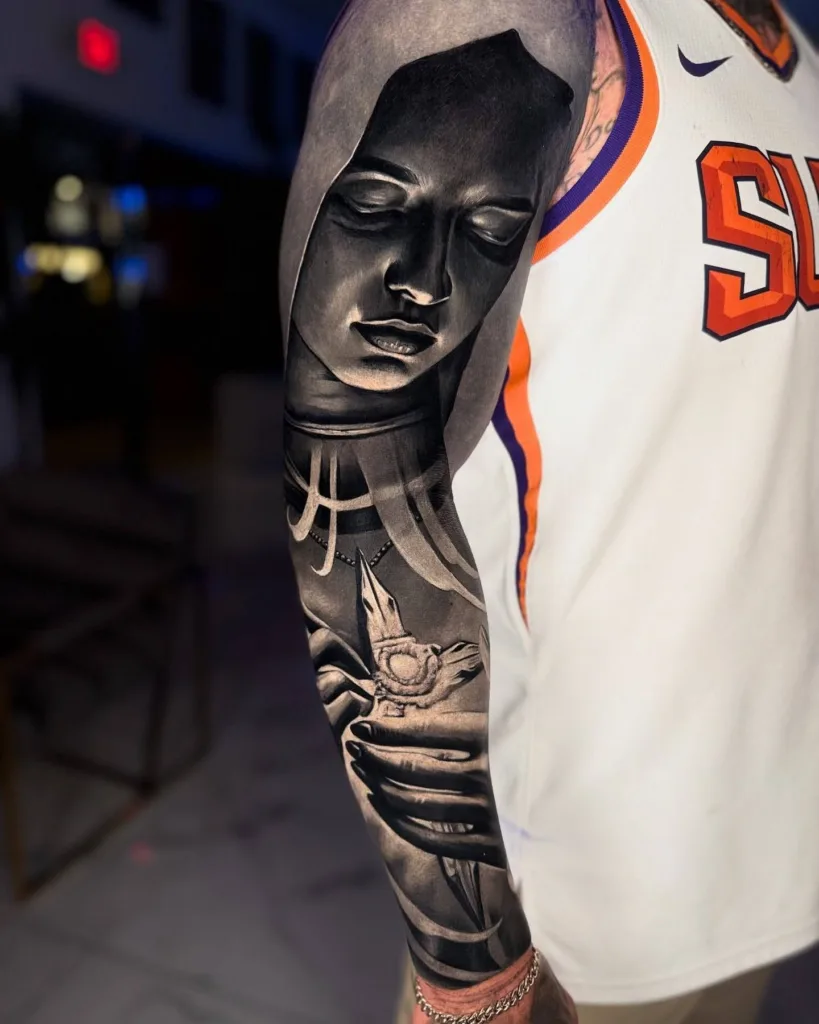
Black and grey realism tattoo sleeve by New York tattoo artist Mando who specializes in black and gret realism and surrealism tattoos—text (702) 298-6079 to book
Healed work in the portfolio
Fresh tattoo photos look great almost by default. Ink is saturated, lines are sharp, skin hasn’t yet begun to settle.
Healed work tells a different story—and a more accurate one.
Always ask to see photos of healed tattoos before committing to an artist. Look for consistent contrast, clean lines, and smooth shading that has held up after the skin normalized. This is the truest measure of whether an artist’s work is built to last.
Healed black and grey realism tattoos by tattoo artist Lynn Hoang—check out her portfolio and text ‘LYNN’ to 702-297-6079 for a consultation
A real consultation process
Any studio doing custom work should offer—and often require—a consultation before the session. If a studio is willing to book you without any conversation about your vision, placement, size, and design, that’s a yellow flag.
At Skin Design Tattoos, every custom tattoo starts with a consultation. It’s not a formality. It’s where the tattoo actually begins.
The Consultation: What to Expect and How to Prepare for It
If this is your first tattoo, the consultation is the most important conversation you’ll have in the whole process.
Come prepared with:
Reference images. Collect five to ten images that represent the style, feel, or specific elements you’re interested in. You don’t need a complete vision—reference images give your artist something to work from and help them understand what appeals to you visually.
An idea of placement. Think about where on your body you want the tattoo. It’s okay if you’re not certain—your artist can advise—but having a starting point helps move the conversation forward.
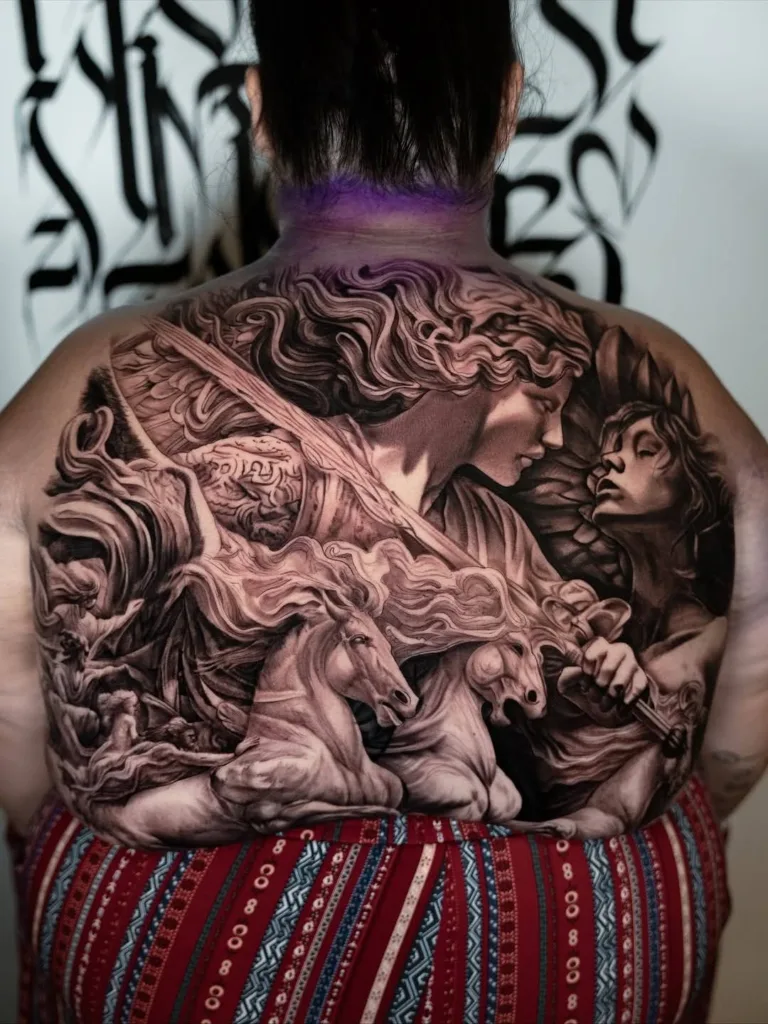
Award-winning black and grey realism tattoos by Skin Design Tattoos tattoo artists
Questions. This is your chance to ask everything. How long will the session take? How many sessions will this require? What size do you recommend? What should I expect during healing? A good artist welcomes these questions.
An open mind. Your artist may push back on certain elements of your idea—size, placement, specific design details. This isn’t dismissiveness. It’s expertise. An artist who recommends going slightly larger, adjusting the placement, or simplifying a detail is telling you how to get a better result. Listen.
Placement: One of the Most Important Decisions You'll Make
Placement is an afterthought for most first-timers. It shouldn’t be.
Where a tattoo lives on your body determines how it ages, how it interacts with your body’s movement, how visible it is, and how much it will hurt during the session.
Placement and pain
Some areas are significantly more painful than others. As a general rule, areas with more muscle and fat—outer thigh, upper arm, calf—are more tolerable. Areas closer to bone—ribs, shin, spine, elbows, feet, hands—are considerably more intense.
For a first tattoo, many artists recommend starting with a more comfortable placement. This lets you gauge your tolerance before committing to a more sensitive area.
Placement and longevity
High-friction areas—hands, fingers, feet—fade faster because the skin regenerates more quickly and is constantly in contact with surfaces. Tattoos in these areas often require more frequent touch-ups to stay sharp.
Areas with significant sun exposure—forearms, upper chest, shoulders—require diligent long-term sun protection to prevent fading.
Placement and career or lifestyle
Consider whether the placement will affect your professional life or daily routines. Highly visible placements—face, neck, hands—carry social weight that varies significantly by industry and environment. There’s no wrong answer, but it’s worth thinking through before committing.
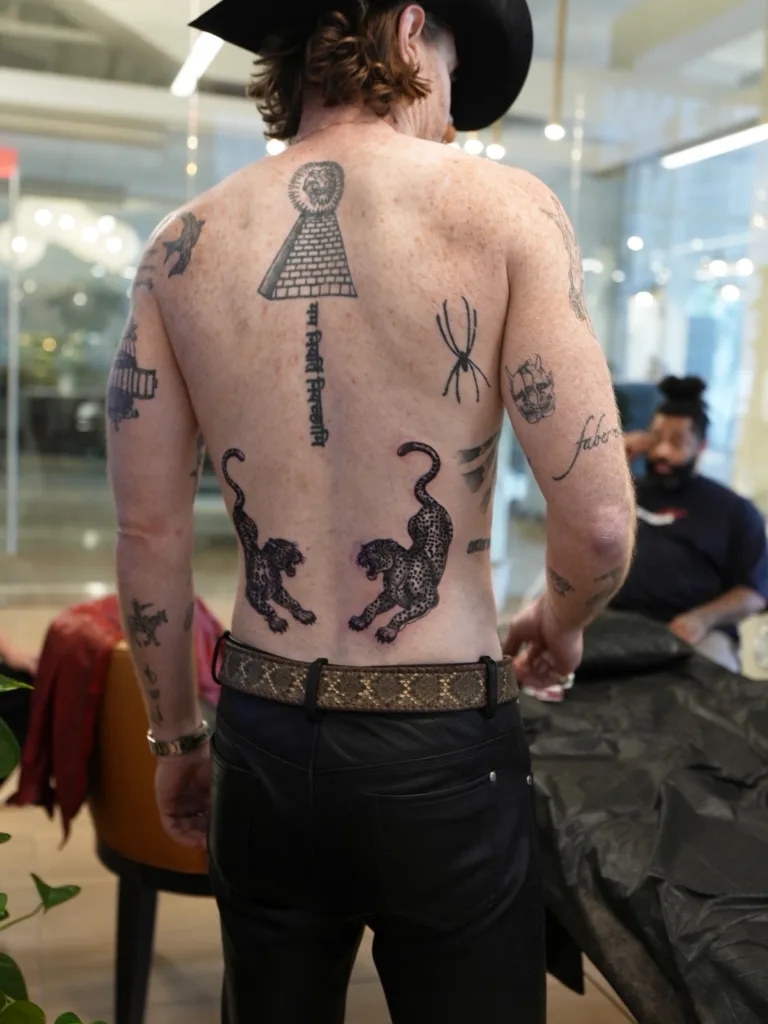
Text ‘STORM’ to 702-297-6079 or book via inkquiries.com/storm
Sizing: Why Your First Instinct Is Often Too Small
First-time clients almost universally want their tattoo smaller than it should be.
The instinct makes sense—smaller feels less scary, less permanent, less expensive.
The problem is that many designs don’t work at small sizes. Fine details blur together. Shading loses definition. Lines that look crisp at the correct size become muddy at a reduced one. Within a few years of healing, an undersized tattoo can become unreadable.
When your artist recommends going larger, they’re not trying to charge you more. They’re telling you what size the design needs to be to hold its integrity over time.
This is especially true for:
- Portraits and realistic work, which require sufficient surface area to capture detail and likeness
- Fine line tattoos, where line spacing needs room to stay distinct as the skin naturally spreads ink slightly over time
- Text and lettering, where cramped sizing causes letters to merge together as the tattoo ages
- Detailed illustrative or geometric work, where pattern complexity needs space to breathe
Trust the sizing recommendation. It exists for your benefit.
What Getting Tattooed Actually Feels Like
Pain is the question every first-timer wants answered and nobody gives a straight answer on.
Here’s an honest one.
Yes, it hurts. It’s a needle repeatedly puncturing your skin. The sensation has been described variously as a scratch, a burn, a vibration, or a hot drag across the skin. All of those descriptions are partially accurate depending on the placement and technique.
What most first-timers find is that the reality is more manageable than the anticipation. The mind tends to catastrophize unfamiliar sensations. Once you’re in the chair and the work has started, the experience usually settles into something you can sit through—and often something you can get used to.
John Wick realism tattoo sleeve by Skin Design Tattoos’ resident artist in Nashville. Check out his work and text ‘JAKE’ to book a free consultation on a custom design of your own.
A few things affect the experience:
Placement. As discussed—bony areas hurt more. Fleshy areas are more tolerable.
Session length. The first hour of a long session is generally the most tolerable. Skin becomes more sensitized as time goes on. This is one of the reasons breaking large work into multiple sessions produces both a better physical experience and a better result.
Your mental state. Anxiety amplifies pain perception. The more relaxed you are going into the session—and during it—the more manageable the experience will be. Bring headphones, a playlist, a podcast. Give your mind somewhere else to go.
Your physical state. Hunger, dehydration, poor sleep, and alcohol in your system all significantly increase discomfort and sensitivity. Preparing your body properly is one of the most actionable things you can do to improve the experience.
First Tattoo Tips: How to Prepare for Your Session
These are the things that actually make a difference.
Eat a full meal two to three hours before your appointment. Not a snack—a real meal with protein and complex carbohydrates. Low blood sugar during a tattoo session causes lightheadedness, shakiness, and in some cases fainting. This is one of the most common issues studios deal with and it’s entirely preventable.
Stay hydrated in the days leading up to your session. Well-hydrated skin accepts ink more cleanly and consistently. Drink water throughout the week before, not just the morning of.
Get a full night’s sleep. Fatigue makes pain harder to manage and focus harder to sustain through a long session.
Don’t drink alcohol the night before or the day of. Alcohol thins the blood, causes more bleeding during the session, compromises ink saturation, and increases skin sensitivity.
Moisturize the area in the days before. Healthy, moisturized skin takes ink better than dry or irritated skin. Avoid applying lotion the morning of your appointment—your artist needs clean, dry skin to work with.
Wear appropriate clothing. Dress for easy access to the area being tattooed and for sitting or lying in one position for an extended time. Tight waistbands, constricting sleeves, and uncomfortable footwear all become problems over a long session.
Bring something to occupy your mind. Headphones and a playlist or podcast make a significant difference in how you experience the session, especially if it runs longer than an hour.
Text ‘DAN’ to 702-297-6079 to inquire about availability.
During the Session: What to Expect
Your artist will walk you through the session, but here’s a general picture of how it goes.
Stencil placement. Before the needle starts, your artist will print a stencil of the design and position it on your body. They’ll check with you on placement and make adjustments until it’s exactly right. Don’t rush this step—once the tattoo is started, placement is permanent.
The first pass. The initial outline is typically the sharpest sensation of the session. Once you’ve been through the first few minutes, most clients find their tolerance calibrates and the experience becomes more manageable.
Shading and color fills. These stages often feel different from outline work—some clients find them more tolerable, others less so, depending on the technique and placement.
Breaks. For sessions over two hours, your artist will likely build in at least one break. Don’t push through if you need one—let your artist know. A short reset is far better than a client who’s struggling and moving.
Wrap-up. When the tattoo is complete, your artist will clean the area, photograph the work, apply a protective covering, and walk you through aftercare. Pay attention to this part—what you do in the next two weeks directly affects what the healed tattoo looks like.
After the Session: The Basics of First Tattoo Aftercare
Aftercare is the part most first-timers underestimate.
The tattoo is a fresh wound when you leave the studio. The healing process takes two to four weeks of consistent care. What you do during that window determines the final result as much as anything the artist did.
The core routine:
- Wash gently with fragrance-free soap two to three times daily
- Pat dry with a clean paper towel after each wash
- Apply a thin layer of unscented lotion after drying
- Keep it out of direct sun
- Don’t submerge it in water—no pools, baths, or ocean
- Don’t pick, peel, or scratch as the skin flakes during healing
The tattoo will look rough at some point during healing—dull, patchy, flaky. This is normal. The evaluation window is six to eight weeks after the session, when the skin has fully settled. Not during healing.
What Does a First Tattoo Cost?
Pricing varies based on size, complexity, placement, and artist experience.
What it shouldn’t be based on is who’s cheapest.
A tattoo is one of the few things you buy that you cannot return, exchange, or easily undo. A tattoo that was done poorly—whether through lack of skill, rushed execution, or cutting corners on materials—is a problem you’ll carry on your skin. Correcting a bad tattoo costs significantly more than the original, both financially and in terms of the quality compromise that comes with any cover-up.
At Skin Design Tattoos, consultations are free. You’ll receive an honest estimate based on your specific design, and that estimate is built around producing work that holds up—not around minimizing cost.
FAQ
What are the most important first tattoo tips?
Do your research before choosing an artist, eat a full meal before your session, trust your artist’s sizing recommendations, and take aftercare seriously. The clients who come in informed and prepared consistently walk away happiest with the result.
What should I get for my first tattoo?
Start with something meaningful to you in a style you’re genuinely drawn to. Avoid highly trendy designs that may not age well for you personally, and resist pressure to go smaller than your artist recommends. The best first tattoos are ones that reflect something real about who you are—they’re the ones you’ll still appreciate in a decade.
Where should I get my first tattoo placed?
For a first tattoo, areas like the outer upper arm, calf, outer thigh, or upper back are generally more comfortable and heal reliably well. Avoid highly sensitive areas—ribs, spine, hands, feet—until you have a sense of your pain tolerance. Your artist can advise on placement based on your specific design.
How much does a first tattoo hurt?
Pain level varies significantly by placement, individual tolerance, and session length. Most first-timers find the experience more manageable than anticipated. The outer arm, thigh, and calf are among the more tolerable placements. Ribs, spine, elbows, and hands are considerably more intense.
How do I choose a tattoo artist for my first tattoo?
Identify the style you want first, then find an artist whose portfolio consistently produces work in that style. Look specifically for healed tattoo examples, not just fresh ones. Book a consultation before committing—the conversation will tell you a lot about whether the artist is right for you.
Can I walk into a tattoo studio without an appointment?
For simple, small flash designs at some studios, yes. For any custom work—which is what most people actually want—a consultation and scheduled appointment is essential. At Skin Design Tattoos, all custom work begins with a consultation.
How long does a first tattoo take?
Depends entirely on size and complexity. A small, simple design might take 30 to 90 minutes. A medium custom piece can run three to five hours. Your artist will give you a realistic time estimate during the consultation.
How do I prepare for my first tattoo appointment?
Eat a full meal two to three hours before, stay hydrated, get enough sleep the night before, avoid alcohol, and wear clothing that allows easy access to the area being tattooed. Bring headphones. Come with any questions you have—a good studio welcomes them.
Is it normal for a fresh tattoo to look bad while healing?
Yes. The healing phase—particularly days four through fourteen—can make even excellent tattoos look dull, patchy, or uneven as the outer skin sheds. Don’t judge the result during healing. The actual healed result is visible six to eight weeks after the session.
Ready to Book Your First Tattoo?
The first step isn’t booking a session. It’s a conversation.
At Skin Design Tattoos, consultations are free and pressure-free. You’ll talk with an artist who specializes in the style you’re interested in, get honest guidance on design, placement, and sizing, and leave with a clear picture of what the process looks like before you commit to anything.
First tattoos don’t have to be intimidating. They just have to be approached with the right information—and the right studio.
Text 702-297-6079 to book your free consultation.
Or start online at skindesigntattoos.com/tattoo-consultation/
Financing available through Affirm and Klarna—payment plans up to 24 months at skindesigntattoos.com/financing/
We have studios in:
skindesigntattoos.com/tattoo-consultation/ to start your consultation.