

Tattoo Healing Stages: What's Normal and What's Not
Key Takeaways
- Tattoo healing happens in four distinct stages, each with its own appearance and care requirements
- Most clients panic mid-heal about something that is entirely normal—knowing the stages in advance prevents unnecessary anxiety
- The tattoo you see at week two looks nothing like the tattoo you’ll have at week eight
- Peeling, flaking, dullness, and cloudiness are all expected parts of the healing process—not signs something went wrong
- Redness, swelling, and tenderness in the first 24 to 48 hours are normal; the same symptoms appearing or worsening after day three warrant attention
- Picking, scratching, and sun exposure during healing are the most common causes of genuinely poor outcomes
- Full surface healing takes two to four weeks; full deep healing takes one to three months
- The healed result cannot be accurately evaluated until at least six to eight weeks post-session
- When in doubt, contact your studio—a reputable artist would rather answer a question than see a tattoo compromised by uncertainty
Why Knowing the Healing Stages Matters
The number of clients who contact studios in a panic mid-heal—convinced something has gone terribly wrong—is significant.
Almost always, nothing has.
What they’re seeing is a tattoo doing exactly what tattoos do when they heal. The peeling, the dullness, the patchy appearance, the itch—all of it is the skin’s natural repair process playing out on schedule.
The problem is that nobody told them what to expect.
This guide fixes that. A week-by-week breakdown of the tattoo healing stages, what’s genuinely normal at each point, what warning signs actually look like, and how to tell the difference between a tattoo that’s healing and one that isn’t.
What's Actually Happening Under the Surface
Before getting into the stages, it helps to understand what tattooing does to the skin—because the healing process is a direct response to that.
A tattoo needle deposits ink into the dermis, the layer of skin below the epidermis (the visible outer surface). The epidermis is damaged in the process. Your immune system immediately identifies this as an injury and begins repairing it.
That repair process is what produces everything you see during healing—the redness, the swelling, the peeling, the cloudiness, the itch. None of it is random. All of it is purposeful biological activity directed at rebuilding the outer skin layer over the newly deposited ink.
Understanding this turns the healing process from something alarming into something logical. Your skin is doing its job. Your job is to support it rather than interfere.
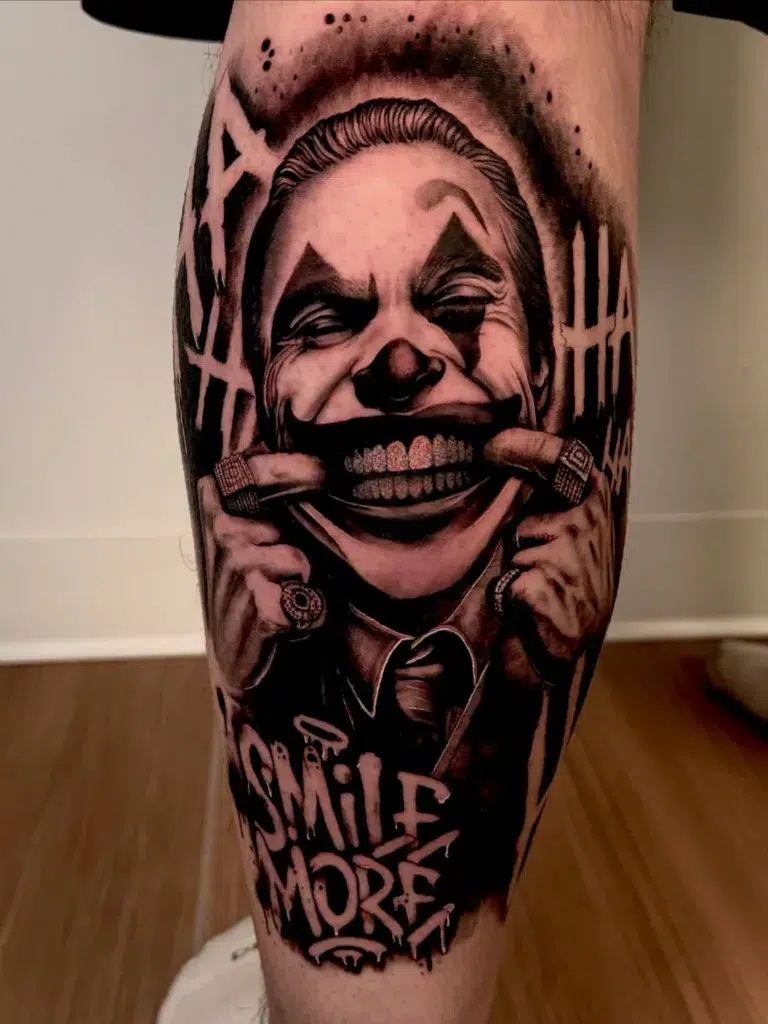
Fully healed black and grey realism tattoo by award-winning OC & Las Vegas tattoo artist—and founder of Skin Design Tattoos—Robert Pho
The Four Tattoo Healing Stages
Stage One: The Open Wound Phase (Days 1–3)
Immediately after the session ends, the tattooed skin is an open wound.
This isn’t a metaphor. The epidermis has been repeatedly punctured. The area is raw, inflamed, and actively producing a response.
What you’ll see:
- Redness surrounding the tattoo and extending slightly beyond it
- Swelling, particularly pronounced in the first 24 hours
- Warmth or heat radiating from the area
- Weeping—a clear or slightly colored fluid (plasma) seeping from the skin, sometimes mixed with traces of ink
- The tattoo appearing darker, more saturated, and more vivid than it will look healed
What’s normal at this stage: All of the above. The redness, swelling, warmth, and weeping are direct immune responses to the skin injury. They are expected and should begin subsiding within 24 to 48 hours.
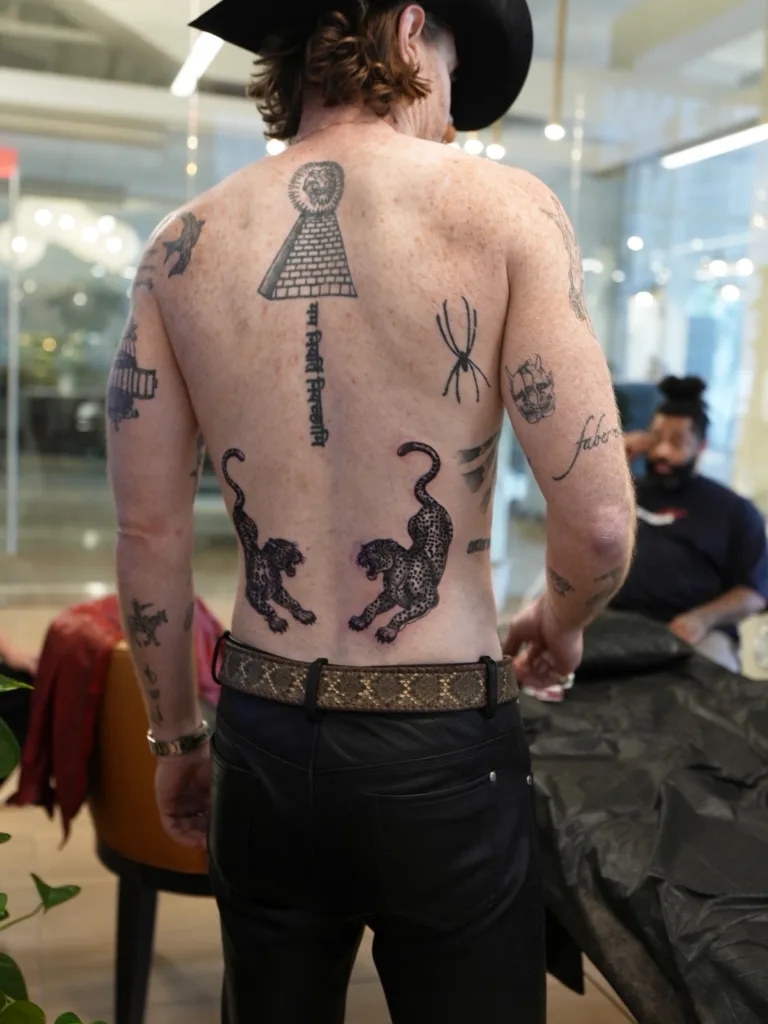
Fresh, full-back piece done by Robert Pho—text us at 702-297-6079 to make your vision a reality
What’s not normal at this stage:
- Redness that is spreading significantly beyond the tattoo’s borders and worsening rather than improving after 48 hours
- Swelling that is severe and not subsiding
- Fever accompanying the local symptoms
- Pus (thick, opaque, yellow or green discharge)—plasma is clear or lightly colored; pus is not
What the tattoo looks like right now vs. what it will look like: The tattoo at this stage appears at its most saturated and vivid. This is not the final result. The colors and contrast will shift significantly as healing progresses.
Care priority at this stage: Follow your artist’s instructions for the initial wrap. When it’s time to remove the covering, wash gently with fragrance-free soap, pat dry with a clean paper towel, and apply a thin layer of unscented moisturizer. Keep it away from direct sun and don’t submerge it in water.
Stage Two: The Itch and Peel Phase (Days 4–14)
This is the stage that triggers the most concern—and the stage where most aftercare mistakes happen.
The outer skin that was damaged during the session is now dying and beginning to shed. New skin is forming underneath. The tattoo will look dramatically different during this phase than it did immediately after the session—and dramatically different from what it will look like once healed.
What you’ll see:
- Peeling and flaking skin, similar in appearance to a sunburn peeling
- The tattoo appearing dull, cloudy, or faded beneath the flaking skin
- A whitish or milky overlay on parts of the tattoo as the healing layer of skin sits over the ink
- Itching—sometimes significant itching—as the new skin forms and nerve endings react
- The overall appearance of the tattoo looking “off,” patchy, or worse than it did fresh
What’s normal at this stage: All of the above—completely. The cloudiness, the patchiness, the dullness, the dramatic visual difference from the fresh tattoo—all of it is the healing layer of skin sitting on top of the ink. It has not damaged the tattoo. It’s a temporary veil that will shed.
The itching is also entirely normal and is one of the most reliable signs that the skin is actively healing. It’s annoying. It does not indicate a problem.
What’s not normal at this stage:
- Peeling that is accompanied by significant pain, severe redness, or heat (as opposed to the mild tenderness that’s normal early in healing)
- Thick scabbing—healthy healing skin forms thin flakes, not thick crusts. Thick scabs indicate that the skin was overworked during the session, that aftercare has been poor, or that infection may be developing
- Any sign of infection: spreading redness, warmth that’s increasing rather than decreasing, pus, fever, or red streaking away from the tattoo
The most important rule of this stage: Do not pick, peel, or scratch.
This is where most tattoo damage happens. The flaking skin during this phase is still attached to ink below it. Pulling it off prematurely pulls ink with it, leaving light spots, gaps, and uneven color in the finished tattoo. The flakes will fall off on their own timeline. Let them.
Scratching tears the healing surface and disrupts ink retention. If the itch is unbearable, pat the area gently rather than scratching. A thin application of unscented lotion often helps.
Care priority at this stage: Continue the washing and moisturizing routine. Resist the urge to interfere with the peeling process. Keep it out of direct sunlight. Don’t let clothing rub directly on the tattoo if you can avoid it.
Stage Three: The Cloudy or Dull Phase (Weeks 2–4)
The visible peeling has largely resolved. The outer skin has shed. The tattoo looks—to most clients—better than it did at week one but still not quite right.
This stage is characterized by a persistent cloudiness or dullness over the tattooed area. The colors may appear muted, the contrast softer than expected, and certain areas of fine detail may seem slightly blurred or obscured.
What you’ll see:
- The tattoo looking less vibrant than it did fresh—this is normal and expected
- A slight sheen or opacity over the skin that wasn’t there before healing began
- Possible dry patches or areas of mild tightness as the deeper skin layers continue normalizing
- The tattoo beginning to clarify and sharpen compared to the week-two appearance, but not yet at its final look
What’s happening: The surface skin has healed, but the deeper layers are still settling. The cloudiness is a thin layer of new skin that formed over the ink during healing—it’s fully attached, fully healed, but not yet fully transparent. As the skin continues to normalize over the following weeks, this layer becomes less visible and the tattoo below it clarifies.
What’s normal at this stage: The dullness, the cloudiness, the muted color—all normal. The tattoo will continue to clarify. What you’re seeing at week three is not the finished result.
What’s not normal at this stage:
- Ongoing significant redness or warmth beyond mild residual sensitivity
- Areas that appear raised or have texture that feels different from the surrounding skin (this can indicate scarring from aggressive scratching or picking in the earlier stage)
- Symptoms of infection that weren’t present earlier—new infections developing this late are uncommon but not impossible if the aftercare was poor
Care priority at this stage: The intensive care routine can begin to taper slightly as the surface heals, but continued moisturizing and sun protection remain important. The skin is healing but still vulnerable to UV damage that affects long-term ink quality.
Stage Four: Full Deep Healing (Months 1–3)
The surface has healed. The tattoo looks substantially like its final self. But the skin beneath the surface is still completing its repair process.
This stage is largely invisible—there’s nothing dramatic happening that you’ll notice day to day. But it matters for understanding when to evaluate the tattoo and when to consider any follow-up.
What you’ll see:
- The tattoo continuing to clarify, with colors becoming truer and contrast becoming more defined
- Any remaining cloudiness from stage three resolving as the deeper skin normalizes
- The tattoo settling into its actual healed appearance—softer than fresh, but clear, defined, and properly readable
What’s happening: The dermis is completing its repair. Collagen is rebuilding in the deeper skin layers. The ink, which was disrupted during the healing process, is fully settling into its permanent position.
Fresh tattoo (left) vs. healed tattoo (right) by renowned tattoo artist Robert Pho
When to evaluate the healed result: At the six-to-eight-week mark for most tattoos. At three months for larger or more complex pieces. Not before. The tattoo you evaluate at week three is not the tattoo you have. The tattoo at week eight or month three is.
What’s not normal at this stage: Persistent raised texture, unusual scarring, or areas that remain significantly lighter than intended. These warrant a conversation with your artist about whether a touch up is appropriate—after the full healing window has closed.
Healed and fresh black and grey leg sleeve by Christina Choi
Quick Reference: What's Normal vs. What's Not
Symptoms That Are Normal
Symptom | Stage | Notes |
|---|---|---|
Redness and swelling | Days 1–3 | Should begin subsiding by day 3 |
Plasma weeping | Days 1–3 | Clear or lightly colored; not pus |
Peeling and flaking | Days 4–14 | Let it shed naturally; don’t pick |
Itching | Days 4–21 | Pat, don’t scratch |
Dullness and cloudiness | Weeks 2–4 | Temporary; tattoo will clarify |
Color appearing muted | Weeks 2–6 | Final color visible at 6–8 weeks |
Tightness or mild dryness | Weeks 2–4 | Moisturize regularly |
Symptoms That Warrant Attention
Symptom | What It May Indicate |
|---|---|
Redness spreading beyond the tattoo and worsening after day 3 | Possible infection |
Thick, raised scabbing | Overworked skin, poor aftercare, or early infection |
Pus—thick, opaque, yellow or green discharge | Possible infection |
Fever accompanying local symptoms | Possible systemic infection |
Red streaking extending from the tattoo | Possible infection—seek medical attention promptly |
Significant raised texture remaining after full healing | Possible scarring |
Severe allergic reaction—hives, significant swelling, difficulty breathing | Seek medical attention immediately |
The Most Common Reasons Tattoos Don't Heal Well
Most genuinely poor healing outcomes trace back to a small number of causes.
Picking and Peeling
The single most common cause of ink fallout and uneven healing. Removing peeling skin before it’s ready removes ink with it. The result is light spots, gaps, and inconsistent color that often requires a touch up to correct—and sometimes can’t be fully corrected.
Sun Exposure During Healing
UV radiation damages the skin during healing and degrades pigment before it has fully settled. Tattoos that were exposed to significant direct sun during the healing window often show premature fading and color inconsistency in the finished result.
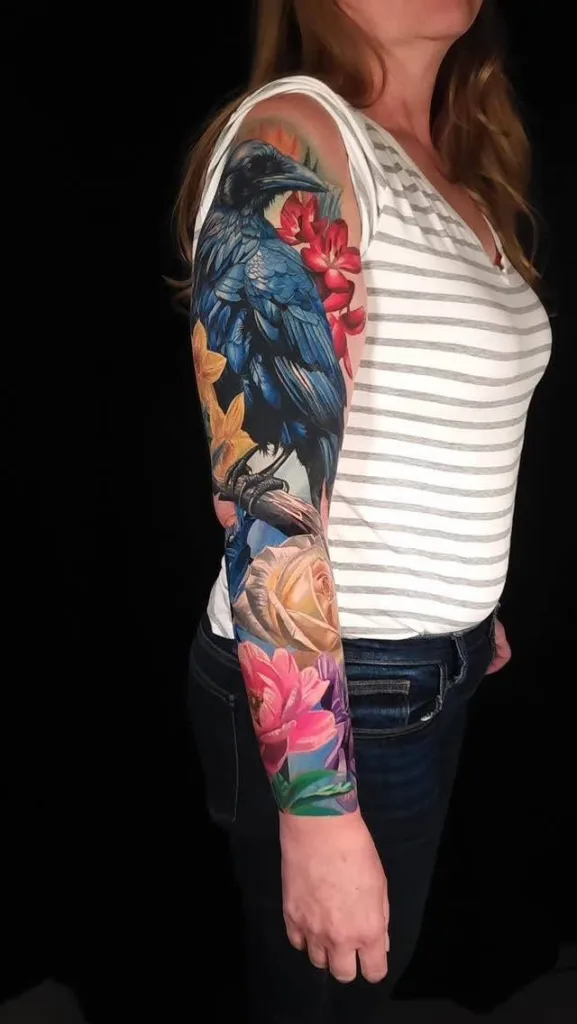
Fully healed full color realism tattoo (done in 2024) by Skin Design Tattoos Las Vegas tattoo artist Brad Charles—text ‘BRAD’ to (702) 297-6079 to book. Proof that tattoos built well & protected from the sun will hold up over time.
Submerging Before Fully Healed
Pools, oceans, and baths introduce bacteria, chemicals, and prolonged moisture exposure to a wound that hasn’t closed. This disrupts ink retention and significantly increases infection risk.
Inconsistent or Improper Aftercare
Skipping washing and moisturizing days, using scented products that irritate healing skin, applying too much product and suffocating the skin, or rewrapping the tattoo after the initial covering is removed—all of these create conditions for poor healing.
Healed payasa portrait leg sleeve in black and grey ink by Honolulu tattoo artist Sandra
Friction From Clothing
Tight clothing rubbing against a healing tattoo causes repeated irritation that disrupts the forming skin layer and can lift ink. Loose, breathable fabric—or no covering where practical—is the better choice during healing.
Fully healed cherub tattoo by Skin Design Tattoos Honolulu tattoo artist—text ‘SANDRA’ to (702) 297-6079 to start your next piece
Real Signs of Tattoo Infection to Watch For
Tattoo infections are not as common as the internet would suggest—but they do happen, and knowing what to look for matters.
Early infection signs (days 1–7):
- Redness that is expanding rather than contracting and is spreading significantly beyond the tattoo’s border
- Increasing warmth and swelling rather than decreasing
- Pus—thick, opaque discharge, typically yellow or green. This is distinct from plasma, which is clear or lightly straw-colored and entirely normal
- Pain that is increasing rather than subsiding after the first 48 hours
More serious signs (seek medical attention):
- Fever or chills accompanying the local symptoms
- Red streaking extending from the tattoo toward the body (this indicates the infection may be spreading through the lymphatic system)
- Significant systemic symptoms—nausea, fatigue, unusual warmth throughout the body
Allergic reactions:
- Some clients experience allergic reactions to specific ink pigments—more common with certain red, yellow, and green pigments
- Signs include persistent raised texture, itching, or redness specifically over certain colored areas of the tattoo
- Mild reactions can often be managed with antihistamines; significant reactions warrant medical consultation
When in doubt: Contact your studio first. A reputable artist wants to know if something looks off. If there are signs of genuine infection, see a doctor promptly. Infections caught early are straightforward to treat; infections that progress are not.
How Long Does a Tattoo Take to Fully Heal?
There are two distinct healing timelines to understand.
Surface healing: The outer skin—the part you can see and touch—is typically healed within two to four weeks. After this point, the tattoo is no longer an open wound, and restrictions like avoiding swimming and direct sun exposure become less critical (though sun protection remains important permanently).
Deep healing: The dermis—where the ink lives—continues healing for one to three months. During this period the tattoo continues to clarify and settle. This is why the healed result isn’t accurately evaluable until six to eight weeks post-session at minimum, and why touch up needs should be assessed at that point rather than mid-heal.
Black and grey realism tattoo sleeve after tattoo touch up by New York tattoo artist Mando—text (702) 298-6079 to book
Factors that affect healing timeline:
- Size and complexity: Larger pieces with more surface area take longer to fully heal
- Placement: High-friction areas (hands, feet, elbows) heal more slowly than protected placements
- Skin type and age: Skin regenerates more slowly as we age; healing timelines vary by individual
- Overall health: Immune function, hydration, sleep, and nutrition all affect how quickly and cleanly skin heals
- Aftercare quality: Consistent, appropriate aftercare shortens healing time and improves outcomes
Frequently Asked Questions
Why does my tattoo look faded after healing?
All tattoos look somewhat different once healed compared to fresh—typically less saturated and with softer contrast. This is because the ink has settled beneath a layer of new skin rather than sitting just below the surface. The final healed result is visible at six to eight weeks. If the tattoo looks significantly faded or patchy after that window, a touch up conversation with your artist is appropriate.
Is it normal for my tattoo to peel?
Yes—completely normal and expected. Peeling typically begins around days four through seven and continues through roughly day fourteen. The flaking skin is the outer layer that was damaged during the session shedding as new skin forms underneath. Do not pick or peel it—let it shed naturally. Premature removal takes ink with it.
Why is my tattoo so itchy?
Itching is one of the most reliable signs that the skin is actively healing—it’s a normal neurological response to skin regeneration. It typically peaks during the peeling phase and subsides as the surface skin heals. Pat the area rather than scratching. A thin application of unscented lotion often helps manage the sensation.
My tattoo looks cloudy or dull. Is something wrong?
Almost certainly not. The cloudy or milky appearance during healing is a thin layer of new skin sitting over the ink. It’s fully normal and temporary. As the deeper skin layers continue to normalize over weeks two through six, the cloudiness resolves and the tattoo clarifies. Evaluate the result at six to eight weeks—not during this stage.
When can I tell if my tattoo healed correctly?
At six to eight weeks for most pieces. At three months for larger or more complex tattoos. Evaluating before this window closes means judging an unfinished result. What looks like a problem at week two or three often looks completely resolved by week eight.
What does an infected tattoo look like?
The key indicators of genuine infection are: redness that is spreading beyond the tattoo and worsening after the first 48 hours, thick opaque discharge (pus) rather than clear plasma, increasing pain rather than decreasing, fever or chills, and in more serious cases, red streaking extending from the tattoo. These are distinct from the normal redness, tenderness, and clear plasma weeping of the first few days. When in doubt, contact your studio or a medical professional.
Can I speed up the tattoo healing process?
You can support healing but not meaningfully accelerate it. Staying well-hydrated, getting adequate sleep, eating well, keeping the tattoo clean and moisturized, and avoiding sun exposure and friction all create the best conditions for healing to proceed efficiently. What you can definitely do is slow healing down—through picking, sun exposure, submerging, or poor aftercare.
Is it normal for my tattoo to look worse before it looks better?
Yes—this is one of the most common and least expected parts of the healing process. The tattoo typically looks its best immediately after the session (fresh and saturated) and then goes through a period of looking worse as the skin heals over it. The cloud, the dullness, the patchiness of mid-heal are temporary. The result at six to eight weeks is the actual tattoo.
Still Not Sure What You're Seeing?
If something about your tattoo’s healing looks off—or if you just want reassurance that what you’re seeing is normal—reach out to your studio.
At Skin Design Tattoos, the relationship with a client doesn’t end when they walk out the door. Questions about healing are part of what we’re here for. A quick conversation is always better than a week of uncertainty.
Skin Design Tattoos has tattoo shops in:
- Honolulu, Hawaii
- Brooklyn, New York
- Orange County, California
- Nashville, Tennessee
- SoHo, New York
- Las Vegas, Nevada
Text 702-297-6079 to book your free consultation.
Or start online at skindesigntattoos.com/tattoo-consultation/
Financing available through Affirm and Klarna—payment plans up to 24 months at skindesigntattoos.com/financing/
Healed black and grey tattoo design by Skin Design Tattoos Hawaii artist Lynn Hoang—text ‘LYNN’ to (702) 297-6079 to book