

Know the Signs Your Tattoo Needs Touch Ups to Look Fresh Again - Preparation Guide
Key Takeaways
- A tattoo touch up corrects fading, patchiness, blown-out lines, or uneven healing after a tattoo has fully settled
- Most tattoos should be evaluated for touch up needs at six to eight weeks post-session—not during healing
- Some touch ups are the result of poor aftercare; others are a normal part of how certain styles and placements heal
- Fine line work, hand tattoos, and foot tattoos are the placements most likely to need touch ups as part of regular maintenance
- Many reputable studios offer complimentary touch ups within a set window after the original session—always ask before booking elsewhere
- A tattoo touch up is not the same as a cover-up or rework—it restores the original piece rather than replacing it
- Preparing properly before a touch up session is just as important as preparing for the original tattoo
- Skin Design Tattoos approaches touch ups with the same care as original sessions—because the healed result is what matters
What Is a Tattoo Touch Up?
A tattoo touch up is a follow-up session that restores or refines a tattoo after it has fully healed.
It’s not a redo. It’s not a cover-up. It’s a targeted correction—adding ink back where it didn’t retain properly, smoothing shading that healed unevenly, sharpening lines that softened during the healing process, or restoring color that faded more than expected.
Touch ups are a normal part of tattooing. They’re not a sign that something went catastrophically wrong. Some placements, skin types, and styles simply require them as part of the process—and knowing that going in sets more realistic expectations about what a finished tattoo actually looks like.
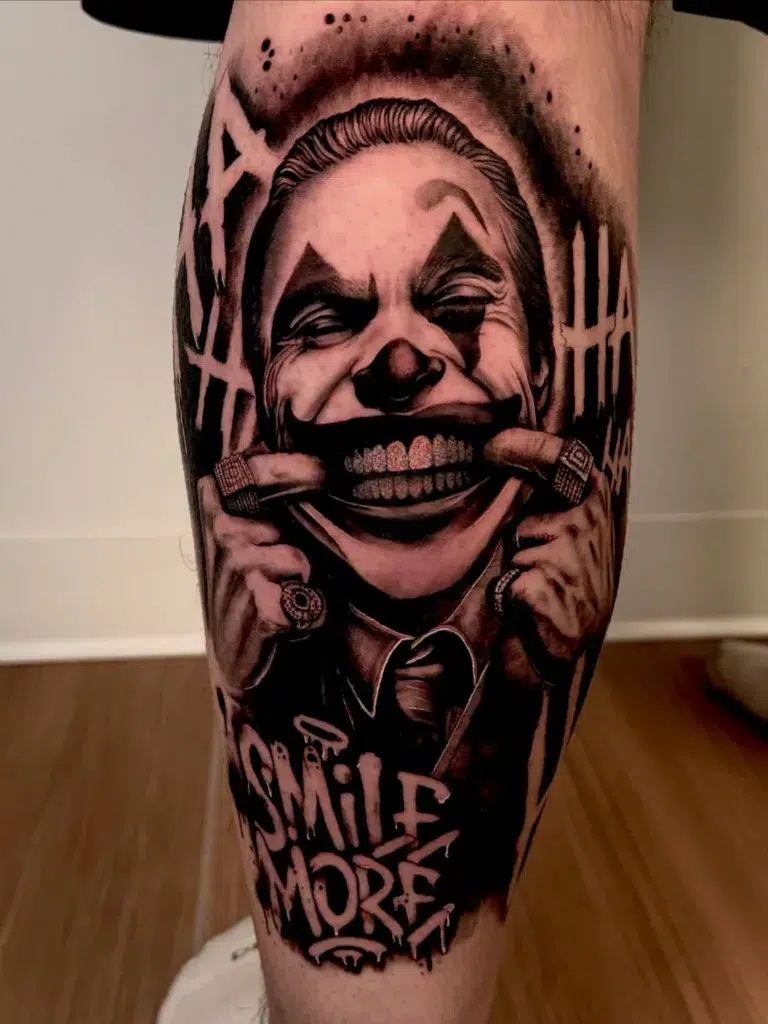
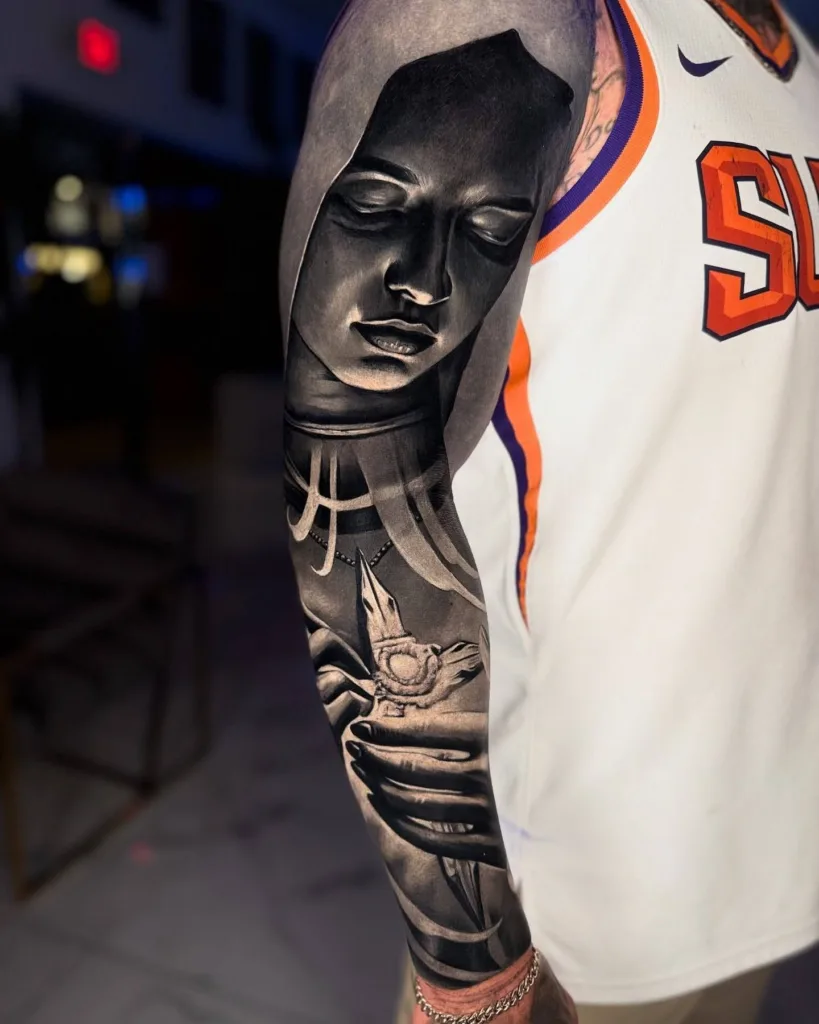
Black and grey realism tattoo sleeve after tattoo touch up by New York tattoo artist Mando—text (702) 298-6079 to book
What matters is knowing when a touch up is genuinely needed, how long to wait before getting one, and how to make sure the session produces the result you’re looking for.
This guide answers all of it.
The Difference Between Healing and Healed
Before assessing whether you need a tattoo touch up, you need to understand the difference between a tattoo that’s healing and one that’s healed.
A tattoo in the healing phase—the first two to four weeks after the session—looks nothing like the finished result. During this window, the skin is peeling, the ink appears dull or cloudy, and areas that will eventually look clean and even can look patchy and inconsistent.
This is normal. It is not a sign that something went wrong.
The outer layer of skin regenerating over the tattoo creates a temporary veil over the ink. As that layer sheds and the skin fully normalizes, the tattoo clarifies. What looks like a problem at week two is often completely resolved by week eight.
The rule: evaluate a tattoo for touch up needs no earlier than six to eight weeks after the session. For larger pieces, three months is a more reliable window. The healed result—not the healing result—is what you’re working with.
Clients who seek touch ups before their tattoo is fully healed almost always receive the same advice from a reputable artist: wait and see. A tattoo that looks rough at three weeks and gets booked for a touch up at four weeks is often a tattoo that would have looked fine at eight.
Signs You Actually Need a Tattoo Touch Up
Once a tattoo is fully healed, these are the signs that a touch up is genuinely warranted.
Ink Fallout and Patchiness
Some areas of the tattoo didn’t retain ink as well as others during healing. This shows up as light spots, uneven saturation, or areas where the ink appears significantly lighter than the surrounding work.
Minor patchiness can be part of normal variation in how skin heals—not every square centimeter of skin takes ink identically. More significant fallout, where visible areas of design are missing ink, typically warrants a touch up session.
Faded or Blown-Out Lines
Lines that were crisp at the end of the session and have softened or spread more than expected during healing may benefit from being re-traced. This is more common in certain skin types and placements—particularly high-friction areas and placements with thinner skin.
Blown-out lines—where ink has migrated slightly outside the intended boundary—are a different issue and not always correctable through a standard touch up. This is a conversation to have honestly with your artist.
Uneven Shading
Shading that healed with inconsistent density—darker in some areas, lighter in others—can be smoothed and balanced in a touch up session. This is one of the most common touch up corrections and typically straightforward to address.
Color Fading
Color tattoos, particularly those using lighter pigments—yellows, whites, light pinks—can fade significantly during healing. A touch up session restores saturation and corrects color that healed thinner than intended.
Placement-Specific Wear
Certain placements simply wear faster than others due to friction, sun exposure, and skin regeneration rates. Hands, fingers, feet, elbows, and inner wrists are among the placements most likely to require periodic touch ups as ongoing maintenance rather than one-time corrections.
Signs You Don't Need a Touch Up (Yet)
Not every concern about a healed tattoo warrants a touch up session. These are cases where the answer is usually to wait, adjust expectations, or address the underlying issue rather than add ink.
The tattoo hasn’t finished healing. If it’s been less than six to eight weeks since your session, you’re evaluating an unfinished result. Wait.
The tattoo looks slightly different from the fresh photo. Fresh tattoos and healed tattoos look different—always. The ink settles, colors shift slightly, contrast softens. This is expected and not a defect.
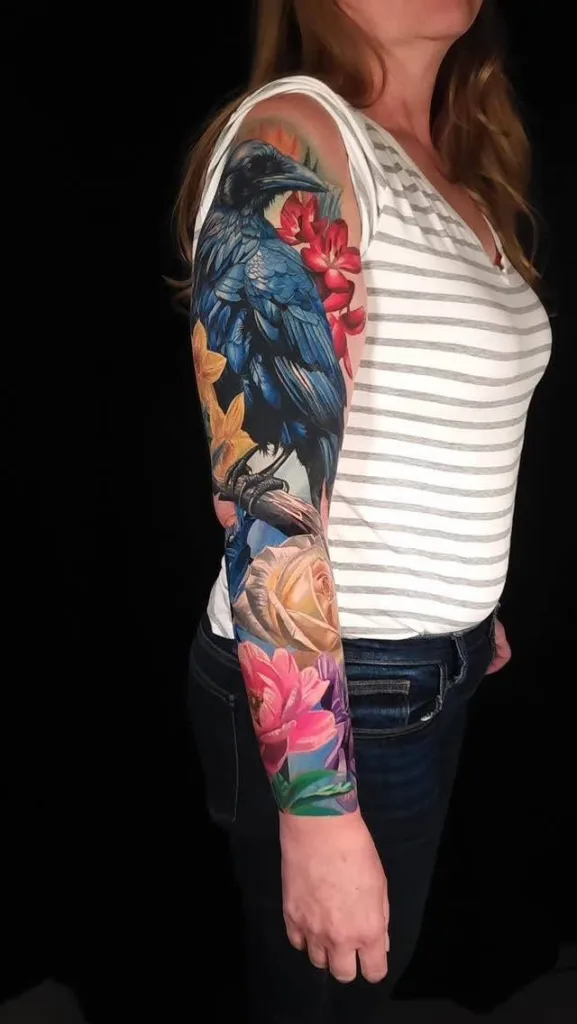
Healed payasa portrait leg sleeve in black and grey ink by Honolulu tattoo artist Sandra
The concern is a design element, not a healing issue. If what you’re unhappy with is a compositional choice—placement, sizing, subject matter—that’s not a touch up conversation. That’s either a rework or a cover-up, which are different processes with different scopes.
The tattoo looks fine in person but not in photos. Tattoo photography is notoriously inconsistent. Lighting, distance, skin texture, and phone cameras all affect how healed tattoos photograph. If the tattoo looks strong in person, the photography isn’t the tattoo’s problem.
Common Reasons Tattoos Need Touch Ups
Touch up needs fall into two categories: those related to aftercare and those inherent to the style or placement.
Aftercare-Related Touch Up Needs
These are preventable with proper healing protocol.
Picking and peeling during healing. The most common cause of ink fallout. Peeling skin that’s removed prematurely takes ink with it, leaving light spots and gaps in the finished tattoo. This is entirely avoidable.
Sun exposure during healing. UV radiation degrades pigment while the skin is still repairing. A tattoo that was exposed to significant sun during healing will often show uneven color loss that requires correction.
Submerging in water too soon. Pools, oceans, and baths introduce factors that disrupt ink retention during healing. Tattoos that were submerged before fully healed frequently show more patchiness than those that weren’t.
Inadequate moisturizing. Skin that dried out and cracked during healing often heals unevenly, with areas of ink fallout corresponding to where the skin was most stressed.
Style and Placement-Related Touch Up Needs
These are inherent to the work and not preventable through aftercare alone.
Fine line tattoos. The delicacy of fine line work makes it more susceptible to healing variation than bold styles. Even with perfect aftercare, fine line tattoos occasionally need a pass to restore line integrity after healing.
Hand and finger tattoos. The skin on hands regenerates quickly, is constantly in contact with surfaces, and is washed frequently. Ink retention is genuinely lower on hands than almost any other placement. Touch ups are a regular part of maintaining hand tattoo quality—not a failure of the original session.
Foot and ankle tattoos. Similar to hands—high friction, frequent washing, constant movement. Foot tattoos, particularly on the toes, frequently require touch up work within the first year.
White ink tattoos. White ink is the least stable pigment in tattooing. It fades, yellows, and disappears faster than any other color. Touch ups are a near-certainty for white ink work.
Scar tissue. Tattooing over scar tissue is unpredictable—ink retention varies significantly and touch ups are common.
How Long to Wait Before a Tattoo Touch Up
The minimum waiting period before a touch up session is six to eight weeks after the original session.
This is not a conservative estimate. It’s the realistic window for the skin to complete the surface healing process and for the tattoo to show its true healed result.
For larger pieces—particularly those that covered significant surface area or involved intensive shading—three months is a better benchmark. Large-scale work takes longer for the skin to fully normalize beneath the surface.
Attempting a touch up before this window closes creates problems: ink applied to skin that hasn’t fully healed doesn’t sit the same way, healing from both the original session and the touch up overlap and complicate each other, and the artist is working on a canvas that isn’t showing its final state.
Wait. Then evaluate.
Complimentary Touch Ups: What to Know
Many reputable tattoo studios offer complimentary touch ups within a defined window after the original session—typically within three to six months.
This policy reflects a commitment to the healed result, not just the fresh one. It exists because even with technically excellent execution, healing variation is a reality of tattooing, and a good studio stands behind the final outcome.
Before booking a touch up elsewhere—or paying for one—always check with the original studio and artist first.
What complimentary touch ups typically cover:
- Ink fallout and patchiness resulting from normal healing variation
- Minor line softening or shading inconsistency
- Color areas that healed thinner than intended
What they typically don’t cover:
- Damage resulting from poor aftercare—picking, sun exposure, submerging before healed
- Tattoos that have had months or years of wear and general fading
- Design changes or additions beyond the original scope
If the original artist is unavailable or the studio has closed, bring photos of the fresh tattoo alongside photos of the healed tattoo to any consultation. Context matters—an artist assessing a touch up needs to understand what the piece was designed to look like.
What a Tattoo Touch Up Session Actually Involves
A touch up session is structurally similar to a standard tattoo session—same equipment, same process, smaller scope.
Assessment. The artist reviews the healed tattoo, identifies the areas that need work, and discusses the approach. For straightforward touch ups—ink fallout, minor shading inconsistency—this is a quick conversation. For more complex corrections, the assessment may take longer.
No stencil needed in most cases. A touch up works from the existing tattoo rather than a new stencil. The artist adds ink directly to the areas that need it, working within the established design.
Shorter sessions. Most touch ups are significantly shorter than the original session—often one to two hours for a standard correction, sometimes less for a small area.
Healed black and grey tattoo design by Skin Design Tattoos Hawaii artist Lynn Hoang—text ‘LYNN’ to (702) 297-6079 to book
Same healing process. A touch up session heals exactly like the original tattoo. The same aftercare applies. The same timeline for evaluation applies.
Expect some soreness. Tattooed skin that has healed is more sensitive than fresh skin in some cases. The touch up session may feel more intense than the original in the areas being worked on—this is normal and typically brief.
How to Prepare for a Touch Up Session
Preparation for a touch up session is identical to preparation for any tattoo appointment.
Eat a full meal two to three hours before. Low blood sugar makes any tattoo session harder to sit through. Don’t skip this.
Stay hydrated. Well-hydrated skin takes ink more cleanly and consistently.
Avoid alcohol for at least 24 hours before. Alcohol thins the blood, increases sensitivity, and compromises ink saturation.
Moisturize the area in the days leading up. Healthy, hydrated skin is easier to work with. Avoid lotion the day of—come in with clean, dry skin.
Best of show full color leg sleeve at the 2025 Hawaii Tattoo Expo by Skin Design Tattoos’ Honolulu’s award-winning artists, Christina Choi & Lynn Hoang
Bring reference photos. Bring both the fresh tattoo photo and photos of the healed result showing the areas of concern. This gives the artist the clearest picture of what changed during healing and what the original intent was.
Be specific about what you want addressed. Vague feedback—”it just doesn’t look right”—is harder to work with than specific observations. Identify the exact areas and describe what you’re seeing: lighter than surrounding areas, shading that looks patchy, a line that softened more than expected.
Touch Up vs. Rework vs. Cover-Up: Understanding the Difference
These three terms are often used interchangeably and shouldn’t be.
Touch up: Restores the existing tattoo to its intended healed state. Adds ink where it didn’t retain, smooths shading, refreshes faded color. The design doesn’t change—the execution is refined.
Rework: Modifies or enhances an existing tattoo. Adding detail, changing elements, extending the composition, or updating work that has aged significantly. The design changes. This is a more involved process than a touch up and is priced accordingly.
Before and after tattoo cover-up by Lynn Hoang—check out her portfolio and text ‘LYNN’ to 702-297-6079 for a consultation
Cover-up: Replaces an existing tattoo with a new design that conceals the original. The most significant and most constrained of the three—what’s achievable in a cover-up is limited by the existing tattoo’s size, darkness, and placement. Cover-up work requires an artist with specific expertise in working within those constraints.
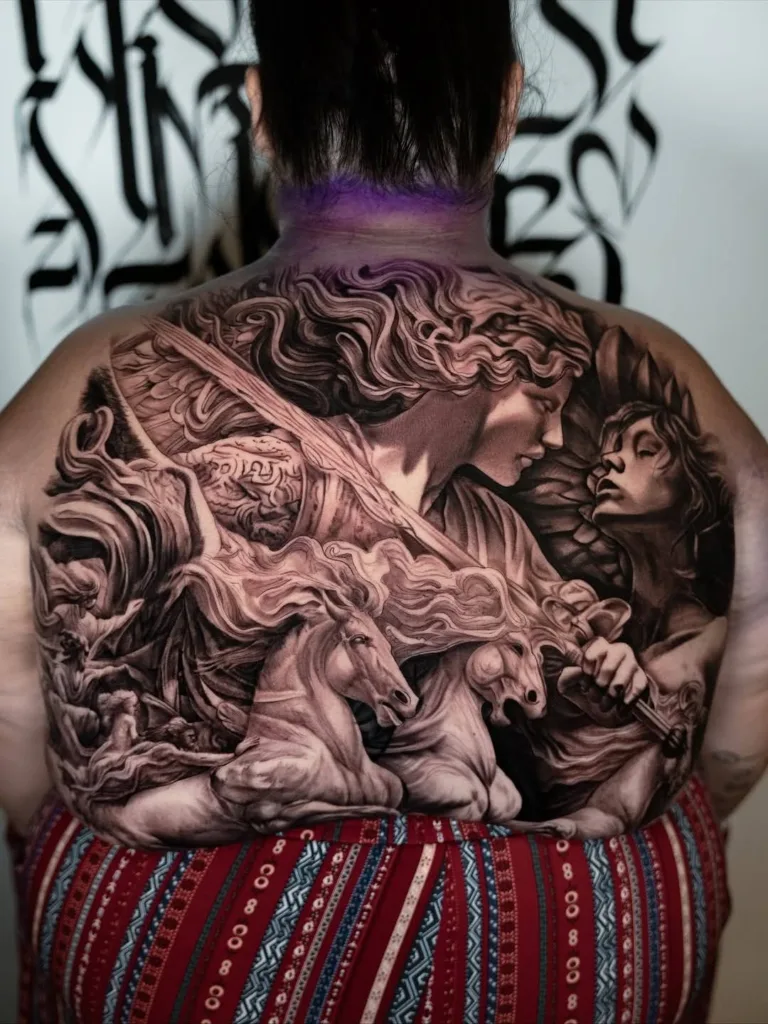
Honolulu tattoo artists Christina Choi & Robert Pho 1st Place in Black & Grey at the Golden State Tattoo Expo—text ‘HONOLULU’ to (702) 297-6079 to book your free consult
Long-Term Tattoo Maintenance: Beyond the Touch Up
A touch up addresses healing-specific issues. Long-term tattoo maintenance is a different and ongoing conversation.
All tattoos fade over time. The rate and nature of fading depends on:
- Sun exposure. The single biggest factor in long-term tattoo quality. UV radiation breaks down pigment over time regardless of how well the tattoo was applied. Consistent SPF 30 or higher application on tattooed skin that sees sun is the most impactful long-term maintenance habit you can develop.
- Skin hydration. Well-moisturized skin maintains tattoo definition better over time than dry skin. This isn’t dramatic year to year, but over a decade it accumulates.
- Placement. High-friction, high-movement placements fade faster and may require periodic maintenance sessions beyond a standard one-time touch up.
- Style. Bold traditional work with heavy line weight ages more slowly than fine line work. Color fades faster than black and grey. These aren’t reasons to avoid certain styles—they’re factors to understand going in.
A tattoo that was executed well and maintained properly will still look strong decades after the original session. A tattoo that was executed well and neglected won’t.
FAQ
How long after getting a tattoo can you get a touch up?
The minimum waiting period is six to eight weeks after the original session. This allows the surface skin to fully heal and the tattoo to show its true healed result. For larger pieces, three months is a more reliable benchmark. Attempting a touch up before this window closes risks compounding healing issues rather than resolving them.
Are tattoo touch ups free?
Many reputable studios offer complimentary touch ups within a set window after the original session—typically three to six months. This covers healing-related issues like ink fallout and minor shading inconsistency. Touch up needs caused by poor aftercare, extended time since the original session, or general wear are typically priced as separate sessions. Always check with the original studio first before booking or paying elsewhere.
Do tattoo touch ups hurt?
Yes, though the session is typically shorter than the original. Healed tattooed skin can be more sensitive than fresh skin in some placements—clients sometimes find touch up sessions more intense in the worked areas. The same preparation applies: eat beforehand, stay hydrated, and avoid alcohol.
How long does a tattoo touch up take?
Most touch up sessions run one to two hours for standard corrections—ink fallout, shading inconsistency, minor line softening. Smaller areas may be significantly shorter. More extensive corrections, or touch ups on large pieces with significant healing variation, may run longer. Your artist will give you a realistic time estimate at the assessment.
Why is my tattoo patchy after healing?
Patchiness after healing can result from several factors: skin that took ink unevenly due to individual physiology, aftercare issues like picking or sun exposure during healing, or placement-related variation in ink retention. Evaluate the tattoo at six to eight weeks—many patches that are visible at two to three weeks resolve on their own as healing completes. Persistent patchiness after full healing is a genuine touch up candidate.
Can any artist do a touch up on someone else's work?
Technically yes, though there are considerations. A different artist working on another artist’s piece needs to understand the original intent and style to correct it effectively. Bring photos of the fresh tattoo to any touch up consultation so the artist has a reference point. For corrections to highly detailed or stylistically specific work, finding an artist who specializes in that style is advisable.
How many times can a tattoo be touched up?
There’s no fixed limit, but skin has a saturation point—repeatedly adding ink to the same area over time can cause the skin to scar or the tattoo to look muddy. Touch ups should be targeted and purposeful rather than reflexive. If a tattoo is requiring constant touch up work, the underlying issue—placement, skin type, aftercare—is worth addressing directly.
When does a touch up become a rework?
When the corrections go beyond restoring the original design and begin modifying or enhancing it. Adding detail, extending the composition, or updating work that has aged significantly are rework scenarios. If you’re unsure which category your situation falls into, a consultation with your artist will clarify the scope and what’s achievable.
Ready to Book Your Touch Up?
If your tattoo has fully healed and you’re seeing areas that need attention—or if you just want an honest assessment of whether a touch up is warranted—the right next step is a conversation.
At Skin Design Tattoos, touch up consultations are the same as any other consultation: honest, specific, and focused on the healed result. We’ll assess what’s there, tell you what’s addressable, and give you a realistic picture of what a touch up session will and won’t achieve.
Ready to talk ideas and build a custom piece at a studio near you? Skin Design Tattoos has tattoo shops in:
Text 702-297-6079 to book your consultation.
Or start online at skindesigntattoos.com/tattoo-consultation/