

Tattoo Ideas for Men: Styles, Placements, and How to Choose What Lasts
Key Takeaways
- Tattoo ideas for men range from bold traditional work to hyper-detailed black and grey realism—style fit matters more than trends
- The best tattoo ideas are built around meaning, longevity, and the right artist—not what’s popular on social media right now
- Placement affects how a tattoo ages, how much it hurts, and how it interacts with future work
- Large-scale compositions—sleeves, chest pieces, back pieces—reward patience and planning more than any other format
- Black and grey realism is one of the most technically demanding styles and one of the most enduring
- Bold traditional and neo-traditional work holds up exceptionally well over time due to strong line weight and solid fills
- Fine line tattoos for men are increasingly popular but require more precise aftercare and sun protection to maintain
- A great tattoo idea is only as good as the artist executing it—style match matters
- Skin Design Tattoos specializes in the styles that hold up: realism, fine line, and large-scale custom compositions
The Problem With Most Tattoo Idea Lists
Search “tattoo ideas for men” and you’ll find thousands of images, roundups, and trend pieces.
Most of them are useless.
Not because the designs are bad—some of them are genuinely strong—but because they present ideas without context. They show you what something looks like fresh, at a specific size, on a specific person, executed by a specific artist. They don’t tell you whether that design will still look sharp in fifteen years.
This guide does all of that.
The goal isn’t to hand you a list of designs to copy. It’s to give you the framework to find an idea that’s actually right for you—one that will hold up, suit your lifestyle, and look as intentional in twenty years as it does the day you get it.
Start With Style, Not Subject Matter
The most common mistake men make when looking for tattoo ideas is starting with subject matter—a skull, a wolf, a portrait of someone they love—without thinking about style first.
Style determines everything: how the tattoo is constructed, how it ages, how it reads from a distance, and which artists are actually qualified to execute it well.
Here are the styles most relevant to the tattoo ideas for men in this guide.
Black and Grey Realism
The gold standard for men who want something that commands attention and ages with intention.
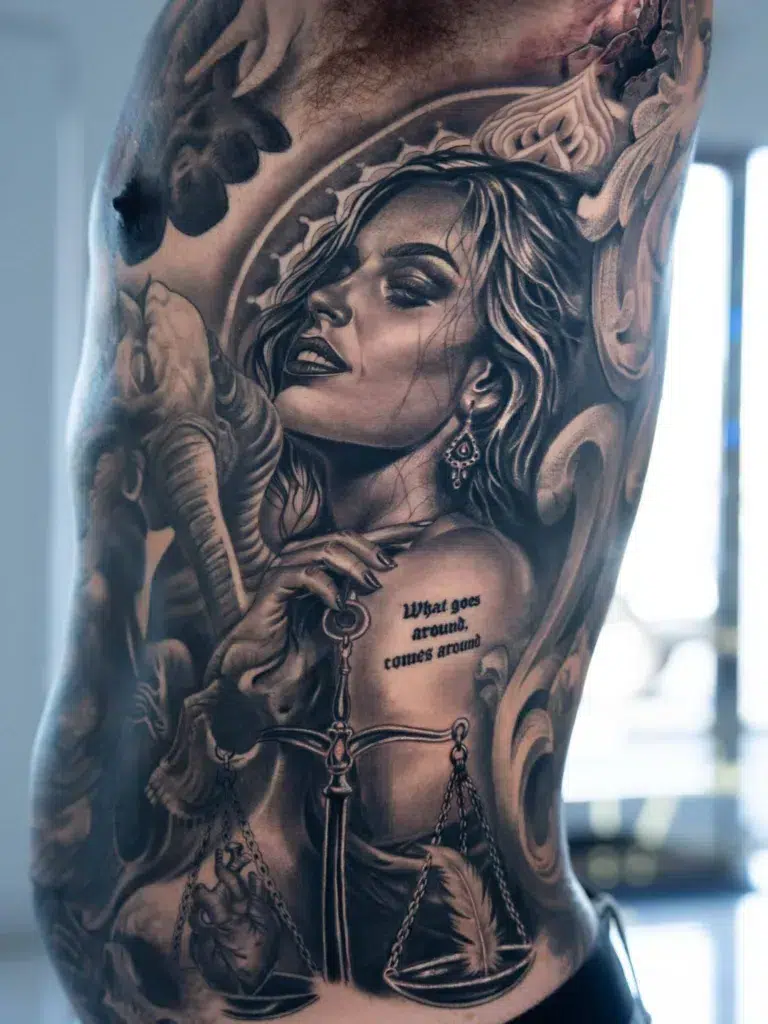
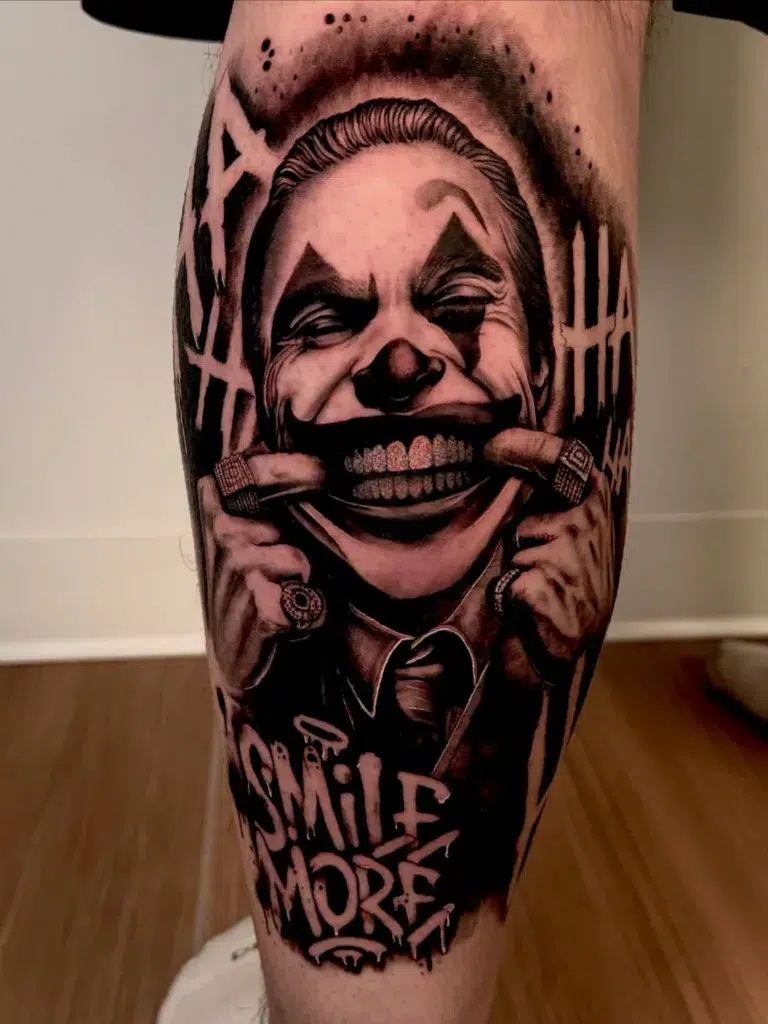
Black and grey realism uses gradients of black ink—no color—to create photographic depth and dimension. Portraits, animals, architecture, nature, abstract compositions—all of it can be rendered in this style with remarkable precision in the hands of the right artist.
Why men choose it: it reads as serious and mature. It ages more predictably than color work. And when it’s done well, it’s genuinely difficult to believe it’s a tattoo.
Black and grey realism tattoo sleeve by New York tattoo artist Mando—text (702) 298-6079 to book
The catch: it’s one of the hardest styles to execute properly. Tonal consistency, smooth gradients, and realistic texture all require years of dedicated practice. This is not a style where you choose based on price.
At Skin Design Tattoos, black and grey realism is a core specialization. Artists like Robert Pho, Christina Choi, and Lynn Hoang have spent decades building the technical precision this style demands.
Traditional and Neo-Traditional
Traditional tattoos—bold outlines, solid color fills, limited shading, iconic imagery—are one of the most time-tested formats in the art form for a reason.
They hold up.
Heavy line weight and solid fills don’t blur and fade the way fine detail does. A well-executed traditional tattoo at twenty years looks remarkably close to how it looked at one year. That longevity is built into the style itself.
Neo-traditional expands on the traditional foundation with more illustrative detail, a wider color palette, and more complex shading—while retaining the strong linework that makes traditional tattoos age so reliably.
Good for: men who want bold, readable work that doesn’t require constant touch-ups to stay sharp.
Healed black and grey tattoo design by Skin Design Tattoos Hawaii artist Lynn Hoang—text ‘LYNN’ to (702) 297-6079 to book
Fine Line
Fine line tattooing—delicate, precise, minimal—has seen a significant rise in popularity among men who prefer understatement over impact.
Single-needle or tight-grouped needle work creates thin, intricate lines that can render everything from geometric patterns to botanical illustrations to detailed portraits with remarkable precision.
The considerations: fine line work is more vulnerable to fading than bold styles. It requires diligent sun protection and a skilled artist who specializes in maintaining line integrity over time. Fine line tattooing done by an artist without deep experience in the style tends to blur and lose definition faster than it should.
Good for: men who want something subtle, precise, and deliberately understated.
Geometric and Dotwork
Geometric tattoos—sacred geometry, mandala-influenced patterns, symmetrical compositions—have become a strong choice for men who want something visually striking without representational imagery.
Dotwork uses stippling rather than solid lines or fills to build shading and texture. It pairs naturally with geometric forms and can create compositions that look almost architectural.
Good for: men who want something that reads as intentional and structured without being figurative.
Japanese Traditional
Irezumi—Japanese traditional tattooing—is one of the most cohesive and compositionally rich tattoo traditions in the world.
Large-scale Japanese work typically incorporates iconic imagery: dragons, koi, tigers, waves, cherry blossoms, phoenixes. The style is defined by bold outlines, rich color, and compositions designed to flow with the body rather than sit flat against it.
Japanese traditional is a natural fit for sleeve and body suit work because the style was developed specifically with large-scale coverage in mind.
Good for: men planning substantial coverage who want a unified compositional language.
Tattoo Ideas for Men by Placement
Style and subject matter only tell part of the story. Where a tattoo lives on the body determines how it reads, how it ages, and how it interacts with everything around it.
Chest
The chest is one of the most impactful placements for men. It offers substantial surface area for large-scale work and is naturally framed by the body’s structure.
Strong chest tattoo ideas for men: large-scale portrait work, eagle or bird compositions that span the full chest, Japanese-influenced floral or animal work, religious or symbolic imagery, geometric chest panels.
Consider: the sternum and ribs are among the more painful placements. Chest pieces that extend into those areas require solid pain tolerance or a plan to break sessions into stages.
Sleeve (Full and Half)
A sleeve is one of the most ambitious formats in tattooing—and one of the most rewarding when executed with a coherent plan.
The key to a great sleeve is treating it as a single composition from the beginning, not a collection of individual tattoos stitched together over time. The difference in the final result is significant
Full sleeve runs from shoulder to wrist and typically requires 20 to 40+ hours of work across multiple sessions.
Half sleeve covers either the upper arm (shoulder to elbow) or the lower arm (elbow to wrist) and runs roughly 10 to 20 hours depending on detail.
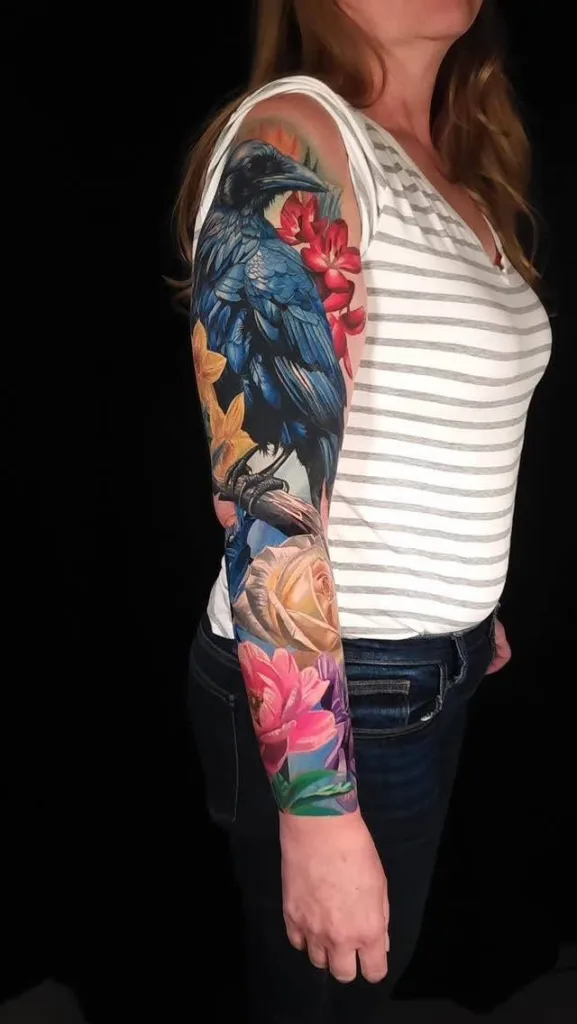
Strong sleeve concepts: Japanese traditional (designed for sleeves compositionally), black and grey realism with a unified theme, geometric patterning, nature-based work with botanical or wildlife elements.
The most important first step for any sleeve: a consultation where the full composition is planned before a single session begins. At Skin Design Tattoos, sleeve consultations map out the full design arc—flow, negative space, anchor pieces, and how everything connects.
Back
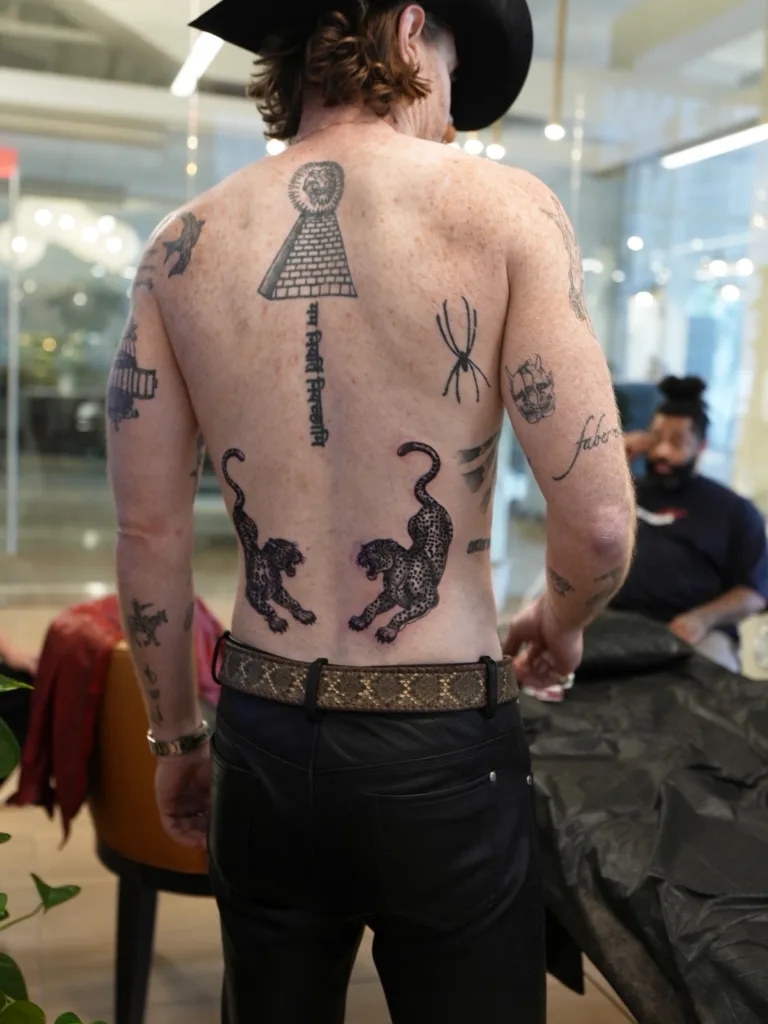
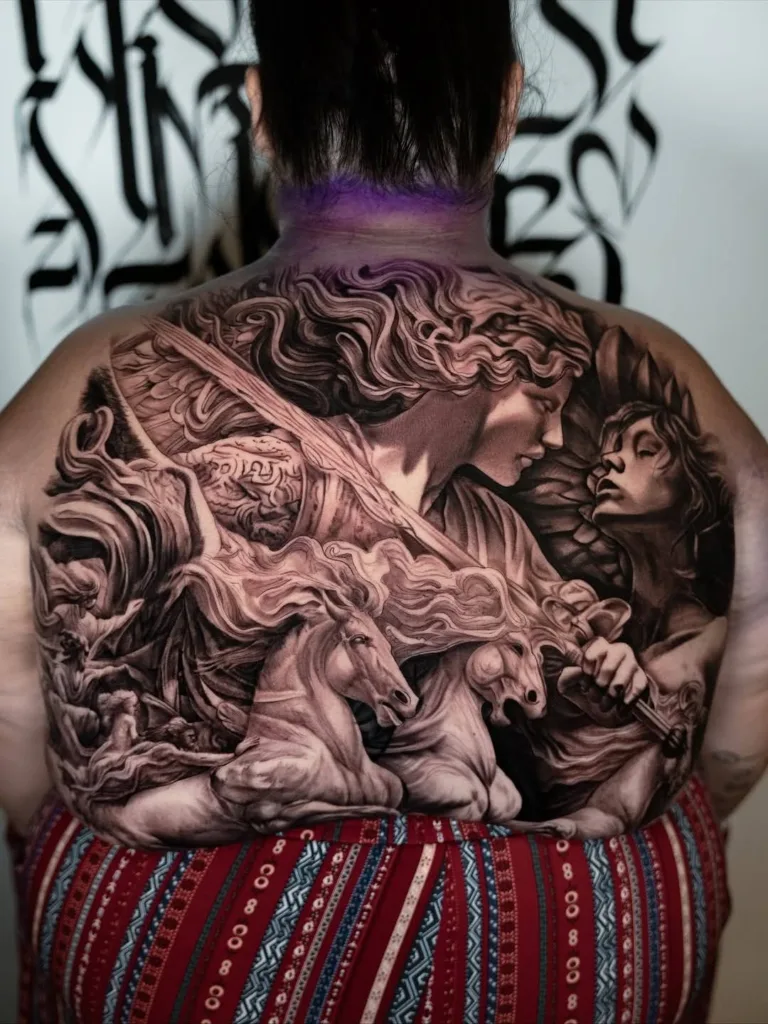
The back is the largest single canvas on the human body and one of the most powerful placements for ambitious work.
Full back pieces are significant undertakings—20 to 60+ hours across multiple sessions—but the format rewards scale. Work that would feel crowded or compressed on an arm breathes and commands on a back.
Strong back tattoo ideas for men: large-scale portrait or figure work, Japanese body suit elements, eagle or wing compositions, geometric mandalas centered on the spine, nature scenes rendered in black and grey realism.
Healed black and grey realism tattoos by tattoo artist Lynn Hoang—check out her portfolio and text ‘LYNN’ to 702-297-6079 for a consultation
Forearm
The forearm is one of the most visible and accessible placements—easy to work on, easy to show, and easy to admire.
It’s also one of the placements where quality is most visible. There’s nowhere to hide weak work on a forearm.
Strong forearm tattoo ideas for men: bold script or lettering (with sufficient sizing), portrait work, animal studies, geometric patterns, botanical fine line compositions.
Consider: the forearm is frequently sun-exposed, which means long-term sun protection is non-negotiable for maintaining the work’s integrity.
Ribs
High on the pain scale. High on the impact scale.
Rib tattoos for men are bold choices—they’re not visible to most people most of the time, which gives them a different kind of weight. They mean something specifically to the person wearing them.
Strong rib concepts: script and lettering (single lines read particularly well along the ribcage), portrait work, large floral or nature compositions, religious imagery.
Consider: the ribs are among the most painful placements. The skin moves constantly with breathing, which can affect healing. Session length for rib work is typically shorter than equivalent work on more comfortable placements.
Leg (Thigh and Calf)
Leg placements are underutilized and underrated.
The thigh offers substantial surface area, more comfort during the session than bony placements, and a natural canvas for large-scale work. The calf is more visible and tends to be a strong placement for bold, self-contained pieces.
Strong rib concepts: script and lettering (single lines read particularly well along the ribcage), portrait work, large floral or nature compositions, religious imagery.
Strong leg tattoo ideas for men: large portrait or animal work on the thigh, Japanese-influenced compositions, bold traditional pieces on the calf, geometric leg sleeves.
Best of show full color leg sleeve at the 2025 Hawaii Tattoo Expo by Skin Design Tattoos’ Honolulu’s award-winning artists, Christina Choi & Lynn Hoang
Hand and Neck
These placements carry social weight that every man should think through clearly before committing.
Hands and necks are visible in virtually every professional and personal context. Industries and environments vary significantly in how they respond to visible tattoo placement at this level. There’s no wrong answer—but there should be a considered one.
From a technical standpoint: hands fade faster than almost any other placement due to constant contact, frequent washing, and high skin cell turnover. Expect touch-up work as part of the ongoing maintenance of any hand tattoo.
Anatomical hand tattoo by Las Vegas & OC tattoo artist Robert Pho—text us at 702-297-6079 to make your vision a reality
Tattoo Ideas for Men: Subject Matter That Holds Up
Beyond style and placement, subject matter matters—specifically, whether the concept has enough personal weight to justify permanent commitment.
Trend-driven tattoos have a shelf life. Personally meaningful ones don’t.
These are the subject categories that tend to translate into tattoos men are still proud of a decade later.
Portrait Work
A portrait of someone who matters—a parent, a child, a person no longer living—carries weight that no abstract design can replicate.
Portrait tattoos require a specialist. Likeness is technically unforgiving. An artist without deep experience in portrait realism will produce work that doesn’t capture the person. Always evaluate an artist’s portrait-specific portfolio, not just their general work.
John Wick realism tattoo sleeve by Skin Design Tattoos’ resident artist in Nashville. Check out his work and text ‘JAKE’ to book a free consultation on a custom design of your own.
Nature and Wildlife
Eagles, wolves, bears, lions, serpents, koi—animal imagery has been central to men’s tattooing across cultures for centuries because it works. It carries symbolic weight, translates well across styles, and holds up visually over time.
The execution matters enormously. A well-rendered black and grey wolf is a powerful piece. A poorly executed one is a cautionary tale.
Geometric and Sacred Geometry
Men who want something visually arresting without representational imagery often land on geometric work—mandalas, sacred geometry, precise patterning. It reads as intentional and structured, ages well when executed with proper line weight, and can work as both standalone pieces and as the connective tissue in larger compositions.
Script and Lettering
Words, names, quotes, dates—script tattooing done well is clean and powerful. Done poorly it’s one of the most common regrets in tattooing.
The requirements: sufficient sizing (cramped lettering blurs together as it ages), a font that has been tested at tattoo scale, and an artist who specializes in lettering rather than treating it as an afterthought.
Abstract and Dark Art
Men drawn to more atmospheric, conceptual work—dark surrealism, horror-influenced imagery, abstract compositions—have more options than ever as the technical range of tattooing has expanded.
This category rewards finding an artist who works specifically in the style rather than an artist who works in everything. The more distinctive the style, the more important the style match.
Text ‘DAN’ to 702-297-6079 to inquire about availability.
How to Narrow Down Your Tattoo Ideas
You have a sense of what you want. Here’s how to move from idea to appointment.
Build a reference folder. Collect images—from Instagram, Pinterest, Google—that represent the visual direction you’re interested in. You don’t need to know exactly what you want. You need enough reference to give an artist something to work from.
Identify the style. Look at your reference images and ask: what do these have in common? Are they all bold and graphic? Detailed and realistic? Delicate and minimal? The common thread is your style direction.
Find artists who specialize in that style. Search specifically for artists whose portfolios are built around the style you’ve identified. Don’t compromise on style fit because an artist is closer or cheaper.
Look at healed work. Ask specifically to see healed photos—not just fresh ones. Healed work is the honest measure of an artist’s technical ability and longevity.
Book a consultation. Bring your reference folder. Let the artist guide you on sizing, placement, and design. The consultation is where great tattoo ideas become great tattoos.
Healed and fresh portrait tattoos by Lynn—send us a message to book yours today
Why Rushing Tattoo Ideas for Men Is the Biggest Mistake You Can Make
The tattoo industry runs on impulse.
Studios that prioritize volume over quality are designed to capitalize on the moment you walk in with a half-formed idea and walk out with something permanent.
The best studios work differently.
At Skin Design Tattoos, the consultation comes before the commitment. Artists who specialize in the style you’re pursuing review your references, advise on sizing and placement, and develop a design that’s built for your body and your vision—not the fastest thing they can produce.
That process takes longer. It’s worth it.
A tattoo is one of the only things you’ll ever buy that you genuinely cannot return. The extra time spent getting the idea right is the most valuable investment in the entire process.
Honolulu tattoo artists Christina Choi & Robert Pho 1st Place in Black & Grey at the Golden State Tattoo Expo—text ‘HONOLULU’ to (702) 297-6079 to book your free consult
FAQ
What are the best tattoo ideas for men?
The best tattoo ideas for men are the ones built around personal meaning, executed in a style the artist genuinely specializes in, and placed thoughtfully for both visual impact and long-term aging. Bold traditional work, black and grey realism, geometric compositions, and large-scale nature or portrait pieces are among the most enduring choices—but the right idea is the one that’s right for you specifically, not a trend.
What tattoo styles age the best on men?
Bold traditional and neo-traditional tattoos age most reliably due to heavy line weight and solid fills that resist blurring. Black and grey realism ages well when properly executed because it relies on tonal depth rather than color, which fades faster. Fine line work is beautiful but requires more disciplined sun protection and touch-up maintenance to stay sharp over time.
Where is the best placement for a first tattoo for men?
The outer upper arm, calf, and outer thigh are the most commonly recommended first placements—they’re more comfortable during the session, heal reliably well, and offer enough surface area for a design that won’t immediately require a touch-up. High-pain placements like the ribs, spine, hands, and feet are better approached once you have a sense of your tolerance.
How much do men's tattoos cost?
Cost varies significantly based on size, complexity, style, and artist experience. A small to medium piece from a skilled artist typically runs a few hundred dollars. Large-scale work—sleeves, back pieces, chest panels—is priced per session and can represent a multi-thousand dollar investment across multiple sessions. Quality tattooing is priced to reflect the skill and time involved. Financing is available at Skin Design Tattoos through Affirm and Klarna with payment plans up to 24 months.
How long does a sleeve tattoo take?
A full sleeve typically requires 20 to 40+ hours of work spread across multiple sessions. Half sleeves generally run 10 to 20 hours. The total depends heavily on the style, level of detail, and your skin’s response. Most sleeve clients complete their work over several months to a year or more.
How do I find the right tattoo artist for the style I want?
Start by identifying your style, then search specifically for artists whose portfolios are built around that style—not artists who claim to do everything. Request healed tattoo photos before committing. Book a consultation and pay attention to how the artist communicates: do they ask questions, offer informed guidance, and push back when something won’t work? Those are the signs of an artist invested in the outcome.
Can I bring my own design to a tattoo consultation?
Yes—and reference images are encouraged. Your own reference material helps the artist understand your vision. That said, a skilled artist will develop a custom design based on your references rather than simply copying an existing piece. The goal is something made specifically for your body and your story.
What's the most painful placement for a men's tattoo?
Ribs, spine, sternum, elbows, hands, feet, and the back of the knees are consistently rated as the most painful placements. The outer arm, outer thigh, and calf are among the most tolerable. Pain tolerance varies significantly between individuals, so these rankings are general guides rather than guarantees.
Ready to Turn Your Tattoo Ideas Into Something Real?
Ideas are easy. Execution is everything.
At Skin Design Tattoos, every custom piece starts with a conversation—not a booking form. Artists who specialize in the style you’re interested in will review your references, walk you through sizing and placement, and develop a design that’s built for longevity.
Whether you’re planning your first tattoo or adding to existing work, the consultation is where it begins.
Healed payasa portrait leg sleeve in black and grey ink by Honolulu tattoo artist Sandra
Text 702-297-6079 to book your free consultation.
Or start online at skindesigntattoos.com/tattoo-consultation/
Financing available through Affirm and Klarna—payment plans up to 24 months at skindesigntattoos.com/financing/
Ready to talk ideas and build a custom piece at a studio near you? Skin Design Tattoos has tattoo shops in: