
When observing a mandala, it is effortless to become entranced by the elaborate interplay of patterns and vivid hues. However, these mesmerizing circular formations serve a far more profound intention than mere visual appeal.
With their deep-rooted spiritual significance and a wealth of historical background, mandala tattoos have become a sought-after and profoundly meaningful option.
Historical Roots of Mandalas
The term “mandala” finds its origins in the ancient Sanskrit language, where it translates to “circle.” With a history spanning thousands of years, mandalas have held great importance in diverse cultures such as Hinduism, Buddhism, and Jainism.
These cultures regarded mandalas as sacred instruments for the practice of meditation. They acted as visual depictions of the universe, signifying the quest for enlightenment and the interdependent nature of all phenomena.
Understanding the Symbolism of Mandalas
Mandalas serve as a distinct symbolic dialect, communicating profound significance through their elaborate elements. The fundamental circular structure represents unity and the recurring essence of existence.
The carefully organized geometric designs, which frequently extend outward, represent the vastness of the cosmos and the interconnectedness that exists within it.
The Spiritual Significance of Mandala Tattoos
For numerous people, the mandala meaning possesses profound spiritual importance, even more so in mandala tattoo design. They serve as a lasting symbol of one’s internal universe, the continual exploration of self-awareness, and the relentless search for equilibrium and unity.
The complex pattern, a perpetual companion etched onto the body, serves as a visual manifestation of the individual’s spiritual ambitions.
Looking for a tattoo shop near you? We can help!
Best Placement For Mandala Tattoos
The positioning of your mandala tattoo carries equal significance to its actual design. Actually, there’s a whole world related to the tattoo placement meaning, even more so in concepts like the mandala.
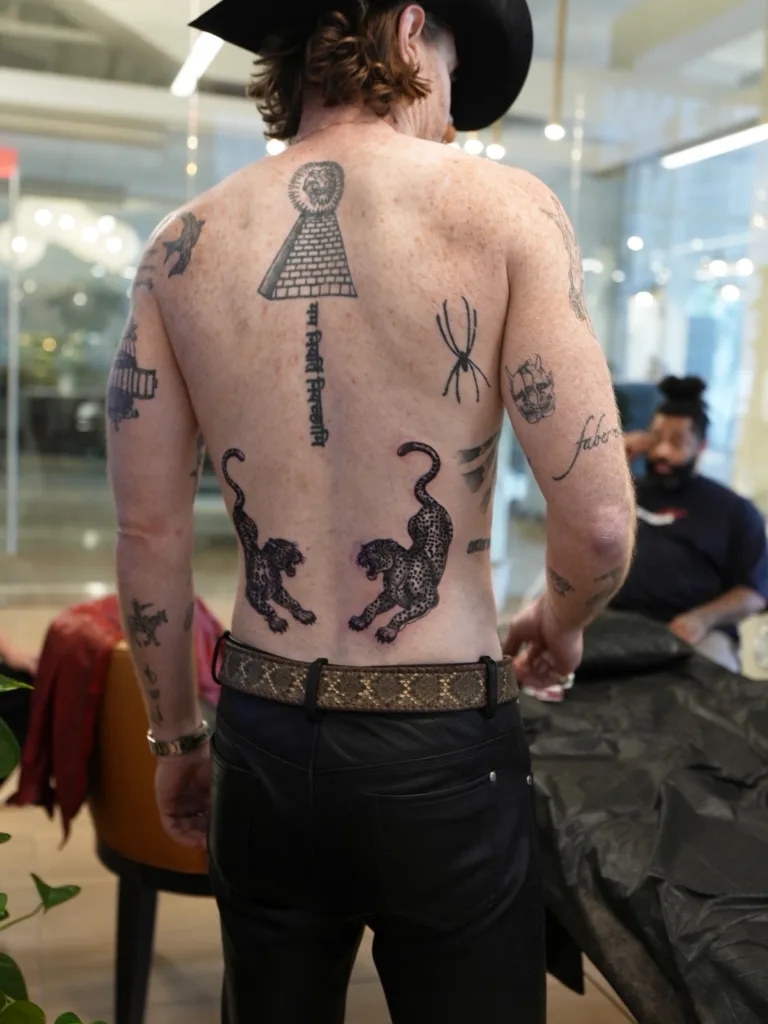
Common options encompass mandala hand tattoo, on the shoulder, back, arm, and leg. These regions provide generous room for the intricate elements to be displayed prominently and can also be conveniently hidden if preferred. And don’t forget to check tattoo sizes as well!
Mandala Tattoo Designs
The appeal of mandala tattoos is found in their remarkable adaptability. Here we provide a glimpse into the broad range of design choices that cater to different tastes and preferences:
- Lotus Mandala Tattoo Ideas: The Lotus Mandala design gracefully integrates the lotus blossom, which represents purity, personal development, and the indomitable capacity to overcome obstacles.
- Om Mandala Tattoos: Om holds immense significance in Hinduism and Buddhism as a revered emblem that symbolizes the cosmos and the ultimate truth. Incorporating this symbol into the mandala design imparts a deeply spiritual dimension.
- Animal Mandala Designs: To add a personalized element, the mandala design can incorporate animal patterns. Elephants embody traits of strength and stability, while owls symbolize wisdom and knowledge.
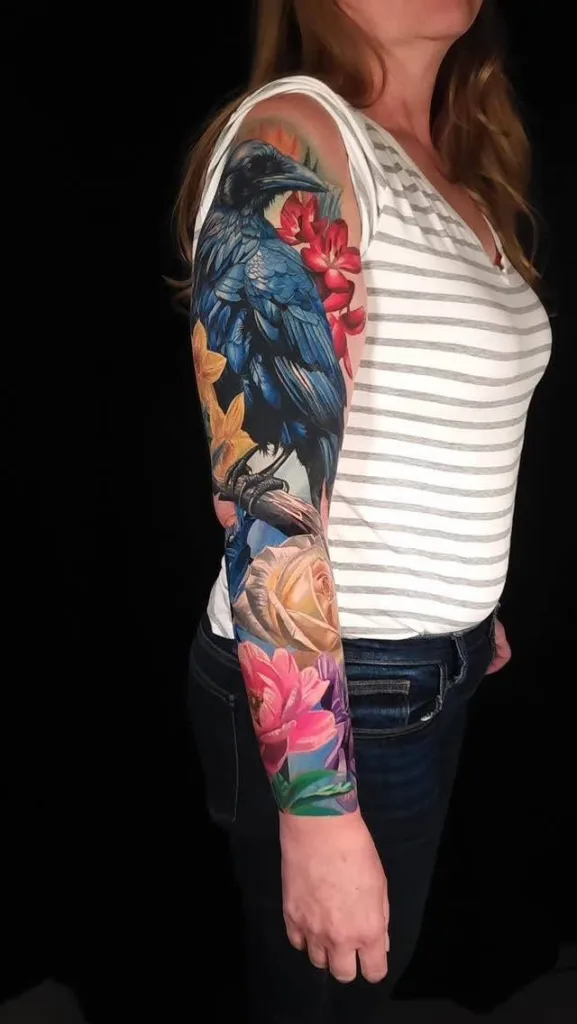
- Flower Mandala Tattoos: Mandala flower tattoos incorporate floral components such as roses (symbolizing love) or lilies (representing purity), which can be intricately interwoven with the mandala patterns, imbuing them with sophistication and individual significance. You can also combine them with animal tattoos.
- Minimalist Mandala Tattoos: Subtle yet impactful, individuals can choose a minimalist mandala design for a refined appearance. With clean strokes and black ink, this tattoo creates a bold and elegant impression.
- Geometric Mandalas: These elaborate patterns highlight the precise calculations and inherent interconnections found within the mandala. The focus on geometric forms produces a visually captivating and intellectually stimulating tattoo.
And remember, you are the owner of your ideas and body, so feel free to schedule a tattoo consultation with your preferred tattoo artist to make sure your ideas are used in the design!
Trends and Inspirations for Mandala Tattoos
The world of mandala tattoo meaning is continuously progressing, presenting a wide array of captivating possibilities. Below are several current ideas worth contemplating:
- Watercolor Mandalas: Gentle layers of watercolor pigments bring a sense of ethereal beauty and creativity to the pattern, resulting in a captivating impact.
- Dotwork Mandalas: This method entails the precise arrangement of minuscule dots to craft a mesmerizing and elaborate mandala. The outcome is a masterpiece that boasts intricate textures.
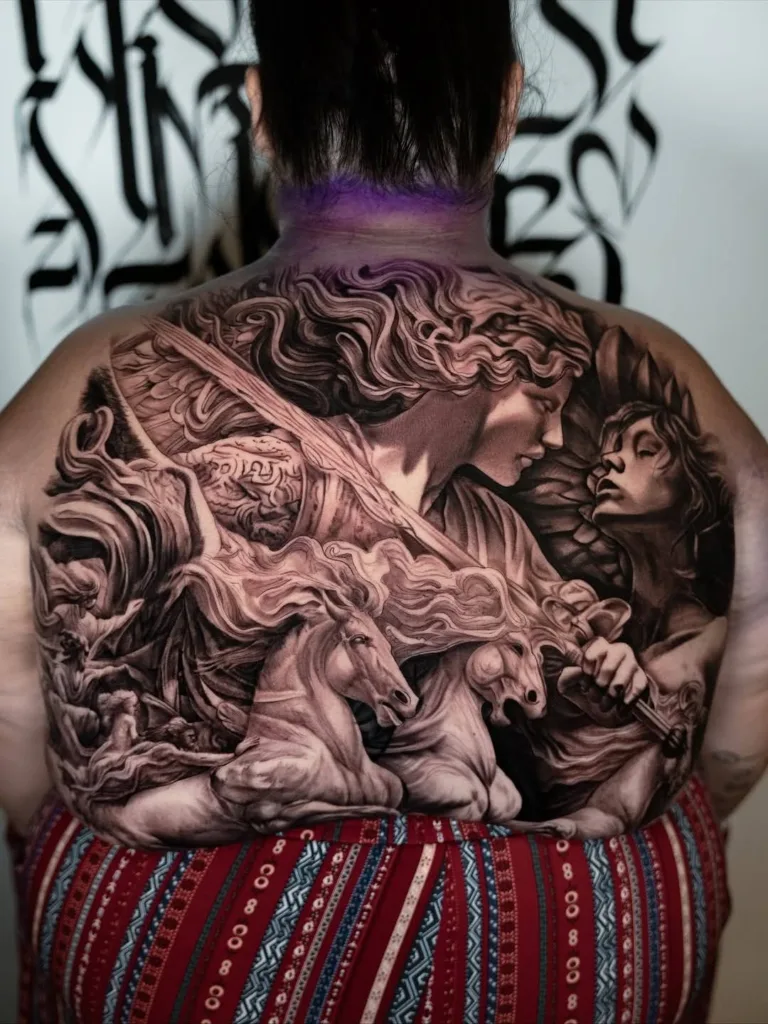
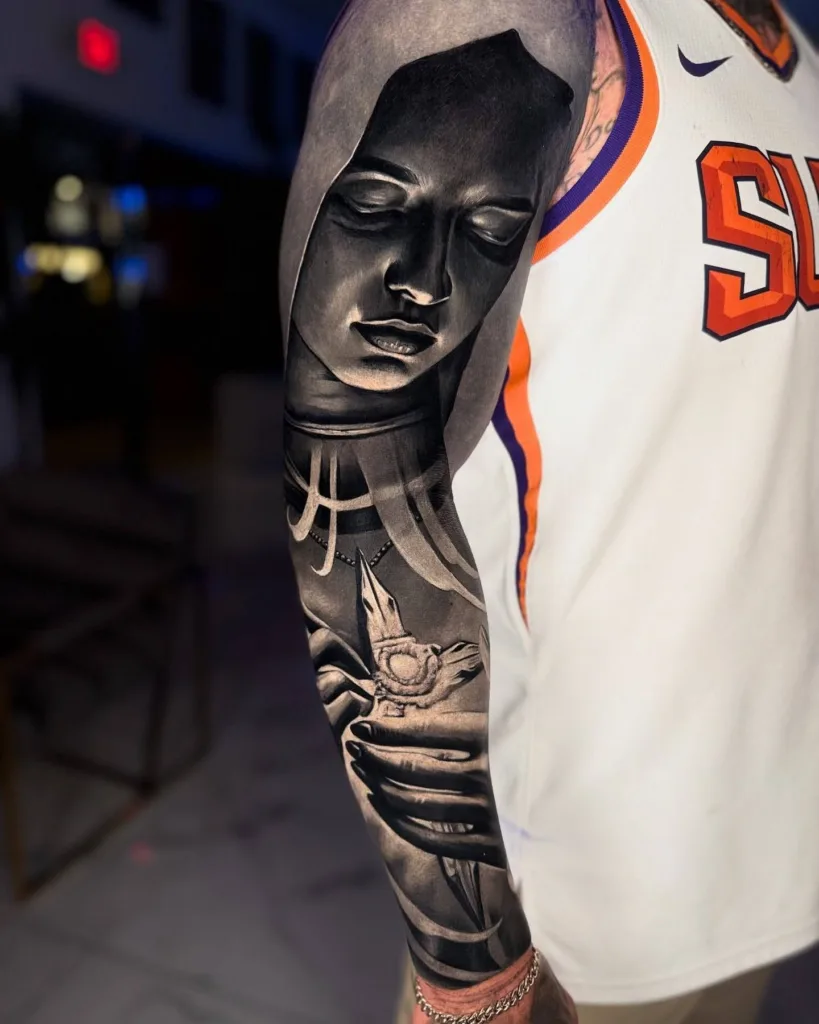
- Black and Grey Realism: For individuals who favor a realistic appearance, the implementation of meticulous black and grey shading imparts a lifelike essence to the mandala, highlighting its intricate intricacies.
A representation of the personal voyage within you!
Mandala tattoo meaning overcomes the mere artistic representation, serving as a personalized means to express one’s beliefs, values, and spiritual bond. Whether opting for a traditional design steeped in cultural symbolism or embracing a more modern interpretation, a mandala tattoo serves as an enduring testament to one’s individual life path and unwavering dedication to attaining inner equilibrium and serenity.