

Tattoo Styles Explained: How to Find the Right One for You
Not sure which tattoo style is right for you? Keep reading for every major tattoo style explained: what it looks like, how it ages, and who it’s best suited for.
Key Takeaways
- There are dozens of tattoo styles, but a handful account for the vast majority of custom work—knowing them helps you make a better decision
- Style determines how a tattoo is constructed, how it ages, and which artists are qualified to execute it well
- Choosing a style before choosing an artist is the correct sequence—not the other way around
- Black and grey realism, fine line, traditional, neo-traditional, and Japanese traditional are among the most enduring styles in the industry
- Some styles—watercolor, white ink, ultra-fine micro tattoos—require informed expectations about long-term maintenance
- A style that photographs beautifully fresh is not necessarily a style that holds up well healed—healed portfolios are the honest measure
- Subject matter is secondary to style—the same subject rendered in different styles produces completely different tattoos
- Skin Design Tattoos artists specialize across the full range of enduring styles, with particular depth in black and grey realism and fine line
Why Style Is the Most Important Decision You'll Make
Most people start the tattoo planning process with a subject: a flower, a portrait, a wolf, a meaningful date.
That’s a natural starting point—but it’s the second decision, not the first.
Style is the first decision. It determines how your subject is rendered, what the tattoo looks like in twenty years, how much it costs, and—most importantly—which artists are actually qualified to execute it. A wolf in traditional American style is a completely different tattoo than a wolf in black and grey realism or Japanese traditional. Same subject. Entirely different outcomes.
Understanding the major tattoo styles before you start shopping for an artist isn’t just helpful—it’s the difference between finding the right person for the job and finding someone willing to take it.
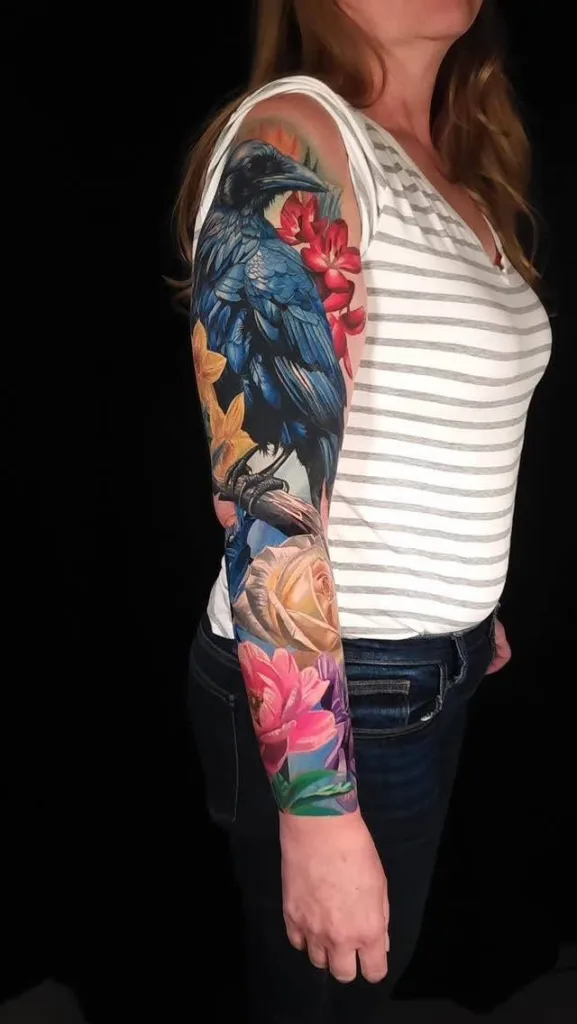
Fully healed full color realism tattoo (done in 2024) by Skin Design Tattoos Las Vegas tattoo artist Brad Charles—text ‘BRAD’ to (702) 297-6079 to book. Proof that tattoos built well & protected from the sun will hold up over time.
Dismissiveness About
This guide covers every major style you’ll encounter: what it looks like, how it’s built, how it ages, and who it’s best suited for.
Black and Grey Realism
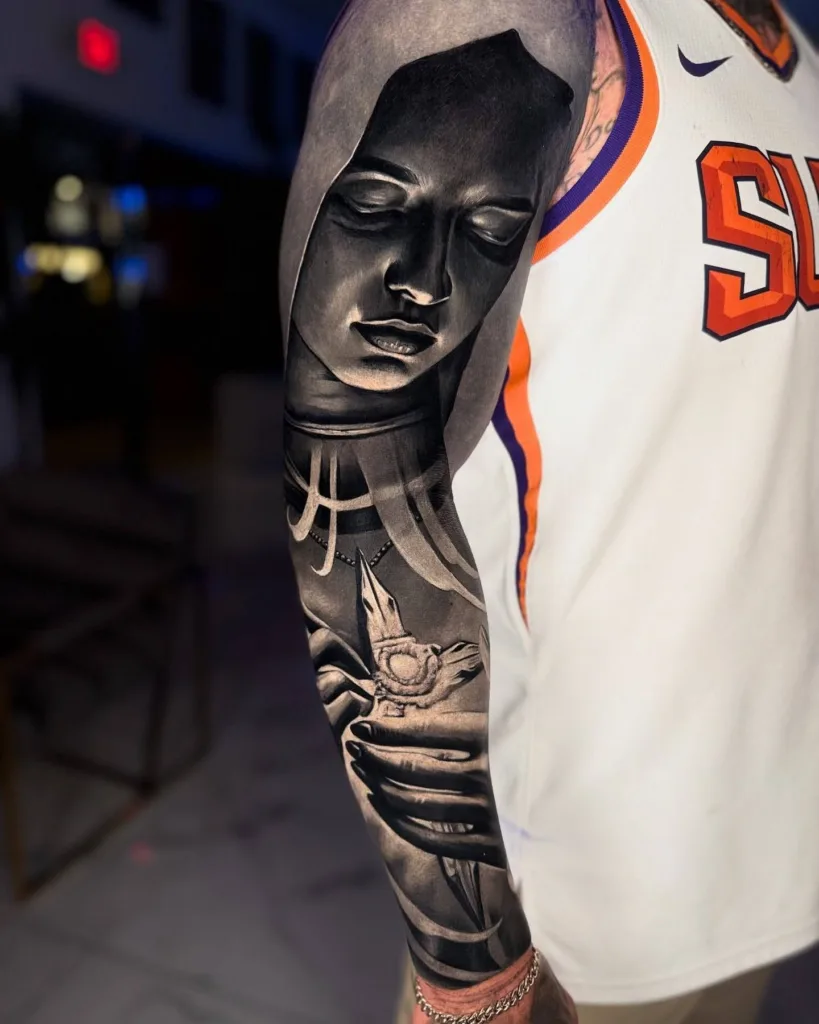
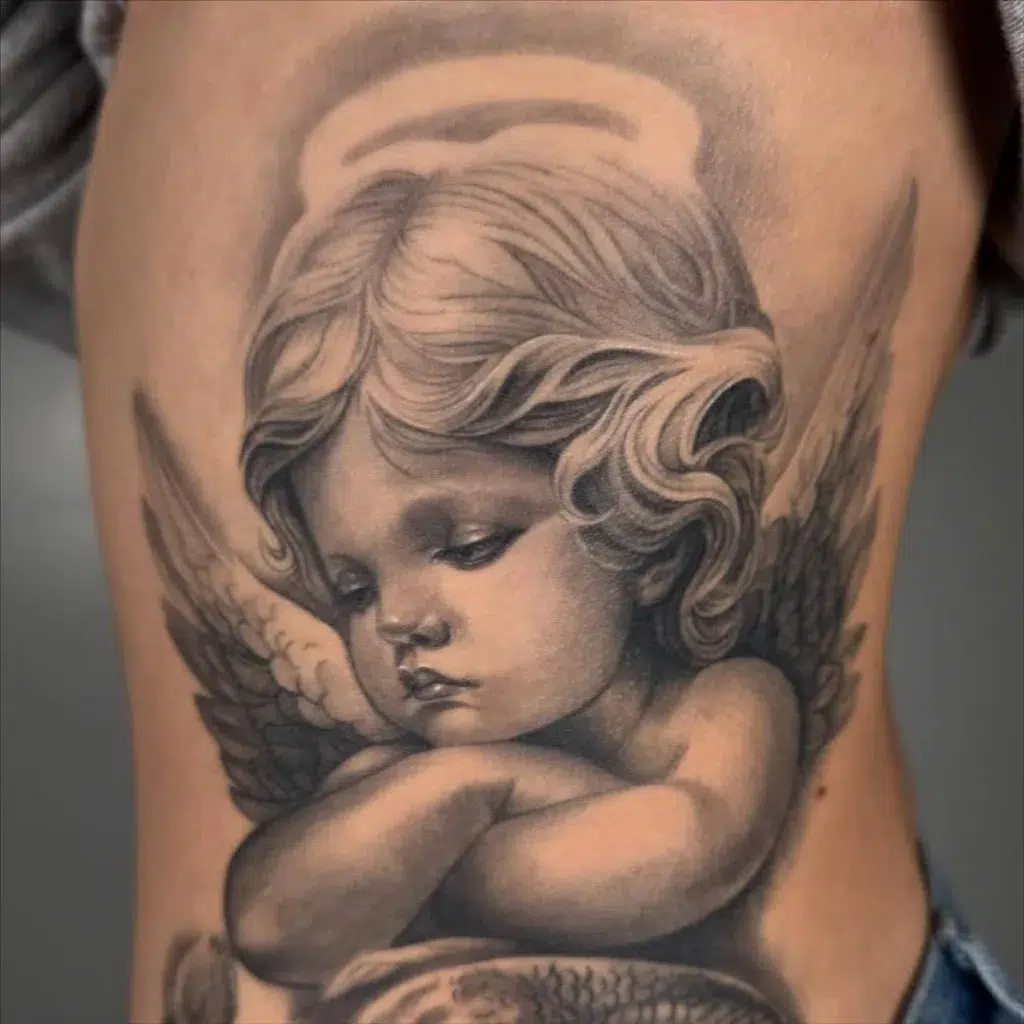
Black and grey realism is one of the most technically demanding and visually powerful styles in contemporary tattooing. It uses only black ink—diluted to create a full range of grey tones—to produce photographic depth and dimension without color.
What it looks like: Photorealistic rendering of portraits, animals, nature, architecture, or abstract compositions. The absence of color forces the artist to build everything through tonal contrast and smooth gradient shading. The best black and grey realism is genuinely difficult to believe is a tattoo.
Healed and fresh black and grey leg sleeve by award-winning Honolulu tattoo artist Christina Choi—text ‘CHRISTINA’ to (702) 297-6079 for a free consult
How it’s built: Multiple shading passes to build tonal range from deep black through the full grey spectrum to the lightest highlights. The technique requires deliberate, slow execution—rushing produces flat, inconsistent shading.
How it ages: More predictably than color work. Black and grey tattoos shift in tone as they age but retain their structural integrity longer than color equivalents. Healed black and grey realism from a skilled artist still reads as a cohesive, dimensional piece years later.
Best suited for: Portrait work, memorial tattoos, wildlife and nature compositions, dark surrealism, large-scale pieces where tonal depth carries the composition.
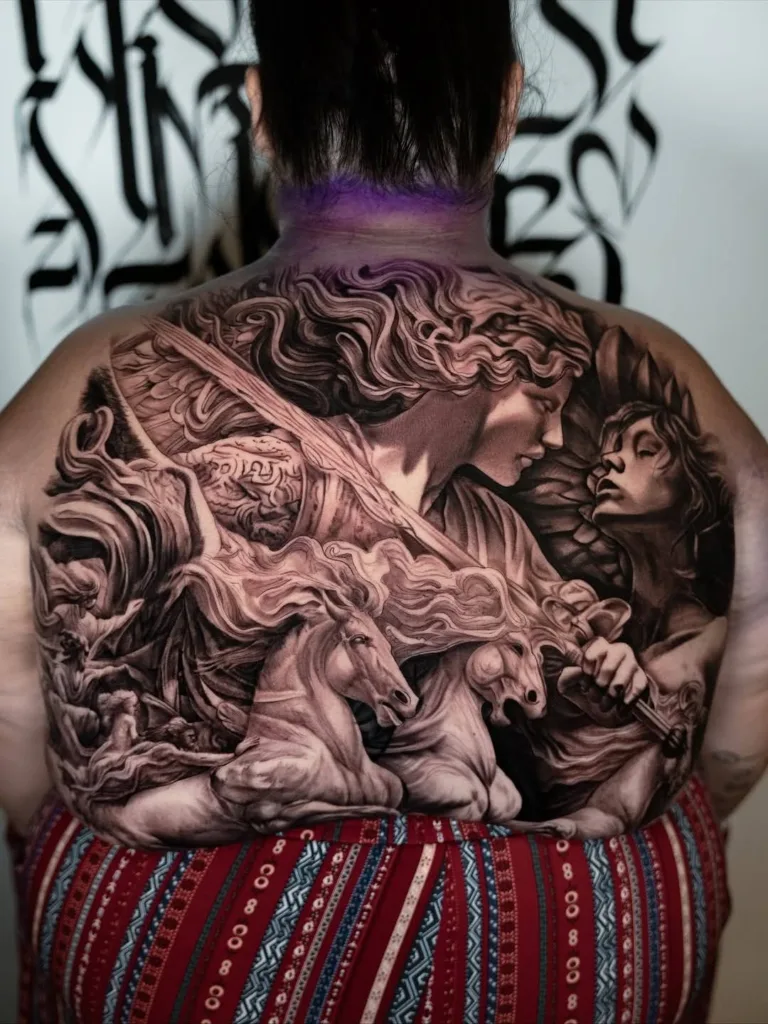
Fresh, full-back piece done by Robert Pho—text us at 702-297-6079 to make your vision a reality
What to know: This is not a style where you compromise on artist experience. Tonal consistency, smooth gradients, and realistic texture require years of dedicated practice. Always evaluate healed portfolio work before committing to any artist in this style.
At Skin Design Tattoos, black and grey realism is a foundational specialization. Robert Pho has spent over 30 years developing and refining the technique; artists including Christina Choi, Lynn Hoang, and Reena Pho have built award-winning portfolios in the style.
Fully healed black and grey realism tattoo by award-winning OC & Las Vegas tattoo artist—and founder of Skin Design Tattoos—Robert Pho
Fine Line
Fine line tattooing uses single-needle or tight-grouped needle configurations to create delicate, precise linework with minimal shading and a light visual presence.
What it looks like: Clean, thin lines rendering botanical illustrations, portraits, geometric forms, script, ornamental patterns, or abstract compositions. The overall impression is precise and intentional—placed rather than stamped.
How it’s built: Slow, controlled needle work at tight groupings. The margin for error is minimal—a single misplaced line compromises the composition. Fine line artists work deliberately, often more slowly than artists in bolder styles.
Matching handwriting tattoos for a newlywed couple
How it ages: More vulnerability than bold styles. Fine lines naturally soften and spread slightly as the skin ages—this is physics, not failure. Sun exposure accelerates the process significantly. Well-executed fine line work by a specialist, properly protected from UV, holds up well. Poorly executed fine line or work with inadequate sun protection loses definition faster.
Best suited for: Clients who prefer subtlety over impact, detailed botanical or illustrative work, ornamental and geometric compositions, and those committed to long-term sun protection.
What to know: Style match matters enormously here. Fine line done by a specialist is precise and controlled. Fine line done by a generalist tends to show inconsistent line weight, uneven spacing, and weaker definition in the healed result. Always look at healed fine line portfolios specifically.
Traditional American
Traditional American tattooing—often called old school—is one of the oldest and most recognizable styles in the art form. It’s defined by bold black outlines, a limited palette of primary colors, solid fills, and iconic American imagery.
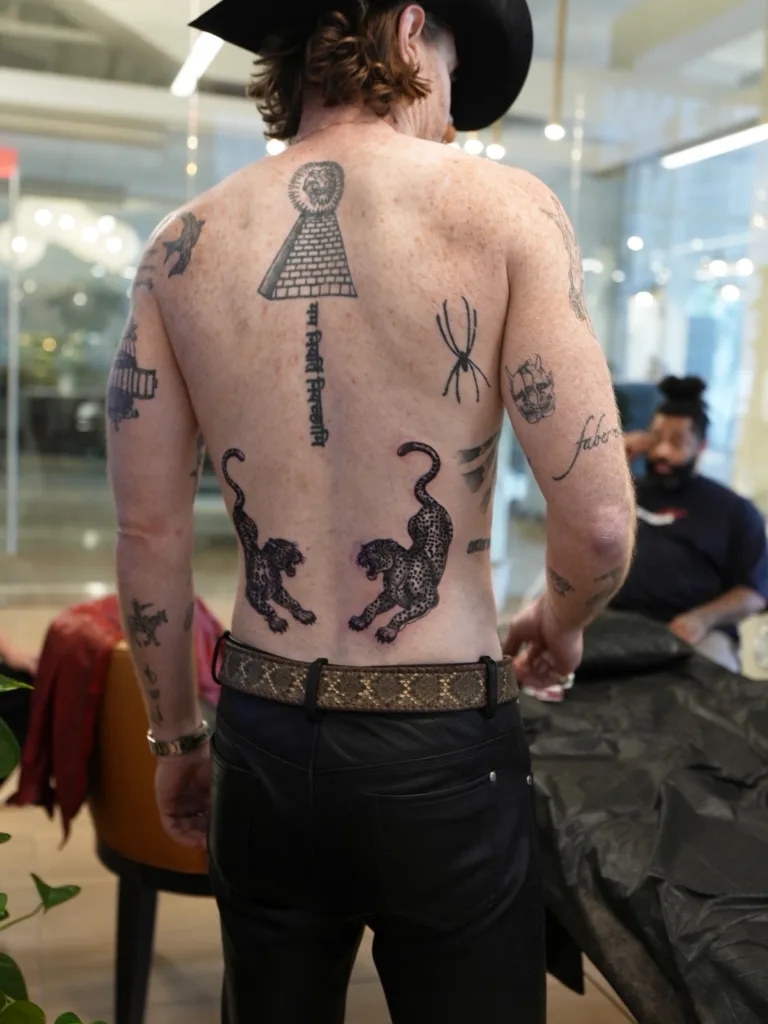
What it looks like: Eagles, panthers, snakes, swallows, roses, daggers, anchors, pin-up figures, ships. Bold, graphic, immediately readable from a distance. Designs are simplified and stylized rather than realistic.
How it’s built: Heavy black outlines applied first, followed by solid color fills and minimal shading. The boldness of the line weight is structural—it’s what holds the design together as the tattoo ages.
How it ages: Among the most reliably durable tattoo styles available. Heavy line weight and solid fills resist blurring and fading better than fine detail styles. A well-executed traditional tattoo at twenty years looks remarkably close to how it looked at one.
Best suited for: Clients who want bold, legible work with proven longevity. Strong choice for first tattoos and for clients building toward a sleeve or larger composition—the style’s consistency makes it naturally suited to large-scale coverage.
What to know: Traditional American is deceptively simple—the bold aesthetic requires a steady hand and confident execution. The characteristic line weight and color saturation that make traditional tattoos age so well are harder to achieve than they appear.
Neo-Traditional
Neo-traditional expands on the traditional American foundation with a more illustrative vocabulary, richer color palette, and more complex shading—while retaining the bold line weight that gives traditional work its structural durability.
What it looks like: More detailed and expressively rendered than strict traditional, but still defined by strong outlines and graphic color. Animals, florals, portraits, and nature subjects are common, rendered with more visual complexity and character than classic traditional.
Neo-traditional tattoo designs by New York tattoo artist Shamil—text (702) 297-6079 to book
How it’s built: Strong outlines as the foundation, with more layered shading and color work than traditional. The illustrative quality comes from the shading and detail inside the outline structure.
How it ages: Very well. The bold outlines that define neo-traditional hold the composition together as color softens over time—the structural legacy of traditional tattooing with more visual complexity.
Best suited for: Clients who want something more illustratively detailed than strict traditional but want the durability benefits of strong linework. Strong for florals, animals, and nature-based compositions where expressive rendering adds character.
What to know: The range within neo-traditional is wide—from work that sits close to traditional to work that approaches illustration or even realism. Clarify with your artist where on that spectrum their work lives.
Japanese Traditional (Irezumi)
Japanese traditional tattooing—irezumi—is one of the oldest and most compositionally sophisticated tattoo traditions in the world. Developed over centuries, the style was specifically designed for large-scale body coverage.
What it looks like: Rich color with bold outlines, iconic imagery—dragons, koi, tigers, phoenixes, cherry blossoms, peonies, waves, clouds—and compositions that flow with the body rather than sitting flat against it. The visual language is cohesive: every element in the irezumi vocabulary relates to every other element.
How it’s built: Bold outlines define the primary subject; decorative background elements—water, clouds, wind bars, botanical fills—connect the composition and manage negative space. Color is layered to achieve depth and saturation.
How it ages: Very well. Bold outlines and solid fills resist fading; the compositional coherence of the style means pieces continue to read clearly as the tattoo ages.
Best suited for: Clients planning large-scale work—sleeves, back pieces, body suits—where the style’s compositional vocabulary makes cohesion natural. Japanese traditional was designed for scale; it rewards ambition.
What to know: The visual vocabulary of Japanese traditional is specific and interconnected. Artists who genuinely specialize in the style understand the relationships between elements—what goes together, what doesn’t, and why. This is not a style where you want a generalist approximating the aesthetic.
Watercolor
Watercolor tattoos replicate the fluid, blended quality of watercolor painting—soft washes of color, diffused edges, and a painterly lack of hard outlines.
What it looks like: Soft, loose color fields that bleed and blend into each other and into the skin. The absence of bold outlines gives watercolor tattoos a distinctive painted quality distinct from any other tattoo style.
How it’s built: Color layering without structural outlines, relying on the color itself to define form.
How it ages: This is the most important thing to understand about watercolor tattoos. Without the structural support of bold linework, watercolor tattoos are more vulnerable to fading and loss of definition than any other style on this list. The soft edges that define the look are also what makes them most susceptible to time and UV exposure.
Watercolor tattoos with underlying structural elements—thin linework or bold anchors within the color washes—age significantly better than pure watercolor work. Always ask an artist how they approach the structural question in their watercolor work.
Best suited for: Clients drawn to the painterly aesthetic who understand the longevity trade-offs and are committed to rigorous sun protection. Best approached with realistic expectations about long-term maintenance.
What to know: Always ask specifically to see healed watercolor work before committing. The difference between a watercolor tattoo at one week and at three years is more dramatic in this style than in any other.
Geometric and Sacred Geometry
Geometric tattooing encompasses a broad range of work built on mathematical precision—sacred geometry, mandala-influenced patterns, symmetrical compositions, and abstract structural forms.
What it looks like: Clean lines, precise angles, symmetrical forms. Sacred geometry incorporates specific patterns—the Flower of Life, Metatron’s Cube, the Fibonacci spiral—with mathematical and spiritual significance. Mandala work builds radiating symmetrical patterns from a central point. Abstract geometric work uses shapes and negative space as compositional tools without representational imagery.
How it’s built: Precision-dependent. Symmetry and exactness require deliberate, steady execution. Geometric work is unforgiving of inconsistency—a line that’s slightly off reads as a mistake in a way it might not in a looser style.
How it ages: Depends heavily on line weight. Bold geometric work with strong outlines ages reliably. Fine geometric work faces the same vulnerability as fine line tattoos generally—softening over time, sensitivity to sun exposure.
Best suited for: Clients who want visually striking work without representational imagery. Strong as standalone pieces and as connective or structural elements in larger compositions.
What to know: Geometric tattooing is often combined with other styles—dotwork shading, fine line detail, mandala elements within larger compositions. The precision required makes artist selection important—look for consistent, clean line work in healed portfolios.
Dotwork
Dotwork uses stippling—patterns of individual dots rather than continuous lines or filled areas—to build shading, texture, and form.
What it looks like: A softer, more textured quality than line-based tattoos. Shading built through dot density rather than ink fills creates a distinctive visual quality that can feel almost etched or engraved. Dotwork pairs naturally with geometric forms and fine line work.
How it’s built: Patient, repetitive dot placement at varying densities to create tonal gradation. The technique is time-intensive—building tonal range through individual dots takes significantly longer than equivalent shading with conventional needles.
How it ages: Generally well, particularly in bolder applications. Finer dotwork faces similar considerations to fine line—some softening over time, sensitivity to sun.
Best suited for: Clients drawn to the textured, etched aesthetic. Particularly strong in geometric compositions and mandala work where the dotwork quality adds dimension without color.
Blackwork
Blackwork encompasses a broad range of tattooing that uses only solid black ink—no grey tones, no color—applied in bold, graphic forms.
What it looks like: High-contrast, graphic compositions. Tribal-influenced patterns, bold geometric forms, illustrative black fill work, dark botanical compositions, and abstract designs built entirely from black fills and negative space (skin left untouched). The visual impact is immediate and striking.
How it’s built: Solid black fills, bold outlines, and deliberate negative space. The absence of shading or color means composition and placement of black versus skin does all the visual work.
How it ages: Very well. Solid black is the most stable ink application available. Bold blackwork retains its visual impact longer than any other style.
Best suited for: Clients who want maximum visual impact and durability. Strong for large-scale coverage, pattern-based work, and clients who prefer the graphic quality of black and negative space over tonal shading or color.
What to know: Blackwork is permanent and high-commitment. The bold, graphic quality that makes it so durable is also what makes it the most difficult style to cover or modify. Choose with confidence.
Reworked blackout tattoo sleeve by New York tattoo artist Amanda—text (702) 297-6079 to book
Illustrative
Illustrative tattooing sits between realism and stylization—drawing from illustration, comics, printmaking, and fine art traditions to create work that is rendered with artistic expressiveness rather than photographic accuracy.
What it looks like: Varied—the category is broad. Common threads include expressive linework, intentional stylization, and a visual quality that reads as hand-drawn rather than photographically realistic. Dark illustrative work often incorporates horror, surrealism, and editorial art influences.
How it’s built: Depends heavily on the specific sub-style. The common thread is that the rendering is expressive rather than purely technical—the artist’s hand is visible in the work.
How it ages: Variable by sub-style and line weight. Illustrative work with strong line structure ages well. Looser, more painterly illustrative work faces similar considerations to other low-structure styles.
Text ‘STORM’ to 702-297-6079 or book via inkquiries.com/storm
How it’s built: Depends heavily on the specific sub-style. The common thread is that the rendering is expressive rather than purely technical—the artist’s hand is visible in the work.
How it ages: Variable by sub-style and line weight. Illustrative work with strong line structure ages well. Looser, more painterly illustrative work faces similar considerations to other low-structure styles.
Jake, our resident Nashville tattoo artist, at the 2025 Golden State Tattoo Expo
Best suited for: Clients who want work with visible artistic character—something that reads as art rather than reproduction. Strong for dark surrealism, horror-influenced work, editorial-influenced compositions, and anything where the artist’s individual style is part of the appeal.
Minimalist
Minimalist tattooing prioritizes simplicity, negative space, and reduction—conveying meaning or image through the fewest possible elements.
What it looks like: Small symbols, simple geometric forms, single-line drawings, minimal text, subtle icons. The aesthetic is clean and restrained—the tattoo takes up minimal visual space while still carrying weight.
How it’s built: Economy of line and form. Every element is intentional; nothing is adde that isn’t necessary.
How it ages: Depends on sizing and line weight. Minimalist tattoos that are too small or use lines too fine face the same challenges as fine line work generally—softening and loss of definition over time. Well-sized minimalist work with adequate line weight holds up better.
Best suited for: Clients who want subtle, understated tattoos. Strong for first tattoos and for clients who want ink that’s visible in some contexts and virtually invisible in others.
What to know: Minimalist tattoos are deceptively challenging to execute well. The absence of complexity means every line is scrutinized—there’s nowhere for imprecision to hide. Choose an artist with a strong minimalist portfolio specifically.
New School
New school tattooing draws from graffiti, cartoons, comic art, and pop culture to produce bold, exaggerated, often cartoonish compositions with vibrant color and heavy outlines.
What it looks like: Exaggerated proportions, bright saturated color, heavy black outlines, a visual energy that reads as graphic and playful. Characters, animals, objects, and pop culture references are common subjects, rendered with expressive exaggeration.
How it ages: Well, in terms of structural durability—heavy outlines hold composition together as color softens. Vibrant colors will shift over time but the bold structure remains.
Best suited for: Clients drawn to bold, graphic, expressive work with color impact. Strong for statement pieces and clients who enjoy pop culture references and illustrative exaggeration.
How to Find Your Style
Reading through this guide is the first step. Building a reference folder is the second.
Collect images—from Instagram, Pinterest, tattoo studio websites, anywhere—that consistently catch your eye. Don’t overthink the selection. Just save what resonates and come back to the folder when it has twenty or thirty images.
Look at the collection as a whole. What’s the common thread? Are they bold and graphic? Delicate and precise? Richly colored? Moody and dark? Photorealistic? That thread is your style direction.
Then find artists whose portfolios are built around that style—not artists who offer everything, but artists who specialize. The portfolio will show you what genuine specialization looks like versus what it doesn’t.
Book a consultation. Bring your reference folder. Let the artist help you translate what you’re drawn to into something built for your body.
Black and grey tattoo realism portrait tattoo by Skin Design’s very own Cat Castro (also featured on Ink Masters!)—click here to book your free consultation today
FAQ
What are the most popular tattoo styles right now?
Black and grey realism, fine line, and neo-traditional are among the most consistently in-demand styles at quality studios. Japanese traditional remains a strong choice for large-scale work. Minimalist and geometric work continue to grow in popularity. The most popular style is less relevant than the style that’s right for you specifically.
Which tattoo style ages the best?
Traditional American, neo-traditional, Japanese traditional, and blackwork age most reliably due to heavy line weight and solid fills that resist blurring and fading. Black and grey realism ages well when properly executed. Fine line, watercolor, and micro tattoos require more maintenance and are more vulnerable to fading over time.
What tattoo style is best for a first tattoo?
Traditional American and neo-traditional are strong choices for first tattoos—bold, legible, and reliably durable. Fine line is a popular choice for clients who prefer a lighter visual presence but requires informed expectations about long-term maintenance. The best style for a first tattoo is the one you’re genuinely drawn to, executed by an artist who specializes in it.
What is the difference between traditional and neo-traditional tattoos?
Traditional American tattoos use a limited palette of primary colors, simplified imagery, and a specific set of classic motifs—executed with bold outlines and minimal shading. Neo-traditional retains the bold line weight of traditional but expands into more illustrative detail, a wider color palette, and more complex shading. Both age very well; neo-traditional offers more visual complexity within the same structural framework.
Can I mix tattoo styles?
Yes, but it requires planning. Mixing styles in a cohesive composition—or across a sleeve—works when there’s a deliberate strategy for how different styles coexist. Style mixing without planning produces work that reads as assembled rather than designed. If mixing styles is the goal, discuss it specifically in the consultation so the artist can plan for cohesion.
What tattoo style is right for a portrait?
Black and grey realism is the most common and most effective style for portrait work—it uses tonal depth to capture likeness and dimension in a way that color realism or illustrative styles approach differently. Portrait realism requires a specialist; always evaluate an artist’s portrait-specific portfolio before booking.
How do I know which tattoo style I want?
Build a reference folder of images that appeal to you—from Instagram, Pinterest, studio websites, anywhere. Don’t curate by what you think you should like; just save what catches your eye. Review the folder when it has twenty or thirty images and look for the common visual thread. That thread is your style direction. Bring the folder to your consultation.
Does the tattoo style affect the price?
Yes. More technically demanding styles—black and grey realism, fine line, portrait work—require slower, more precise execution and are typically priced higher per hour or per session than bolder, faster styles. The total cost also depends on size and complexity. A consultation will give you an honest estimate based on your specific project.
Not Sure Where to Start?
The consultation is exactly where this conversation belongs.
At Skin Design Tattoos, artists specialize across the full range of enduring styles—black and grey realism, fine line, traditional, neo-traditional, Japanese traditional, and large-scale custom compositions. If you know your style, we’ll match you with the right artist. If you’re still figuring it out, bring your reference folder and we’ll help you get there.
Fresh tattoo (left) vs. healed tattoo (right) by renowned tattoo artist Robert Pho
Skin Design Tattoos has tattoo shops in:
Text 702-297-6079 to book your free consultation.
Or start online at skindesigntattoos.com/tattoo-consultation/
Financing available through Affirm and Klarna—payment plans up to 24 months at skindesigntattoos.com/financing/