

Tattoo Aftercare: How to Protect Your Ink After Every Session
Key Takeaways
- Proper tattoo aftercare begins the moment your artist puts down the machine—not when you get home
- The first two weeks are the most critical window for how your tattoo heals and how long it holds
- Keeping a new tattoo clean, moisturized, and out of the sun prevents the most common healing problems
- Over-moisturizing is just as damaging as under-moisturizing—less is more
- Picking, peeling, and scratching are the fastest ways to pull ink out of the skin
- Sun exposure is the number one long-term cause of tattoo fading—sunscreen is non-negotiable after healing
- Ocean water, pools, and soaking baths should be avoided until the tattoo is fully healed
- Every tattoo heals differently depending on placement, size, style, and your individual skin
- A great tattoo is a collaboration between artist and client—the artist’s job ends when you walk out; yours begins
Why Tattoo Aftercare Is Part of the Tattoo
Most people think the tattoo is finished when the session ends.
It isn’t.
What happens in the weeks after your appointment determines how the work actually looks—and how it looks ten, twenty years from now. The most technically perfect tattoo can be compromised by poor healing. And a tattoo that healed well, on skin that was properly cared for, will outperform one that didn’t regardless of how skilled the artist was.
Aftercare isn’t a box to check. It’s the second half of the process.
This guide covers everything you need to know—from the first hours after your session through long-term maintenance—so the investment you made in your tattoo pays off for the rest of your life.
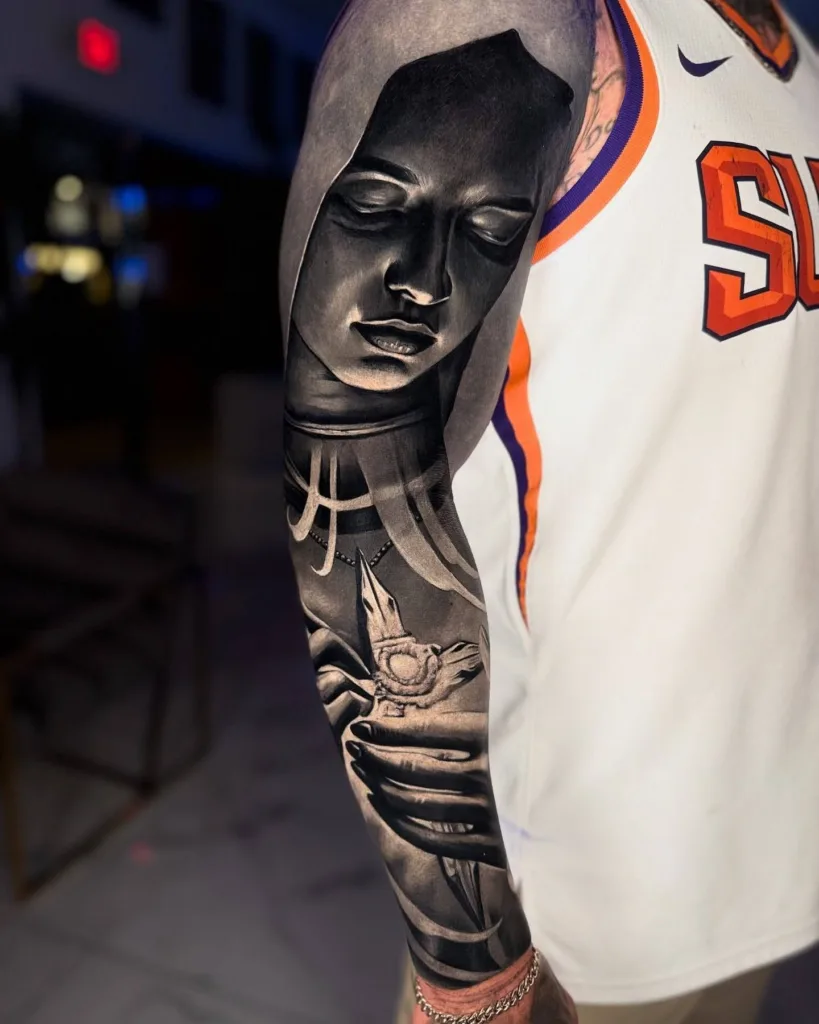
Black and grey realism tattoo sleeve by New York tattoo artist Mando—text (702) 298-6079 to book
What's Actually Happening When a Tattoo Heals
Understanding the healing process helps you understand why aftercare rules exist—and why cutting corners matters.
When a tattoo is applied, the needle deposits ink into the dermis, the layer of skin beneath the surface epidermis. The epidermis—the outer layer—is damaged in the process. Your body immediately begins repairing it.
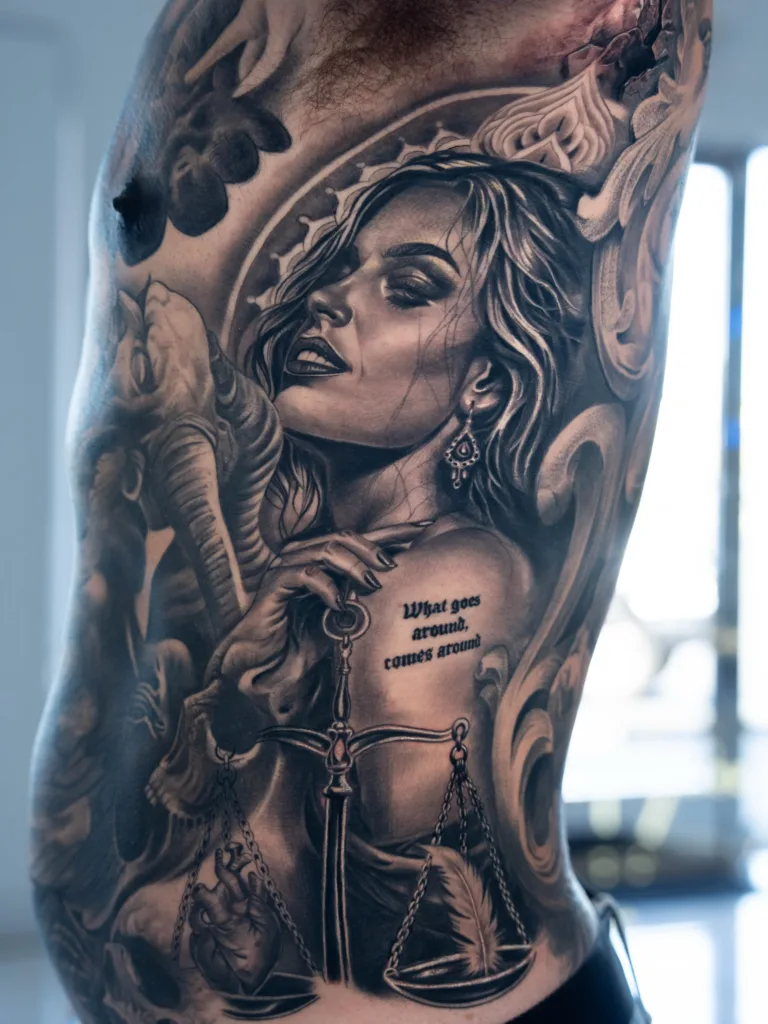
Award-winning black and grey realism tattoos by Skin Design Tattoos NY artists
This repair process is why tattoos go through distinct phases:
Days 1–3: The tattoo is an open wound. The skin is raw, potentially weeping plasma or ink, and highly vulnerable to infection. This is the most critical window.
Days 4–14: The outer layer of skin begins to peel and flake—this is normal and expected. New skin is forming underneath. The tattoo may look dull, cloudy, or patchy during this phase. That’s the healing layer of skin sitting over the ink, not a sign something went wrong.
Weeks 2–4: The surface skin has healed, but the deeper layers are still settling. The tattoo will begin to look cleaner and more defined as the skin fully closes.
Month 1–3: The tattoo continues to settle beneath the surface. Final color and contrast typically aren’t visible until two to three months post-session, when the skin has fully normalized.
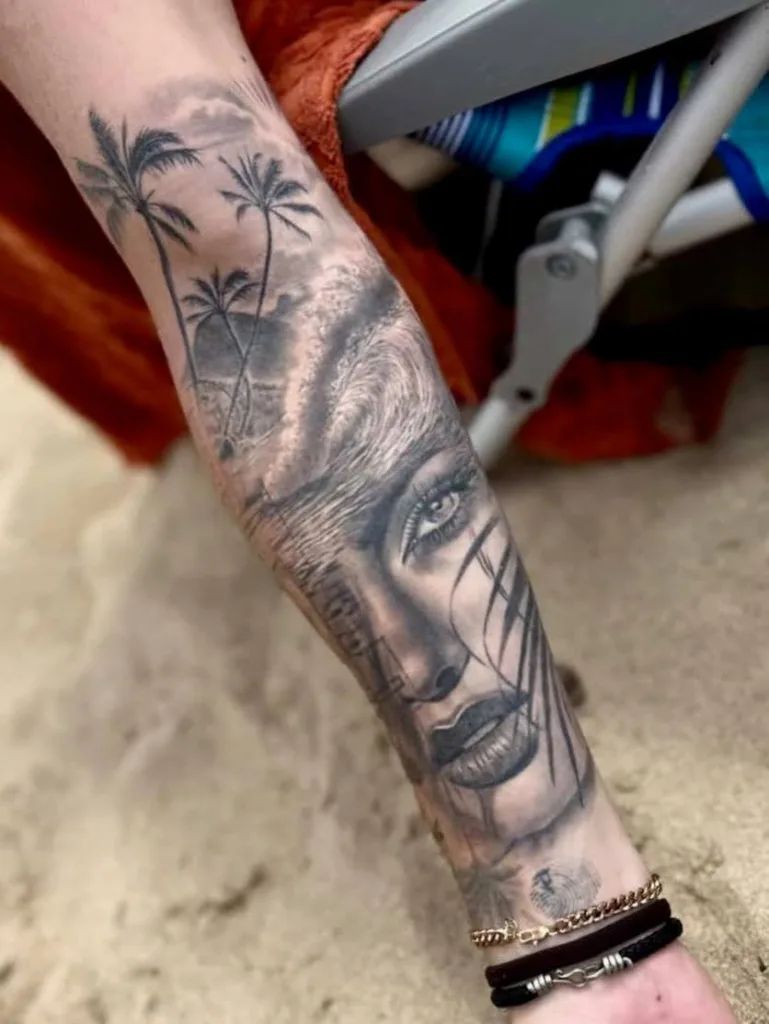
Healed black and grey tattoo designs by Skin Design Tattoos Hawaii artist Lynn Hoang—text ‘LYNN’ to (702) 297-6079 to book
Rushing any part of this process—through neglect, over-handling, or sun exposure—interrupts the skin’s repair cycle and shows in the final result.
The First 24 Hours
What you do in the first day sets the foundation for everything that follows.
Leave the wrap on
Your artist will cover the fresh tattoo before you leave the studio. Whether they use traditional plastic wrap, a medical-grade bandage, or a second-skin adhesive film like Saniderm or Tegaderm, leave it on for the time they specify—typically two to four hours for traditional wrap, or up to 24 hours for second-skin film.
The covering protects the open wound from bacteria and environmental contact during its most vulnerable period.
First wash
When it’s time to remove the covering, wash the tattoo gently with clean hands using a fragrance-free, antimicrobial soap. Use lukewarm water—not hot. Pat dry with a clean paper towel. Do not use a cloth towel, which can harbor bacteria and snag on raw skin.
Moisturize lightly
Apply a thin layer of unscented lotion or a tattoo-specific aftercare product. Thin is the key word. A film, not a coat. The skin needs to breathe.
Do not use petroleum-based products like Vaseline or Neosporin on a fresh tattoo. They seal the skin and trap moisture in a way that can pull ink and suffocate the healing process.
The First Two Weeks: Daily Routine
The healing window is where most aftercare mistakes happen. The routine is simple, but consistency matters.
Washing
Wash the tattoo two to three times a day with fragrance-free soap and lukewarm water. Keep it brief. You’re removing bacteria and dried plasma—not scrubbing the tattoo.
Never wash a fresh tattoo in a shower stream directed at it. Let water run over it gently, or wash with your hands and rinse carefully. High-pressure water on a fresh tattoo is more aggressive than it needs to be.
Moisturizing
After each wash, once the skin is fully dry, apply a thin layer of unscented lotion. The goal is to keep the skin from drying out and cracking—not to keep it perpetually coated.
Signs you’re over-moisturizing: the skin looks wet or suffocated, small white bumps appear around the tattoo, or the tattoo feels constantly tacky. If any of this is happening, pull back and let the skin breathe more.
Fragrance-free lotions that work well: Lubriderm, Aveeno Unscented, CeraVe (unscented), or dedicated tattoo aftercare products like Hustle Butter or Redemption Aftercare Cream.
Healed payasa portrait leg sleeve in black and grey ink by traveling tattoo artist Sandra
What to avoid—completely
Picking and peeling. When the tattoo begins to flake, the impulse to peel is almost irresistible. Don’t. The flaking skin is still attached to ink underneath. Pulling it off prematurely pulls ink with it, leaving light spots and uneven color. Let it fall off on its own schedule.
Scratching. If the tattoo itches—which it will, because healing skin itches—pat it gently instead of scratching. Scratching tears the healing surface and disrupts ink retention.
Submerging in water. No baths, pools, hot tubs, or ocean. Showers are fine; soaking is not. Submerging a fresh tattoo introduces bacteria and causes the skin to absorb water, which can push ink out and cause patchy healing. This restriction applies for the full healing period—typically two to four weeks, sometimes longer for larger pieces.
Sun exposure. A fresh tattoo and direct sun is one of the worst combinations for long-term ink quality. UV radiation breaks down the pigment while the skin is still healing, causing premature fading and color shift before the ink has even settled. Keep it covered or out of the sun entirely until fully healed.
Tight clothing over the tattoo. Friction from fabric against a healing tattoo causes irritation and can lift ink, especially in areas where clothing fits snugly. Loose, breathable fabric—or no covering at all where practical—is best during the healing window.
Fully healed cherub tattoo by Skin Design Tattoos traveling tattoo artist, Sandra
Placement-Specific Aftercare Notes
Different placements heal differently. Here’s what to know for the most common areas.
Hands and fingers
Among the fastest-fading placements. Skin on the hands regenerates quickly and is constantly in contact with surfaces, soap, and UV. Expect some touch-up work. Aftercare here needs to be especially diligent—frequent washing means more frequent moisturizing to compensate.
Feet and ankles
Similar to hands—high contact, high friction, slower to heal due to circulation. Keep footwear loose and breathable during healing. Avoid shoes that rub directly on the tattoo.
Ribs and sternum
These areas move constantly with breathing, which can slow healing and cause more discomfort. Loose clothing is essential. Sleeping positions that put pressure on the tattoo should be avoided when possible.
Black and grey realism chest piece by OC tattoo artist Nigel P—text ‘NIGEL’ to (702) 297-6079 to bring your vision to life
Inner arm and inner elbow
Areas that bend frequently can experience cracking in the skin during healing if not kept moisturized. Watch these closely and increase moisture application if the skin looks tight or dry.
John Wick realism tattoo sleeve by Skin Design Tattoos’ resident artist in Nashville. Check out his work and text ‘JAKE’ to book a free consultation on a custom design of your own.
Back and shoulders
Generally heal well, but are harder to self-monitor. Have someone check the healing progress regularly. These areas are also easy to forget about sun protection because they’re out of your line of sight—don’t skip sunscreen once healed.
Full-back piece done by Robert Pho—text us at 702-297-6079 to make your vision a reality
Long-Term Tattoo Care: How to Keep It Looking Sharp for Decades
The healing window closes, but aftercare doesn’t end.
The single biggest determinant of how a tattoo looks long-term isn’t how it was applied—it’s how the skin around it was maintained.
Text ‘CAT’ to 702-297-6079 or book at skindesigntattoos.com/tattoo-consultation/
Sunscreen, always
UV exposure is the primary accelerant of tattoo fading. Pigment breaks down under prolonged UV exposure regardless of how well the tattoo was applied. Once your tattoo is fully healed, apply a broad-spectrum SPF 30 or higher every time the tattooed skin will be exposed to sun.
This applies year-round, not just in summer. UV radiation reaches skin through clouds and windows. If the tattoo matters to you, protect it consistently.
Skin hydration
Well-hydrated skin holds ink better than dry skin over time. This isn’t a dramatic difference year-to-year, but over a decade it accumulates. Moisturizing regularly—not just during the healing phase—keeps the skin supple and the ink looking defined.
Avoid prolonged sun tanning
Tanning—whether from natural sun or tanning beds—consistently degrades tattoo quality. The UV exposure that darkens skin also breaks down pigment beneath the surface. If you tan regularly, expect tattoos to fade faster and require more frequent touch-ups.
Healed black and grey realism portrait tattoo by tattoo artist Lynn Hoang—check out her portfolio and text ‘LYNN’ to 702-297-6079 for a consultation
Touch-ups
Even the best tattoos sometimes benefit from a touch-up session after full healing, particularly fine line work and tattoos on high-friction placements. This is normal and not a sign of artist error. A quick touch-up session can restore contrast and crispness and extend the life of the piece significantly.
At Skin Design Tattoos, we recommend waiting a minimum of six to eight weeks after the initial session before evaluating whether a touch-up is needed—the healed result takes time to fully settle, and what looks patchy at week two often looks perfectly even by week eight.
Jake, our resident Nashville tattoo artist, at the 2025 Golden State Tattoo Expo
Common Aftercare Mistakes and How to Avoid Them
Using scented products. Fragrances cause irritation and allergic reactions in healing skin. Any lotion, soap, or product going near a fresh tattoo should be fragrance-free. No exceptions.
Applying too much product. Thick layers of lotion suffocate the skin. If you can still see or feel the product sitting on top of the skin, you’ve used too much.
Skipping days. Consistency matters more than perfection. Two washes and a moisturize per day, every day, for two weeks is far more effective than rigorous care on some days and nothing on others.
Judging the tattoo before it’s healed. A tattoo at day five—peeling, dull, patchy—looks nothing like a tattoo at week eight. Many clients panic mid-heal when the work looks rough. The evaluation window is after full healing, not during it.
Rewrapping the tattoo. Unless your artist specifically instructed you to rewrap, don’t. Sealing a healing tattoo with plastic wrap after the initial covering is removed traps moisture and bacteria.
Exposing it to gym equipment and public surfaces. Gym equipment is covered in bacteria. A fresh tattoo pressed against a bench or mat is a direct infection risk. Take a few days off, or cover the tattoo fully with a clean, non-stick bandage while at the gym.
Text ‘STORM’ to 702-297-6079 or book via inkquiries.com/storm
A Note on Second-Skin Wrap
Many artists now use adhesive second-skin bandages—Saniderm, Tegaderm, and similar products—rather than traditional plastic wrap. If your artist applied one of these, the protocol is different.
Second-skin wrap is designed to stay on for one to three days. It creates a sealed, sterile environment that lets the tattoo weep plasma and begin healing without outside contact. When you remove it, you’ll likely see pooled plasma and ink inside the wrap—this is normal and not cause for alarm.
After removal, wash the tattoo once, moisturize lightly, and transition to the standard daily routine. Some artists use multiple rounds of second-skin across the first week; follow your specific artist’s instructions.
Second-skin heals tattoos faster and cleaner than traditional wrap in most cases, but it isn’t a reason to skip the rest of aftercare once it’s removed.
FAQ
How long does tattoo aftercare take?
The active healing phase—where daily washing and moisturizing is essential—lasts approximately two to four weeks. Larger pieces or placements on high-friction areas can take longer. Full deep healing, where the skin beneath the surface has completely normalized, takes one to three months. Long-term care (primarily sunscreen) is ongoing for the life of the tattoo.
What's the best lotion for tattoo aftercare?
Any fragrance-free, dye-free moisturizer works well. Popular options include Lubriderm Daily Moisture, Aveeno Daily Moisturizing Lotion (unscented), CeraVe Moisturizing Cream, and dedicated tattoo products like Hustle Butter Deluxe or Redemption Aftercare. Avoid anything with fragrance, alcohol, or petroleum as a primary ingredient.
Can I shower with a new tattoo?
Yes—showering is fine. Submerging is not. Keep shower water lukewarm rather than hot, avoid directing the stream at the tattoo, and keep the shower brief. Baths, pools, hot tubs, and ocean should be avoided for the full healing period.
My tattoo is peeling and looks faded. Is something wrong?
Almost certainly not. The peeling phase is a normal part of healing and typically occurs between days four and ten. The skin looks dull and patchy during this window because a layer of healing skin is sitting on top of the ink. Once that layer sheds naturally, the tattoo will clarify. Do not peel or pick. Evaluate the result after six to eight weeks, not during healing.
When can I go in the sun after getting a tattoo?
Avoid direct sun exposure on a healing tattoo entirely until it has fully healed—typically two to four weeks minimum. After healing, always apply SPF 30 or higher before sun exposure. This is a permanent aftercare practice, not just a healing-phase rule.
When can I go swimming after a tattoo?
Wait until the tattoo is fully healed—at minimum two to four weeks, and longer for larger pieces. Pools contain chlorine, which irritates healing skin and disrupts the ink. Ocean water introduces bacteria and salt. Neither is safe for a fresh tattoo.
Do I need to do anything special for a fine line tattoo?
Fine line tattoos can be slightly more susceptible to fading over time due to the delicacy of the linework. Aftercare during healing is the same, but long-term sun protection is especially important. Consistent SPF use and staying out of tanning beds significantly extends the life of fine line work.
What happens if I don't follow aftercare instructions?
The consequences range from minor—slight patchiness or dullness that requires a touch-up—to significant: uneven ink retention, blurred lines, color loss, scarring, or in the case of infection, serious skin damage. The quality of aftercare directly determines the quality of the healed result.
The Tattoo Isn't Finished Until It's Healed
Your artist put everything into the session.
The rest is on you.
At Skin Design Tattoos, every client leaves with detailed aftercare guidance—not a generic sheet, but instruction specific to the piece, the placement, and the style. Because a tattoo that heals poorly reflects on the work, regardless of how well it was executed.
Text ‘KIRSHTEN’ to 702-297-6079 or book
If you have questions about aftercare at any point during your healing process, reach out. We’d rather answer ten questions than see a great tattoo compromised by something preventable.
Before and after tattoo cover-up by Lynn Hoang—check out her portfolio and text ‘LYNN’ to 702-297-6079 for a consultation
Text 702-297-6079 for aftercare questions or to book your next session.
Financing available through Affirm and Klarna—payment plans up to 24 months at skindesigntattoos.com/financing/
We have studios in:
skindesigntattoos.com/tattoo-consultation/ to start your consultation.